
Toilet Installation
A toilet install looks simple until the details matter: the flange height, the wax ring seal, the supply line, and the floor level. Get those right and the toilet sits solid, flushes clean, and stays leak free for years. Get them wrong and the floor rots from a slow leak you cannot see.
What a Good Toilet Install Includes
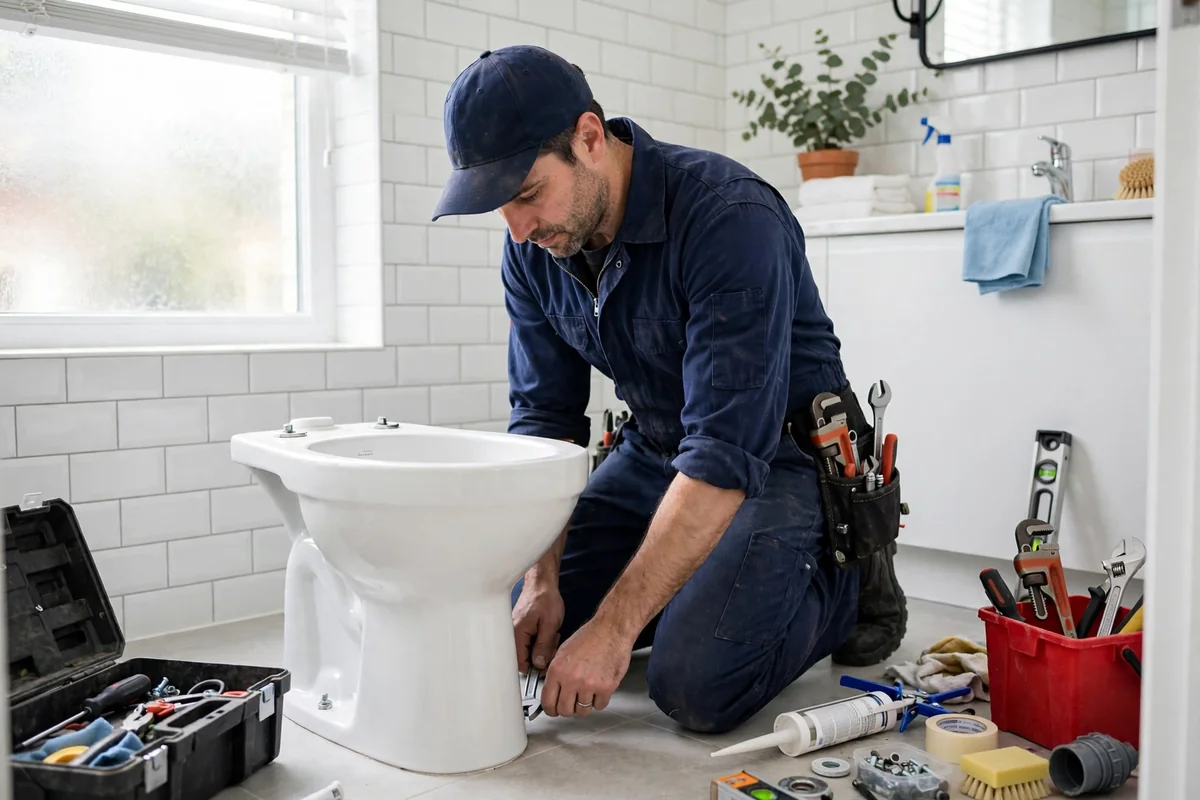
A toilet install starts with the rough in: the drain flange in the floor and the distance from the wall, called the rough in size. Most homes use a 12 inch rough in, but older homes may use 10 or 14 inches. The pro measures before ordering, because a toilet made for the wrong rough in will not fit. The flange must sit level and at the right height above the finished floor, or the wax seal will fail early.
The Deston is a referral service, not a plumbing company. We connect homeowners across all 50 states with independent local plumbers who install toilets regularly. We do not send our own crews. We match you with a nearby pro, you get an upfront price, and the work gets done right. The referral costs you nothing. You pay the pro for the work, after you approve the price.
The old toilet comes out, the flange is inspected and repaired if cracked, a new wax ring or wax free seal is set, the new toilet is seated and bolted, the supply line is connected, and the toilet is tested through several flushes. The pro checks for rocking, for leaks at the base, and for a tank that fills and stops correctly. A careful install takes an hour or two for a swap in the same spot. A move to a new spot takes longer, because drain and supply lines must be rerouted.
Signs It Is Time for a New Toilet
Repair suits a worn part. Replacement suits a worn toilet.
Cracks in the bowl or tank
A cracked toilet cannot be repaired safely. Cracks grow, leak, and can fail suddenly. Replace a cracked toilet at once, before the crack reaches the floor.
Rocking or a soft floor around the base
Rocking means loose bolts, a failed wax ring, or a damaged flange or subfloor. A slow leak under a rocking toilet rots the floor. A pro checks the flange and floor before setting a new toilet.
Constant running or weak flush
A toilet that runs, needs double flushes, or clogs often may have worn internals or a poor trap design. Newer toilets flush better on less water. If repairs keep failing, replacement costs less than repeated service.
Stains that will not clean
Mineral stains and worn glaze make an old toilet look dirty even after cleaning. A new toilet with a fresh glaze cleans easier and looks better in a remodel or a sale prep.
High water use
Older toilets can use far more water per flush than current models. A new low flow toilet cuts water use on every flush. For a busy household, the savings add up over years.
Remodel or new bathroom
A remodel or a new bathroom needs a toilet that fits the room, the rough in, and the style. A pro helps pick height, shape, and flush type for the space and the users.
From Call to Finished Install, in Six Steps
A same spot swap often takes one visit. A move or a wall-hung unit takes longer.
- 1
You call
Dial (888) 418-3086 and describe the job: same spot swap, new bathroom, or wall-hung unit. Note the rough in if you know it, and whether the floor is damaged.
- 2
We refer a local toilet installer
We connect you with an independent local plumber who installs toilets often. They confirm rough in size, flange condition, and supply line type.
- 3
Pick the toilet
The pro helps you pick height, shape, and flush type. Comfort height suits taller users and older knees. Elongated bowls suit most adults. Round bowls suit small rooms.
- 4
You approve the price first
You get upfront pricing before work starts, with the toilet, parts, and labor listed. You approve the price. No work starts without your say so.
- 5
Remove, set, and seal
The pro removes the old toilet, inspects and repairs the flange, sets the new seal, seats and bolts the toilet, and connects the supply line.
- 6
Test and show you the care
The pro tests several flushes, checks for rocking and leaks, and shows you how to care for the new toilet and when to call for a running or leaking issue.
Choosing the Right Toilet
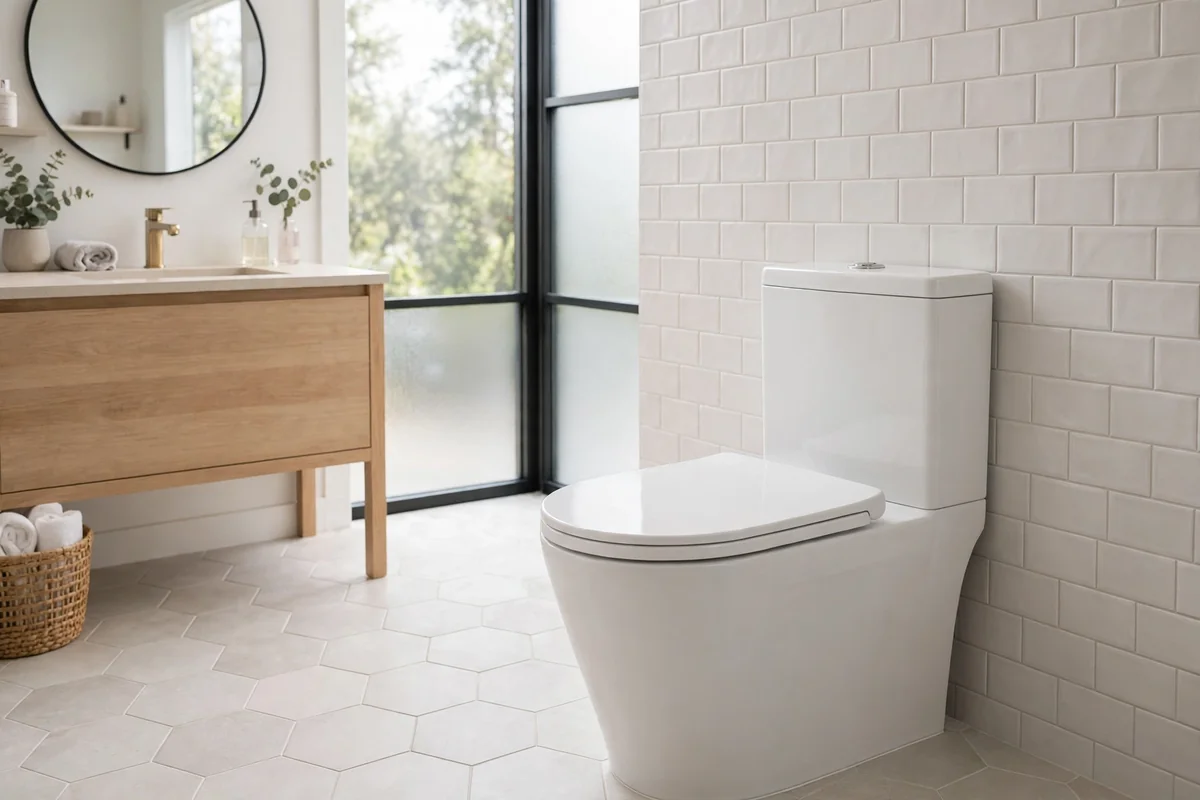
Height matters more than most buyers expect. Standard height suits most users. Comfort height, about two inches taller, suits taller users and people with knee trouble. A comfort height toilet in a home with small children may need a step stool. Bowl shape matters too: elongated bowls suit most adults, while round bowls suit small rooms where inches count. Measure the room before you buy.
Flush type matters for water use and clog risk. Single flush toilets use one amount per flush. Dual flush toilets offer a light flush and a full flush, which saves water on liquid waste. Gravity flush toilets are quiet and simple. Pressure assist toilets flush harder and suit busy commercial style use, but they are louder. A pro can match flush type to your home water pressure and your clog history.
One-piece toilets have the tank and bowl fused, which makes cleaning easier and removes a leak point at the tank joint. Two-piece toilets cost less and are easier to carry upstairs. Wall-hung toilets hang from a carrier inside the wall, which frees floor space and makes cleaning under the toilet easy. Wall-hung installs cost more because the wall must be opened and framed for the carrier, often $800 to $1,500 or more for the install alone.
Toilet Installation Options
One referral can cover a swap, a remodel fit, or a wall-hung unit.
Same spot replacement
The most common install: old toilet out, new toilet in the same spot. Labor for a toilet you already own often runs $150 to $350. A basic new two-piece toilet adds $120 to $300 for the unit itself.
New bathroom or remodel install
A toilet for a new bathroom or a moved spot, with drain and supply lines run to the new location. Rough in size and flange height are set for the new floor finish.
Wall-hung toilet install
A carrier frame inside the wall holds the toilet off the floor. The wall is opened, framed, and finished around the carrier. Cost runs higher, but cleaning and space gains are real.
One-Piece vs. Two-Piece vs. Wall-Hung
All three flush well. They differ in cost, cleaning, and install work.
| Factor | One-piece | Two-piece |
|---|---|---|
| Unit cost | Higher | Lower, most common |
| Cleaning | Easier, no tank joint seam | Tank joint seam to clean |
| Carrying | Heavier, one unit | Lighter, tank and bowl separate |
| Leak points | Fewer, no tank joint | Tank joint can leak |
| Best when | Remodel, easy cleaning wanted | Budget leads, standard swap |
Before and After: From Worn to New
The photos below are illustrations of the difference this work makes. They are not photos of a real job.
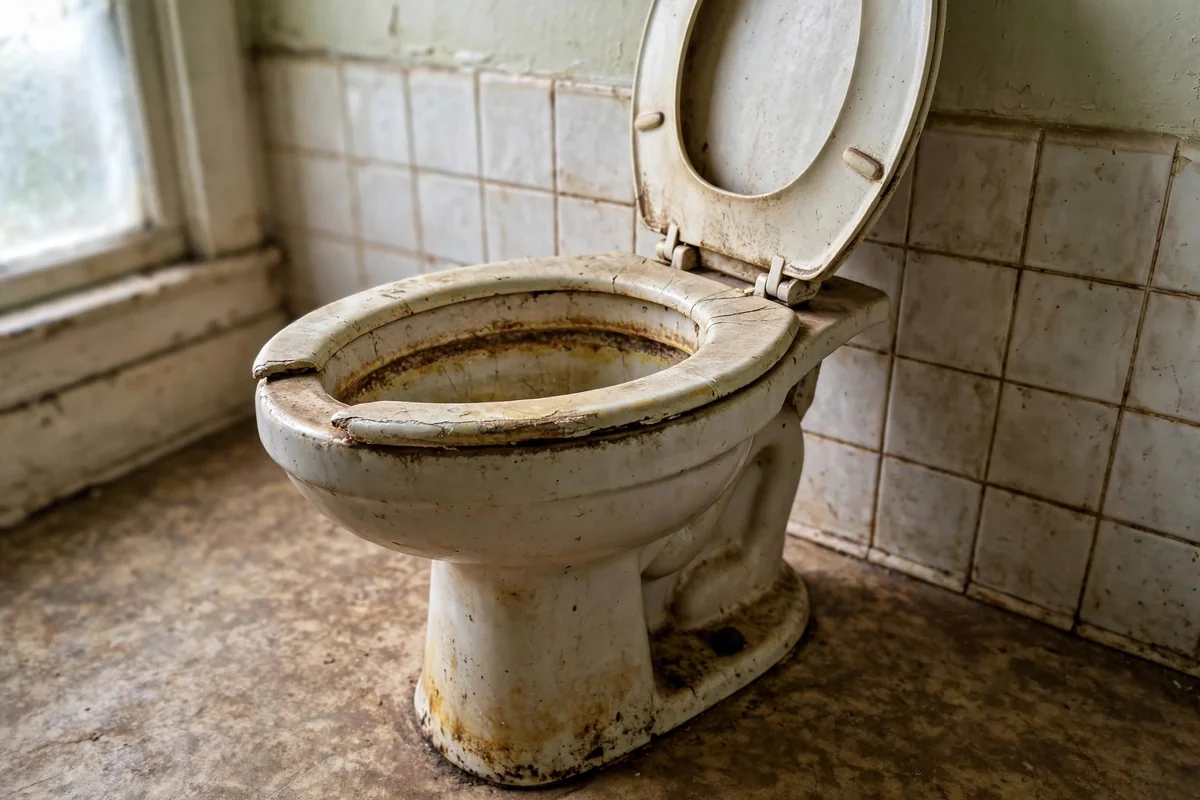 Before
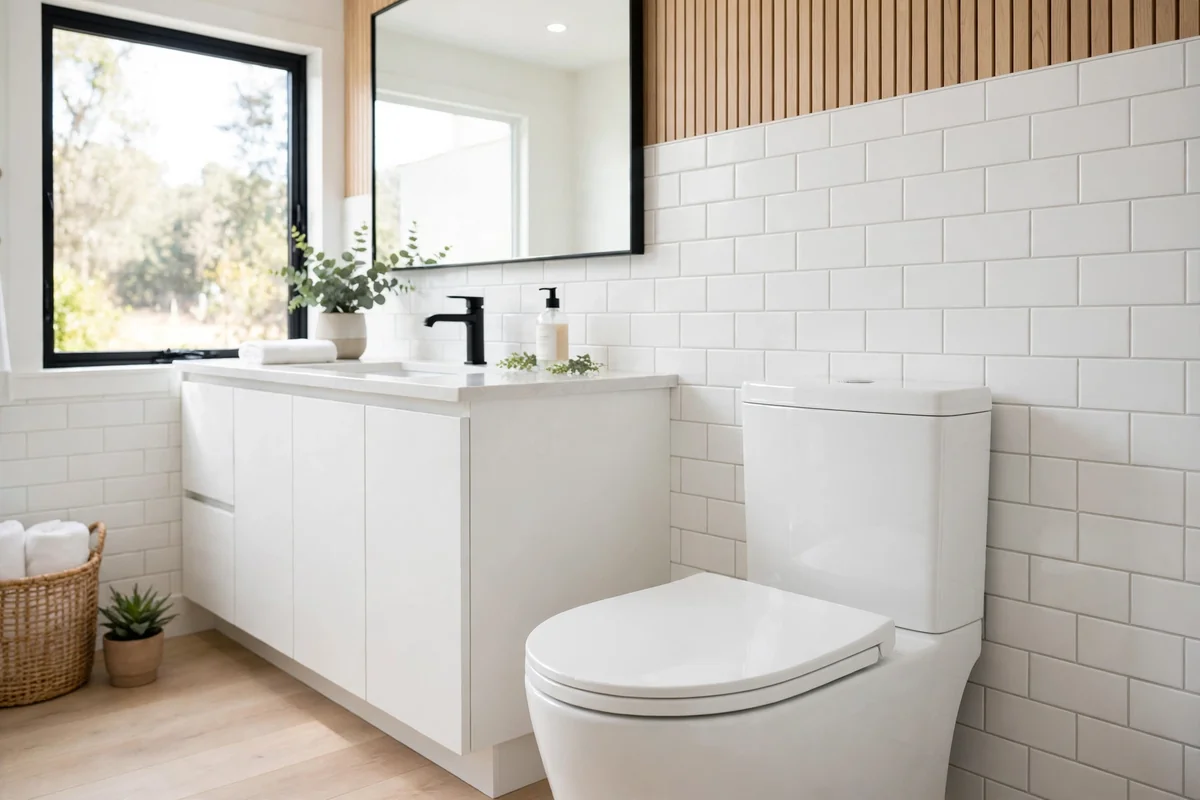 After
What Toilet Installation Costs
Typical United States ranges, shown as national averages for planning only. Your matched plumber gives you the price for your home before work starts.
| Job | Typical range |
|---|---|
| Labor, toilet you already own, same spot | $150 to $350 |
| Basic new two-piece toilet, unit only | $120 to $300 |
| One-piece toilet, unit only | $300 to $700 |
| Wall-hung install, wall work included | $800 to $1,500 or more |
| Flange repair, when cracked or low | $150 to $400 |
| New supply line and shutoff valve | $75 to $200 |
Preparing for the Install
A little prep helps the pro finish on schedule and leave a clean bathroom.
Clear the bathroom. Move rugs, trash cans, and items around the toilet so the pro can work and set the new unit without moving your things.
Know your rough in size. Measure from the wall to the center of the flange bolts, if you can. A 12 inch rough in is most common. The wrong size toilet will not fit.
Pick the toilet early. If you supply the toilet, have it on site before the visit. If the pro supplies it, agree on height, shape, and color before install day.
Note floor damage. Tell the pro about soft flooring, stains, or rocking before the visit. Floor repair may be needed before the new toilet can be set.
Plan a bathroom outage. The bathroom will be out of use during the swap, often one to two hours for a same spot install. Plan around it for a one bathroom home.
Keep pets out. Keep pets out of the bathroom during the install. Tools, bolts, and a removed toilet make the room unsafe for wandering pets.
Frequently Asked Questions
How long does a toilet installation take?
A same spot swap often takes one to two hours: remove the old toilet, check the flange, set the new seal and toilet, connect the supply, and test. A move to a new spot or a wall-hung unit takes longer, because drain, supply, and wall work must be done first.
Do I need a new wax ring with a new toilet?
Yes. A new toilet always gets a new seal. Reusing an old wax ring risks a slow leak under the toilet, which rots the floor unseen. A pro sets a new wax ring or a wax free seal sized for the flange height.
What is toilet rough in size?
The distance from the finished wall to the center of the drain flange bolts. Most homes use 12 inches. Older homes may use 10 or 14 inches. Measure before buying, because a toilet made for the wrong rough in will not fit the drain or the wall.
Can I install a toilet myself?
Some homeowners do, but the details matter: flange height, seal type, bolt torque, and supply connection. An overtight bolt cracks porcelain. A low flange fails the seal. A pro install costs $150 to $350 in labor for a toilet you already own, and it avoids floor damage from a slow leak.
Why does my toilet rock?
Loose bolts, a failed wax ring, a cracked flange, or a soft floor can all cause rocking. Rocking breaks the seal and lets water leak under the toilet. Do not just tighten the bolts, which can crack the base. A pro checks the flange and floor first.
Should I pick comfort height or standard height?
Comfort height suits taller users and people with knee trouble. Standard height suits most users and smaller children. If your home has both tall adults and small children, a standard height with a step stool for kids often works best. Try both heights in a showroom if you can.
What is the difference between one-piece and two-piece toilets?
One-piece toilets fuse tank and bowl, which makes cleaning easier and removes a tank joint leak point. Two-piece toilets cost less and are easier to carry. Both flush well. Pick one-piece for easy cleaning in a remodel, two-piece for a budget swap.
How much does a wall-hung toilet cost to install?
Wall-hung installations often run $800 to $1,500 or more, because the wall must be opened and framed for the carrier that holds the toilet. The unit itself adds cost. Wall-hung suits a remodel where the wall is already open, and it frees floor space.
Do new toilets save water?
Yes. Current low flow toilets use far less water per flush than older models, and dual flush models save more on liquid waste. A busy household saves noticeable water over years. Ask the pro about flush type and water use for the models you are considering.
Does The Deston charge homeowners for referrals?
No. Our matching service is free to you. You only pay the local pro for the work done at your home. You approve the pro price before work starts. The Deston is a referral service that connects homeowners with independent local plumbers. We are not a plumbing company.
What should I do with the old toilet?
Most pros haul the old toilet away as part of the install. Ask when you book whether haul away is included. If you haul it yourself, check local disposal rules: porcelain is not standard trash in many areas, and some centers take it for recycling.
More Help for Your Home
Toilet Repair|Bathroom Plumbing|Bathroom Remodel Plumbing|Residential Plumbing|All Services
A Toilet That Sits Solid and Flushes Clean.
Call now and we will refer you to a local toilet installer. Get a fit check, an upfront price, and a leak free install.
(888) 418-3086Call NowThe Deston is a referral service that connects homeowners with independent local plumbers. We are not a plumbing company.