Tankless Water Heaters
A tankless water heater makes hot water only when you ask for it. No big tank keeps 50 gallons warm all day. This guide explains how these units work, where they shine, and where a traditional tank may still be the better pick.

Signs a Tankless Water Heater May Be Right for You
The Deston is a nationwide referral service serving homeowners across all 50 states. If you decide tankless fits your home, call (888) 418-3086 and we will connect you with a local plumbing pro who can answer your questions.
You do not need a broken heater to consider tankless. These situations make it worth a look:
When Tankless Makes Sense
Your family runs out of hot water
Back-to-back showers drain a tank fast. A tankless unit heats water as it flows, so the third shower runs as hot as the first.
You are short on space
Tankless units hang on a wall. They free up the closet or corner that a 50-gallon tank now occupies.
You plan to stay in your home for years
Tankless units last about twice as long as tanks. The energy savings add up over that longer life.
Your energy bills bother you
Tanks burn fuel around the clock to keep stored water hot. Tankless units fire only when a tap opens.
You are building or remodeling
Running gas lines and venting is easier before walls close. A remodel is a natural time to rethink hot water.
Tank leaks worry you
A tank holds dozens of gallons that can flood a home. A tankless unit stores almost no water, so that risk nearly disappears.
You run many fixtures at once
Laundry, dishwasher, and two showers at once will drain most tanks. A properly sized tankless unit keeps up with peak demand.
You want a longer-lasting heater
About 20 years of life, roughly double a tank, means one tankless install can outlast two tank replacements.
You like a clean utility space
Wall mounting frees floor space and removes the bulky tank from the room. The result is a tidier, easier-to-service setup.
How a Tankless Water Heater Works
There is no mystery inside the box. Here is the sequence every time you turn on the hot tap:
- 1
You open a hot water tap
Water starts moving toward the heater.
- 2
A flow sensor wakes the unit
It detects the movement and signals the burner or the heating elements.
- 3
The heat exchanger fires up
Gas burners ignite or electric elements energize. The exchanger is a set of coils built to transfer heat fast.
- 4
Water heats as it passes through
Cold water enters one side and exits hot seconds later. Nothing gets stored along the way.
- 5
The thermostat holds your set temperature
Sensors adjust the flame or power as flow changes. The shower stays steady even when someone flushes a toilet.
- 6
The tap closes and the unit shuts down
No standby heating happens. No energy is spent until the next tap opens.
Types and Options
The right unit depends on your fuel, your home size, and your climate.
Whole-house gas tankless
These are the most common type. One unit serves every fixture in the home. They need a gas line sized for high BTU output.
Whole-house electric tankless
No venting is needed. They need heavy electrical service, often several large breakers. They suit smaller homes or warm climates best.
Point-of-use units
Small units serve a single sink or shower. They cut the wait for hot water at far fixtures. They can work alone or beside a main unit.
Condensing versus non-condensing
Condensing models capture extra heat from the exhaust. They reach higher efficiency and vent through PVC pipe. Non-condensing models cost less upfront.
Indoor versus outdoor models
Outdoor units mount on an exterior wall and need no indoor venting. Indoor units need a vent run to the outside. Cold climates need freeze protection either way.
Flow rate and temperature rise
Flow rate is measured in gallons per minute. Temperature rise is how much the unit warms the incoming water. Cold climates demand more rise, which lowers usable flow.
Tankless Pros and Cons at a Glance
Where tankless wins. Endless hot water for back-to-back use. A longer lifespan of about 20 years. Lower monthly fuel use since nothing heats around the clock. A small wall-hung footprint that frees floor space. And no tank to rupture and flood your home.
Where tanks still win. Lower upfront cost, often half the installed price of tankless. Simpler installs with no gas line or venting changes. A better fit for homes with low hot water use, where the payback period stretches longest.
The honest middle ground. Tankless makes the most sense for larger households, long-term owners, and homes with heavy hot water demand. For a single person in a small condo, a standard tank often wins on math alone. A local pro can run the numbers for your home before you decide. Still weighing tank versus tankless? Compare with our page on water heater installation for traditional tank options.
Cold Climates Need Bigger Units
Groundwater temperature drives sizing more than anything else. In warm states, incoming water may sit near 70 degrees, so the unit only needs a 50-degree rise to reach a comfortable shower. In northern states, incoming water can be 40 degrees, which demands an 80-degree rise. A bigger rise means less flow from the same unit.
Homeowners in cold regions often need a higher-BTU model than the brochure suggests. Your pro will size for your local water temperature, not a national average. Count your peak fixtures too: a home that runs two showers and a dishwasher at once needs more flow than a home with one bathroom. Sizing for the peak, not the average, is what keeps showers hot on busy mornings.
Ready to price a system for your home? Our tankless water heater installation page walks through sizing, gas lines, and venting.
How a Pro Sizes and Installs a Tankless Unit
Sizing starts with a simple count. The pro lists the fixtures that could run at once on a busy morning: showers, dishwasher, washing machine, and kitchen sink. Each fixture has a flow rate in gallons per minute, and the total sets the minimum flow the unit must deliver at your local temperature rise. A unit that meets the average day but not the peak morning will disappoint exactly when the house is busiest.
Next comes the gas or electrical check. A gas unit may need a larger gas line, since it fires at a much higher BTU rate than a tank when it runs, even though it runs for shorter bursts. An electric unit may need a panel upgrade and several large breakers. These upgrades are the main reason installed cost can match or exceed the equipment price, and a good quote lists them as separate line items rather than burying them in one lump sum.
Venting comes third. Condensing models vent through PVC pipe, which is cheaper and easier to route than the metal venting older tanks used. Non-condensing models need metal venting rated for hot exhaust. Outdoor units skip indoor venting entirely, but they need freeze protection and a location shielded from harsh weather. The pro checks local code for vent clearances from windows, doors, and air intakes before picking a spot.
Install day usually takes a full day for a tank-to-tankless swap, longer if gas lines or venting change. The old tank comes out, the new unit mounts on the wall, gas and water lines connect, venting runs, and the unit is tested at several fixtures. The pro sets the output temperature, often 120 degrees, and shows you how to adjust it. Ask them to run two showers at once before they leave, so you see the sizing work under real peak demand.
Upkeep is simple but not optional. Descale the heat exchanger once a year, more often in hard water areas. The pro flushes a vinegar solution through the unit to dissolve mineral scale, checks the inlet filter, and inspects the vent. Skipping the flush lets scale narrow the exchanger, which cuts flow and raises fuel use year by year. A yearly flush keeps the unit near its rated efficiency for its full 20-year life.
What It Costs
A tankless unit costs more than a tank. Your local pro quotes everything upfront. They put the unit, the labor, and any upgrades into one number. You approve it before work starts.
| Item | Typical range |
|---|---|
| Whole-house unit, equipment alone | $500 to $2,500 |
| Premium condensing models | Top of the equipment range |
| Total installed cost | $2,500 to $6,500 |
| Energy savings per year | $80 to $150 |
| Payback vs. a standard tank | 7 to 12 years |
Before and After: Tank Out, Tankless In
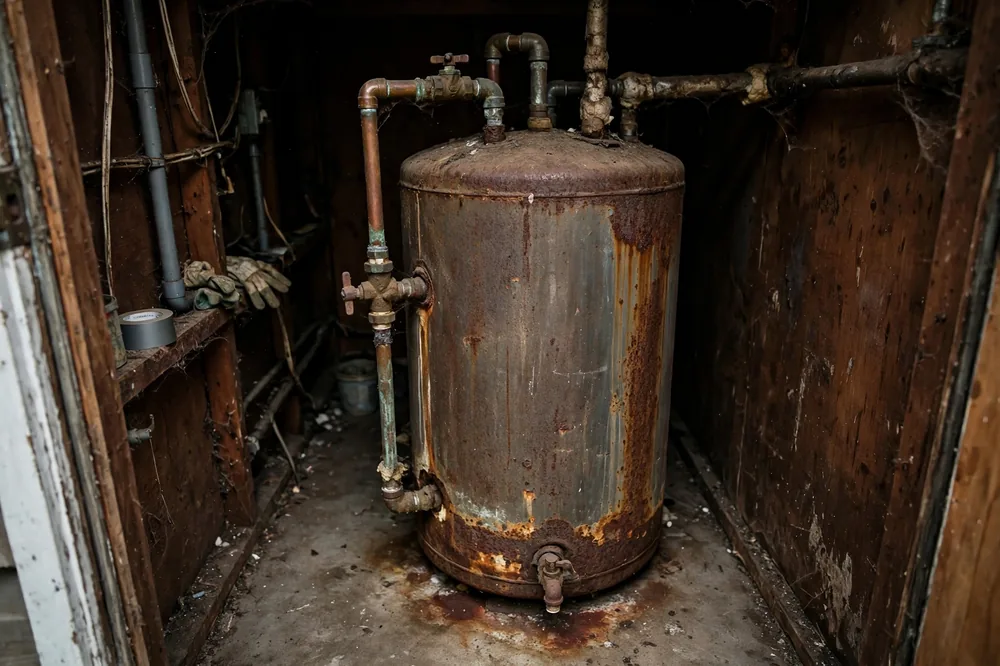
The photos below are illustrations of the difference a tankless swap makes in a utility space. They are not photos of a real job.
 Before
 After
Frequently Asked Questions
Do tankless water heaters give instant hot water?
They give endless hot water, not instant hot water. You still wait while cold water clears the pipes. A recirculation pump can shorten that wait.
Can one unit run two showers at once?
It depends on flow rate and groundwater temperature. A properly sized gas unit handles two showers in most climates. An undersized unit will run lukewarm when demand peaks.
Which is better, gas or electric tankless?
Gas delivers higher flow and suits whole homes. Electric avoids venting but needs major electrical capacity. Your climate and existing utilities usually decide.
How long do tankless water heaters last?
About 20 years with regular maintenance. That is roughly double the life of a tank. Descaling once a year matters most in hard water areas.
Do tankless units need maintenance?
Yes. Mineral scale builds up inside the heat exchanger. An annual flush keeps efficiency up. Skip it and flow drops over time. Our water heater maintenance guide explains what a visit covers.
Will a tankless heater lower my energy bill?
Usually yes, by a modest amount. You stop paying to keep 50 gallons hot all day. Big savings need high hot water use.
Can a tankless unit replace my tank in the same spot?
Sometimes. Gas tankless units need different venting and often a larger gas line. The pro checks what your space allows before quoting.
Does a tankless unit need a drain or floor drain?
Condensing units produce condensate that needs a drain or pump. Your pro plans the drain route as part of the install quote.
What happens if the power goes out?
Gas tankless units need electricity for controls and ignition, so they stop during an outage just like electric models. A tank keeps some hot water stored through a short outage.
Is tankless worth it for a small household?
Often not on fuel savings alone. Low hot water use stretches the payback period past a decade. The endless-hot-water and space benefits may still justify it, but a pro should run your numbers first.
More Water Heater Help
Water Heater Repair | Water Heater Installation | Tankless Installation | Leak Detection | All Services
Endless Hot Water Starts With the Right Size.
Call now and we will connect you with a local pro who can size a tankless system for your home, your climate, and your peak demand.
(888) 418-3086 Call NowThe Deston is a referral service that connects homeowners with independent local plumbers. We are not a plumbing company.