
Tankless Water Heater Installation
A tankless water heater heats water only when you turn on a tap, instead of keeping a full tank hot all day. The result is hot water on demand, a unit that hangs on the wall instead of filling a floor, and lower standby heat loss. Sizing and venting decide whether it works well in your home.
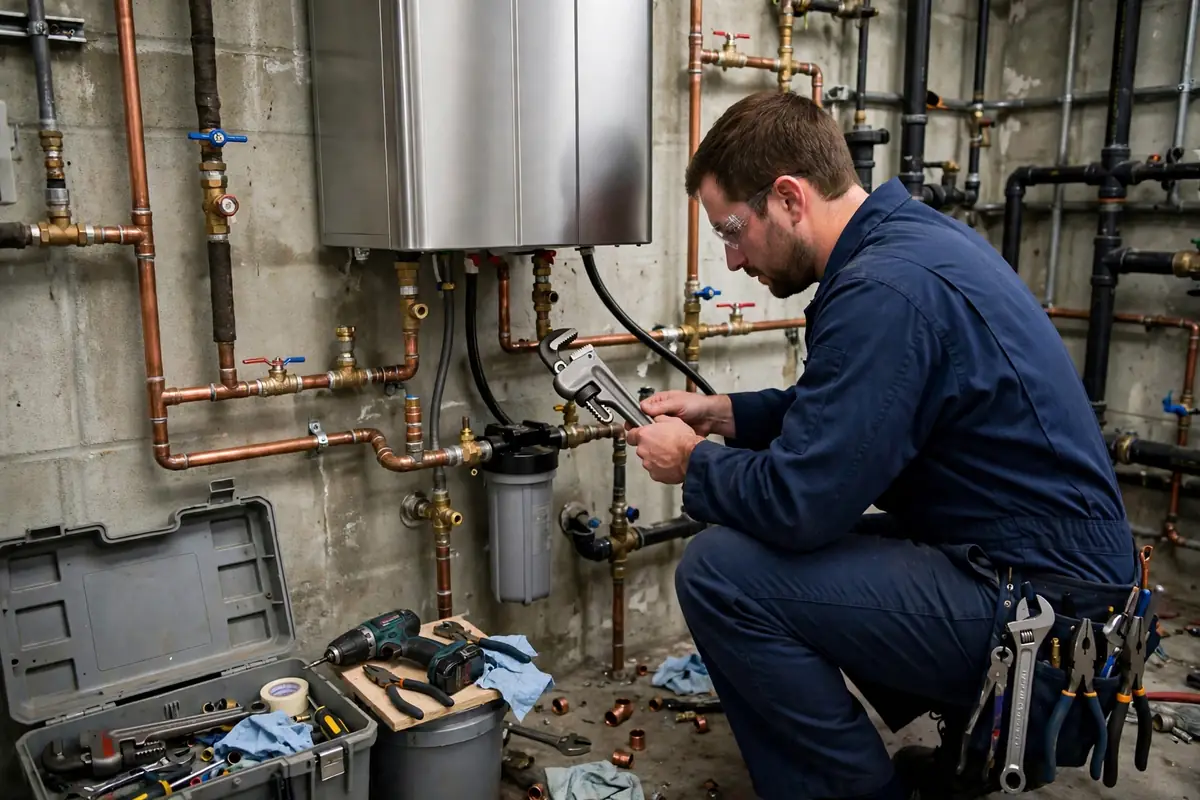
How Tankless Heating Works
A tankless unit, also called an on demand heater, has a heat exchanger and a burner or heating elements. When you open a hot tap, a flow sensor starts the burner. Cold water passes through the heat exchanger and leaves hot. When you close the tap, the burner stops. No tank sits hot all day, so no heat is lost through tank walls overnight. That on demand design is the core benefit, and also the core limit: the unit can only heat so much water per minute.
The Deston is a referral service, not a plumbing company. We connect homeowners across all 50 states with independent local plumbers who install tankless heaters regularly. We do not send our own crews. We match you with a nearby pro, you get an upfront price, and the work gets done right. The referral costs you nothing. You pay the pro for the work, after you approve the price.
A full tankless installation usually runs $2,500 to $6,500. That range covers the unit, venting, gas or electric work, and labor for a typical swap. A gas line upgrade, a new vent route, or a condensate drain for a condensing model adds cost. Your pro can price your exact job once they see the current heater spot, the gas line size, and the vent path.
Signs Tankless Fits Your Home
Tankless suits many homes, but sizing and fuel decide whether it suits yours.
Hot water runs out during back to back showers
A tank holds a set amount of hot water. A family that showers back to back can drain it. A tankless unit heats on demand, so the next shower starts hot as long as total flow stays within the unit size.
Your tank is old, leaking, or rusted
A tank past its prime, with rust or a leak, cannot be repaired safely and should be replaced. A tankless swap at that point costs more than a tank swap, but it resets hot water for years and frees floor space.
You want the floor space back
A tankless unit hangs on the wall and frees the floor a tank used. That space suits a small utility room, a closet install, or a basement that needs room for storage.
You want lower standby loss
A tank keeps water hot all day, even when no one uses it. A tankless unit heats only on use. Homes with low or uneven hot water use save the most on standby loss.
You plan a remodel or an addition
A remodel that adds a bathroom or a soaking tub raises hot water demand. A tankless unit sized for the new load can cover it without a larger tank. Size the unit for the new total demand, not the old one.
You have gas and a vent path
Gas tankless units need a gas line sized for the burner and a vent route to outside. Homes with gas and a clear vent path suit gas tankless well. Electric models need a large electric service instead.
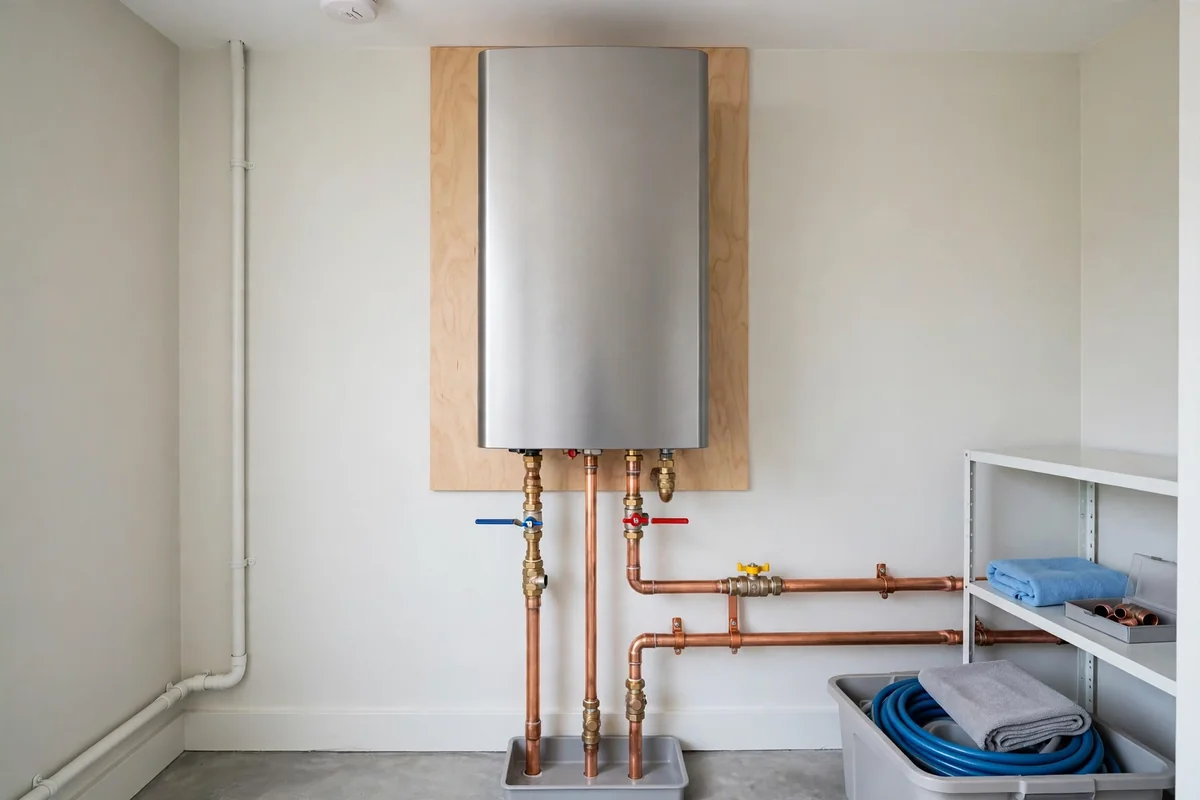
From Call to Hot Water, in Six Steps
A tankless swap often takes a day. Gas or vent upgrades can add time.
- 1
You call
Dial (888) 418-3086 and describe the current heater: tank or tankless, gas or electric, age, and how often hot water runs out.
- 2
We refer a local tankless installer
We connect you with an independent local plumber who installs tankless units often. They check gas line size, electric service, vent path, and water hardness.
- 3
Sizing for your home
The pro sizes the unit by peak flow: how many showers, taps, and appliances may run at once, plus the temperature rise your climate needs.
- 4
You approve the price first
You get upfront pricing before work starts, with the unit, venting, gas or electric work, and labor listed. You approve the price. No work starts without your say so.
- 5
Install and vent
The pro mounts the unit, ties in water, gas or electric, and vents it to outside as the maker and local code require. Condensing models get a condensate drain.
- 6
Test at peak flow
The pro runs several taps at once, checks temperature stability, checks for gas or water leaks, and shows you the controls and the descaling schedule.
Gas vs. Electric, Condensing vs. Non-Condensing
Gas tankless units heat fast and suit larger homes with high peak demand. They need a gas line sized for a large burner, which is often larger than the line that fed a tank. A gas line upgrade is a common added cost in a tankless swap. They also need venting to outside, and condensing gas models need a condensate drain. A pro checks all three before quoting.
Electric tankless units need no vent and no gas line, which suits homes without gas or without a vent path. They need a large electric service, often with several dedicated breakers. A home with a small panel may need an electric upgrade, which adds cost. Electric units suit smaller homes, point of use installs, and warm climates where the temperature rise needed is smaller.
Condensing gas models capture extra heat from exhaust and run more efficiently than non-condensing models. They cost more up front and need a condensate drain, but they use less gas over time. Non-condensing models cost less and vent hotter exhaust through metal venting. Your pro can compare both for your gas price, your climate, and your vent path.
Tankless Installation Options
One referral can cover the unit, the venting, and the fuel work.
Whole home gas tankless
The standard choice for larger homes with gas service. Sized for peak flow across showers and appliances. Venting and gas line sizing are checked before install.
Whole home electric tankless
A vent free choice for homes without gas or without a vent path. Electric service is checked first, because these units draw large power at peak flow.
Point of use tankless
A small unit for one tap, one bathroom, or a remote sink far from the main heater. It cuts wait time for hot water at that tap and suits additions and outbuildings.
Tankless vs. Tank Water Heater
Both give hot water. They differ in space, runout, and install cost.
| Factor | Tankless | Tank |
|---|---|---|
| Hot water supply | On demand, no tank to drain | Set tank amount, then it runs out |
| Space | Wall mounted, floor free | Floor standing, large footprint |
| Standby loss | None, heats only on use | Tank kept hot all day |
| Install cost | Higher, vent and fuel work | Lower, simpler swap |
| Best when | High demand, space tight | Budget leads, demand steady |
Before and After: From Rusted Tank to Wall Unit
The photos below are illustrations of the difference this work makes. They are not photos of a real job.
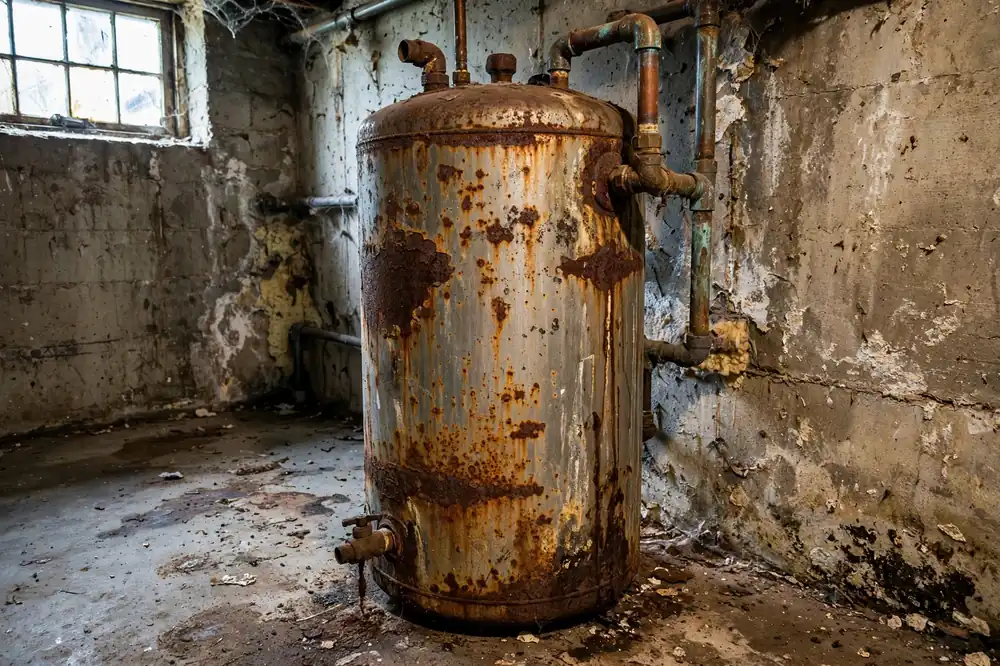 Before
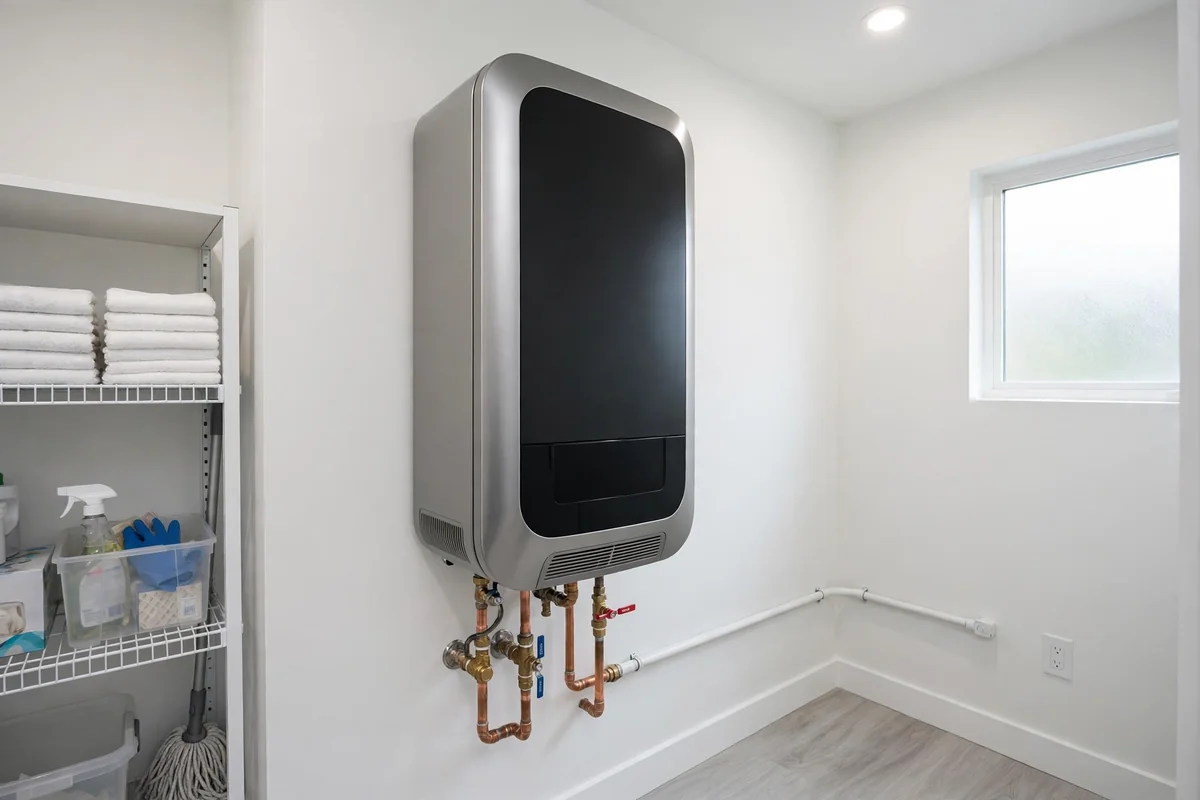 After
What Tankless Installation Costs
Typical United States ranges, shown as national averages for planning only. Your matched plumber gives you the price for your home before work starts.
| Job | Typical range |
|---|---|
| Full tankless installation, typical range | $2,500 to $6,500 |
| Tankless unit alone, mid size gas | $1,000 to $2,500 |
| Gas line upgrade, when needed | $500 to $1,500 |
| New vent route, standard run | $300 to $800 |
| Condensate drain, condensing model | $150 to $400 |
| Descaling service, yearly care | $150 to $300 |
Preparing for the Install
A little prep helps the pro size the unit and finish on schedule.
Clear the heater area. Move stored items away from the current heater and the planned tankless wall spot so the pro can work and vent.
Note your peak hot water use. How many showers, taps, and appliances run at once at busy times. Peak flow sizes the unit, so an honest count matters.
Find your gas meter and panel. Know where the gas meter and electric panel sit. The pro checks gas line size and electric capacity from them.
Plan for water and heat off time. Hot water will be off during the swap, often most of a day. Plan showers and laundry around the install day.
Ask about water hardness. Hard water scales a tankless heat exchanger faster. A softener or a descaling schedule may be advised for hard water homes.
Keep the area clear. Keep pets and kids out of the work area. Gas, vent, and electric work make it unsafe for wandering during the install.
Frequently Asked Questions
How does a tankless water heater work?
It heats water only when you open a hot tap. A flow sensor starts the burner or elements, water passes through a heat exchanger and leaves hot, and the burner stops when you close the tap. No tank sits hot all day. The limit is flow rate: the unit can only heat so much water per minute at the needed temperature rise.
Will a tankless heater run out of hot water?
Not in the tank sense, because there is no tank to drain. It can fall short if total flow exceeds its size, such as three showers plus laundry at once on a small unit. Proper sizing for peak flow prevents that. Tell the pro your true peak use, not your average use.
Is tankless better than a tank heater?
It depends on your home. Tankless wins on runout, space, and standby loss. Tank wins on install cost and simplicity. A home with steady demand and a tight budget may do better with a tank. A home with runout problems or tight space may do better tankless. Price both with vent and fuel work included.
Do I need a gas line upgrade for tankless?
Often yes for gas models. A tankless burner draws more gas at peak than a tank burner, so the gas line that fed a tank may be too small. A pro measures gas line size and length and tells you whether an upgrade is needed. The upgrade is a common added cost in a gas tankless swap.
Can a tankless heater work in cold climates?
Yes, when sized for cold water. Cold inlet water needs a larger temperature rise, which cuts the flow a unit can heat. A unit sized for warm climates may fall short in a cold climate home. Tell the pro your climate and your inlet water temperature, and size for winter, not summer.
How long does a tankless heater last?
Tankless units last longer than tanks in most homes, because they have no tank to rust through. Hard water scale is the main wear factor. Descaling on schedule and a softener in hard water homes extend life. A leaking tank cannot be repaired safely, while a tankless heat exchanger can often be serviced.
Does tankless save money?
It saves on standby loss, because no tank sits hot all day. How much you save depends on your use, your fuel price, and the install cost. A home with low or uneven use saves the most. A home with constant high use saves less. Ask the pro to compare total cost over time, not just the install price.
What maintenance does tankless need?
Descaling on schedule, especially in hard water homes, plus an inlet filter clean and a vent check. Descaling service runs $150 to $300. Some homeowners descale with a pump kit, but a pro service also checks gas, vent, and controls. Skipping descaling cuts flow and shortens unit life.
Can I install tankless myself?
Tankless install involves gas or large electric work, venting, and condensate handling, plus local code and permit rules. A poor vent or gas connection is a safety risk. A pro install also keeps maker warranty terms intact in most cases. For most homes, a pro install is the right call.
Does The Deston charge homeowners for referrals?
No. Our matching service is free to you. You only pay the local pro for the work done at your home. You approve the pro price before work starts. The Deston is a referral service that connects homeowners with independent local plumbers. We are not a plumbing company.
What size tankless unit do I need?
Size by peak flow and temperature rise, not by house size alone. Count showers, taps, and appliances that may run at once, and the rise from inlet water to your set temperature. A pro measures both and picks a unit that covers peak use. An undersized unit is the top cause of tankless complaints.
More Help for Your Home
Water Heater Installation|Water Heater Maintenance|Tankless Water Heater|Gas Line Installation|All Services
Hot Water That Does Not Run Out.
Call now and we will refer you to a local tankless installer. Get a sizing check, an upfront price, and a unit built for your peak use.
(888) 418-3086Call NowThe Deston is a referral service that connects homeowners with independent local plumbers. We are not a plumbing company.