
Water Heater Maintenance
A water heater works hard every day, and it wears in ways you cannot see: sediment settles, an anode rod dissolves, and scale builds on heat exchangers. Yearly maintenance clears sediment, checks the anode rod, and tests safety controls, so the heater lasts longer and heats cheaper. A $150 service beats a $1,500 replacement every time.
What Water Heater Maintenance Covers
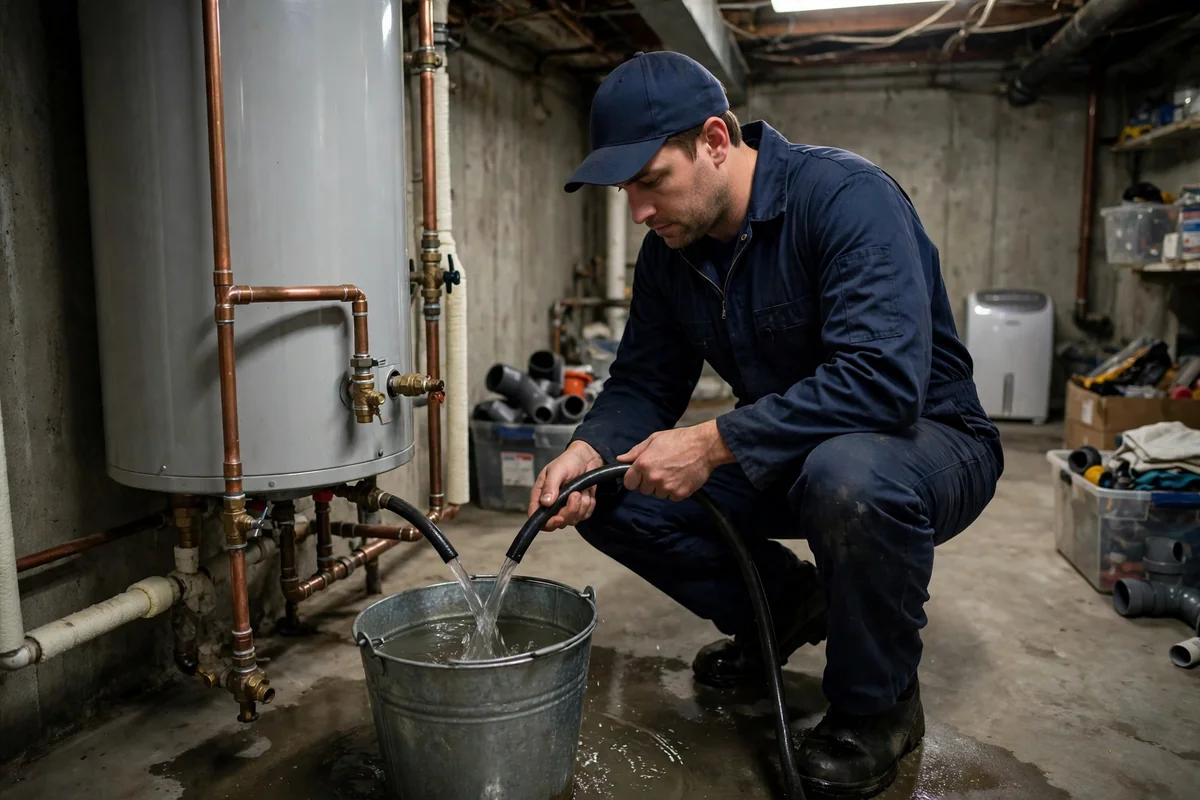
A tank heater needs three jobs each year: a flush to clear sediment, an anode rod check to protect the tank from corrosion, and a safety check of the relief valve, thermostat, and vent. Sediment insulates the burner or elements from water, so the heater works harder and heats slower. The anode rod is a sacrificial rod that corrodes instead of the tank. When it is gone, the tank corrodes next. The relief valve releases pressure if it builds too high. All three jobs take about an hour on a tank heater.
The Deston is a referral service, not a plumbing company. We connect homeowners across all 50 states with independent local plumbers who service water heaters regularly. We do not send our own crews. We match you with a nearby pro, you get an upfront price, and the work gets done right. The referral costs you nothing. You pay the pro for the work, after you approve the price.
A tankless heater needs different care: descaling to clear mineral scale from the heat exchanger, plus an inlet filter clean and a vent check. Tankless descaling runs $150 to $300. A full tune-up with anode rod replacement on a tank heater runs $200 to $350. A basic flush and inspection usually runs $100 to $200. Your pro can tell you which service your heater type needs.
Signs Your Heater Needs Service
These signs mean sediment, scale, or a worn part is already costing you.
Rumbling or popping noises
Sediment trapped at the tank bottom pops and rumbles as it heats. Flushing clears loose sediment. Heavy sediment that will not flush may need a deeper clean or a replacement assessment.
Hot water runs out faster than before
Sediment takes up tank space and insulates heat, so usable hot water drops. A flush restores capacity in many cases. A tank that still runs out after flushing may be too small or failing.
Rusty or smelly hot water
Rust in hot water only points to tank corrosion or a spent anode rod. A sulfur smell points to bacteria in a warm tank or a spent anode type. A pro checks the anode rod and water before recommending a fix.
Slow heat recovery
A heater that takes longer to reheat after use may have scale on elements or a burner, or heavy sediment. Descaling or flushing restores heat transfer in most cases.
Relief valve dripping or stuck
A relief valve that drips constantly, or that will not lift when tested, needs attention at once. It is a safety device, not a part to ignore. A pro tests and replaces it if needed.
No service in over a year
A heater with no service in over a year is overdue, even if it seems fine. Sediment and anode wear are silent until they cause noise, rust, or a leak. Yearly service catches both early.
From Call to Serviced Heater, in Six Steps
A tank service often takes about an hour. Tankless descaling takes similar time.
- 1
You call
Dial (888) 418-3086 and describe the heater: tank or tankless, gas or electric, age, and any noise, rust, or runout issue.
- 2
We refer a local water heater pro
We connect you with an independent local plumber who services water heaters often. They bring flush gear, anode rods, and descaling kits.
- 3
The pro inspects first
The pro checks the tank or heat exchanger, the relief valve, the vent for gas units, and the anode rod condition before starting work.
- 4
You approve the price first
You get upfront pricing before work starts, with the flush, anode rod, or descaling listed. You approve the price. No work starts without your say so.
- 5
Flush, descale, or swap the rod
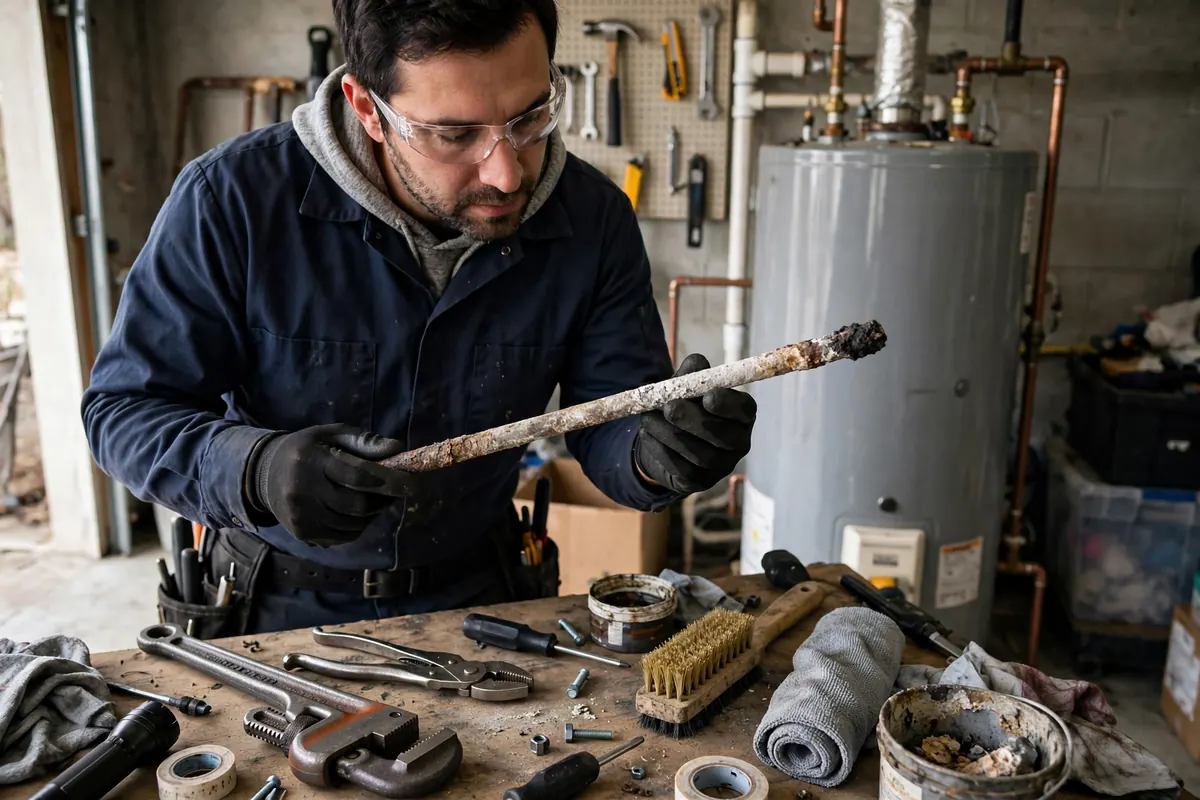
The pro flushes sediment, descales a tankless heat exchanger, or swaps a spent anode rod, then tests heat and safety controls.
- 6
Care schedule for next year
The pro leaves a service interval for your water hardness and heater type, so the next service happens before faults return.
Tank Care vs. Tankless Care
Tank care centers on sediment and the anode rod. Flush yearly, more often in hard water homes. Check the anode rod every few years, and replace it when it is thin or coated. A full tune-up with anode rod replacement runs $200 to $350. A basic flush and inspection usually runs $100 to $200. Both cost far less than a tank replacement, which runs $900 to $2,500 for a standard install.
Tankless care centers on scale. Hard water leaves mineral scale on the heat exchanger, which cuts flow and heat transfer. Descaling with a pump and solution clears it. Tankless descaling runs $150 to $300. In hard water homes, descale yearly. In soft water homes, every two years may suffice. A softener upstream cuts scale and stretches the descaling interval.
Both types need safety checks. A tank needs a relief valve test and a vent check for gas units. A tankless needs a vent check and a gas or electric check. A pro service visit covers safety checks for either type, so you do not need to learn two different checklists.
Water Heater Maintenance Options
One referral can cover a flush, a tune-up, or a descaling.
Basic flush and inspection
Sediment flush, relief valve test, thermostat check, and vent check for gas units. Usually runs $100 to $200. The yearly baseline for tank heaters.
Full tune-up with anode rod
Flush plus anode rod replacement, plus all safety checks. Runs $200 to $350. The right choice when the anode rod is spent or the tank is older.
Tankless descaling service
Heat exchanger descaling, inlet filter clean, and vent and controls check. Runs $150 to $300. The yearly care for tankless units, especially in hard water homes.
Flush Only vs. Full Tune-Up
Both help. They differ in what they replace and what they prevent.
| Factor | Full tune-up | Flush only |
|---|---|---|
| Sediment cleared | Yes, full flush | Yes, full flush |
| Anode rod replaced | Yes, new rod fitted | No, rod only checked |
| Safety checks | Full, valve and vent | Basic, valve and thermostat |
| Cost | $200 to $350 | $100 to $200 |
| Best when | Older tank, rod spent | Young tank, yearly routine |
Before and After: From Neglected to Maintained
The photos below are illustrations of the difference this work makes. They are not photos of a real job.
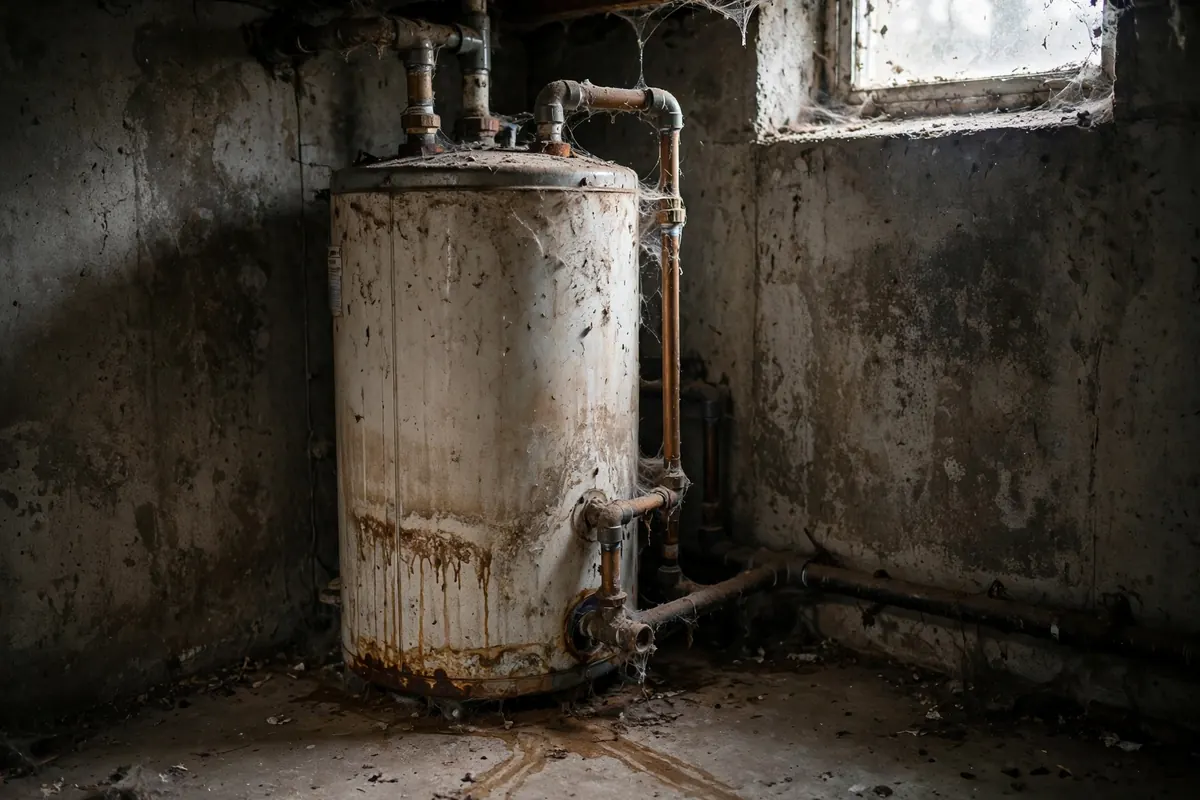 Before
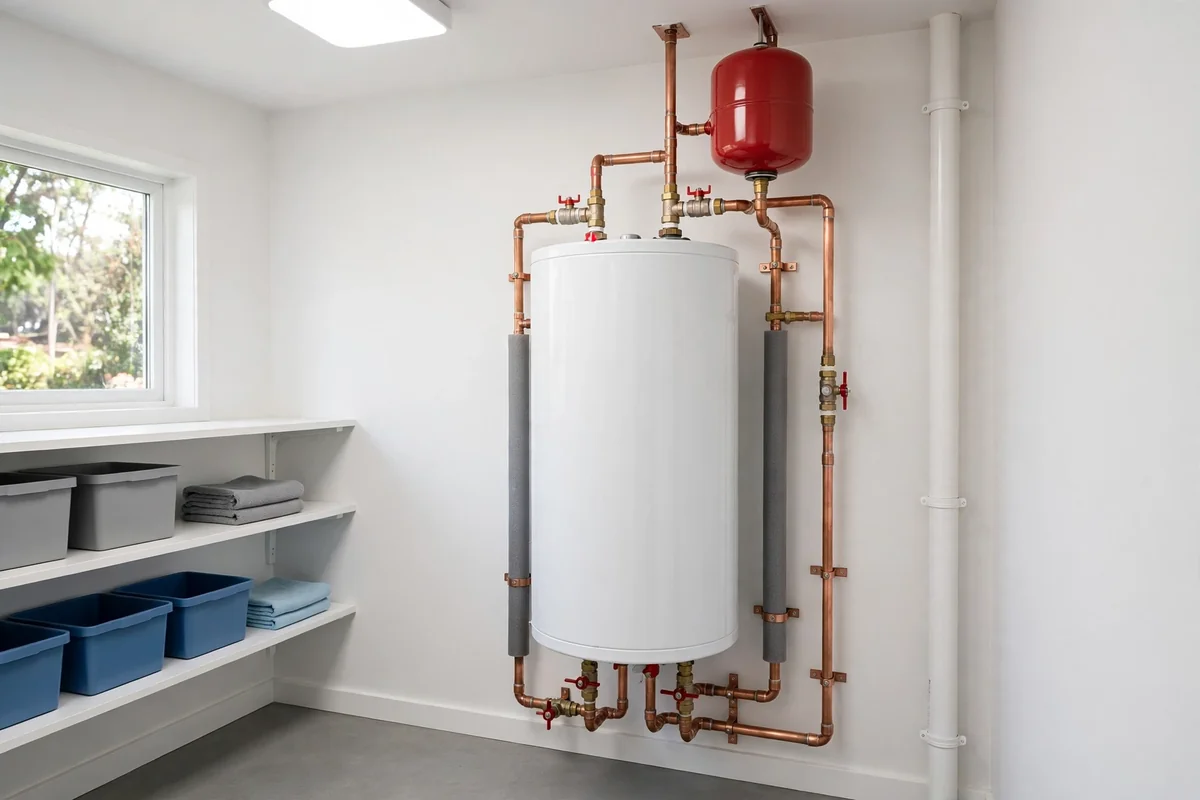 After
What Water Heater Maintenance Costs
Typical United States ranges, shown as national averages for planning only. Your matched plumber gives you the price for your home before work starts.
| Job | Typical range |
|---|---|
| Basic flush and inspection | $100 to $200 |
| Full tune-up with anode rod replacement | $200 to $350 |
| Tankless descaling service | $150 to $300 |
| Anode rod alone, part and labor | $150 to $300 |
| Relief valve replacement | $150 to $300 |
| Expansion tank check and service | $100 to $250 |
Preparing for the Service Visit
A little prep helps the pro flush, descale, and test on schedule.
Clear the heater area. Move stored items away from the tank so the pro can drain, flush, and reach the anode rod port.
Note heater type and age. Tank or tankless, gas or electric, and age, if known. The pro confirms on site, but a head start helps parts ordering.
Plan a hot water outage. Hot water will be off during a flush or descaling, often an hour or two. Plan showers and laundry around the visit.
Note symptoms. Noise, rust, smell, or runout, and when each started. Symptoms guide which service the heater needs.
Find the drain spot. Know where flush water can drain: a floor drain, a sump pit, or outside. The pro brings a hose, but a drain plan saves time.
Keep pets out. Keep pets out of the work area. Tools, hot water, and open pipes make the room unsafe for wandering pets.
Frequently Asked Questions
How often should I flush my water heater?
Flush a tank heater yearly, more often in hard water homes. A tankless heater needs descaling yearly in hard water homes, every two years in soft water homes. A pro can set the interval for your water hardness and heater type.
What does a basic flush and inspection cost?
A basic flush and inspection usually runs $100 to $200. It covers a sediment flush, a relief valve test, a thermostat check, and a vent check for gas units. It is the yearly baseline for tank heaters.
What is an anode rod, and why does it matter?
An anode rod is a sacrificial rod inside the tank that corrodes instead of the tank steel. When it is gone, the tank corrodes next and rusts through. A full tune-up with anode rod replacement runs $200 to $350. Ask the pro to show you the old rod.
How much does tankless descaling cost?
Tankless descaling runs $150 to $300. It clears mineral scale from the heat exchanger, plus an inlet filter clean and a vent check. Hard water homes need it yearly. Skipping it cuts flow and shortens heat exchanger life.
Can I flush my water heater myself?
Some homeowners flush a tank with a hose, but hot water, gas or electric, and relief valve safety make it risky without care. A pro flush also checks the anode rod, relief valve, and vent in the same visit. For most homes, a pro service is worth the $100 to $200.
Why does my heater rumble?
Sediment trapped at the tank bottom pops and rumbles as it heats. Flushing clears loose sediment. Heavy sediment that will not flush may need a deeper clean or a replacement assessment. Do not ignore rumbling, it wastes fuel and wears the tank.
Why is my hot water rusty?
Rust in hot water only points to tank corrosion or a spent anode rod. Rust in hot and cold points to pipes or supply. A pro checks the anode rod and the tank before recommending a fix. A rusted tank is near the end of its life.
Why does my hot water smell like sulfur?
Bacteria in a warm tank or a spent anode type can cause a sulfur smell. A pro checks the anode rod type and the tank, and may recommend a rod change or a flush and sanitizing step. Do not just raise temperature as a fix without pro advice.
Is maintenance worth it on an old heater?
Yes, up to a point. A $150 service beats a $1,500 replacement every time, when the tank is sound. A tank past 10 years with rust or a leak is a replacement candidate, not a service candidate. A pro can tell you which side of that line your heater sits on.
Does The Deston charge homeowners for referrals?
No. Our matching service is free to you. You only pay the local pro for the work done at your home. You approve the pro price before work starts. The Deston is a referral service that connects homeowners with independent local plumbers. We are not a plumbing company.
What happens if I skip maintenance?
Sediment builds, heat transfer drops, fuel use rises, the anode rod spends, and the tank corrodes. The heater runs out faster, makes noise, and fails earlier. A flood from a failed tank costs far more than yearly service. Schedule service before faults appear, not after.
More Help for Your Home
Water Heater Installation|Water Heater Repair|Tankless Water Heater Installation|Residential Plumbing|All Services
A Heater That Lasts, Not One That Fails.
Call now and we will refer you to a local water heater pro. Get a flush, an anode check, and a heater that heats like it should.
(888) 418-3086Call NowThe Deston is a referral service that connects homeowners with independent local plumbers. We are not a plumbing company.