
Toilet Repair Services
A toilet that will not flush, keeps running, or leaks around its base is more than a nuisance. It wastes water, drives up your bill, and can damage your floor if the leak reaches the subfloor. The Deston connects homeowners with independent local plumbers who fix toilets every day.
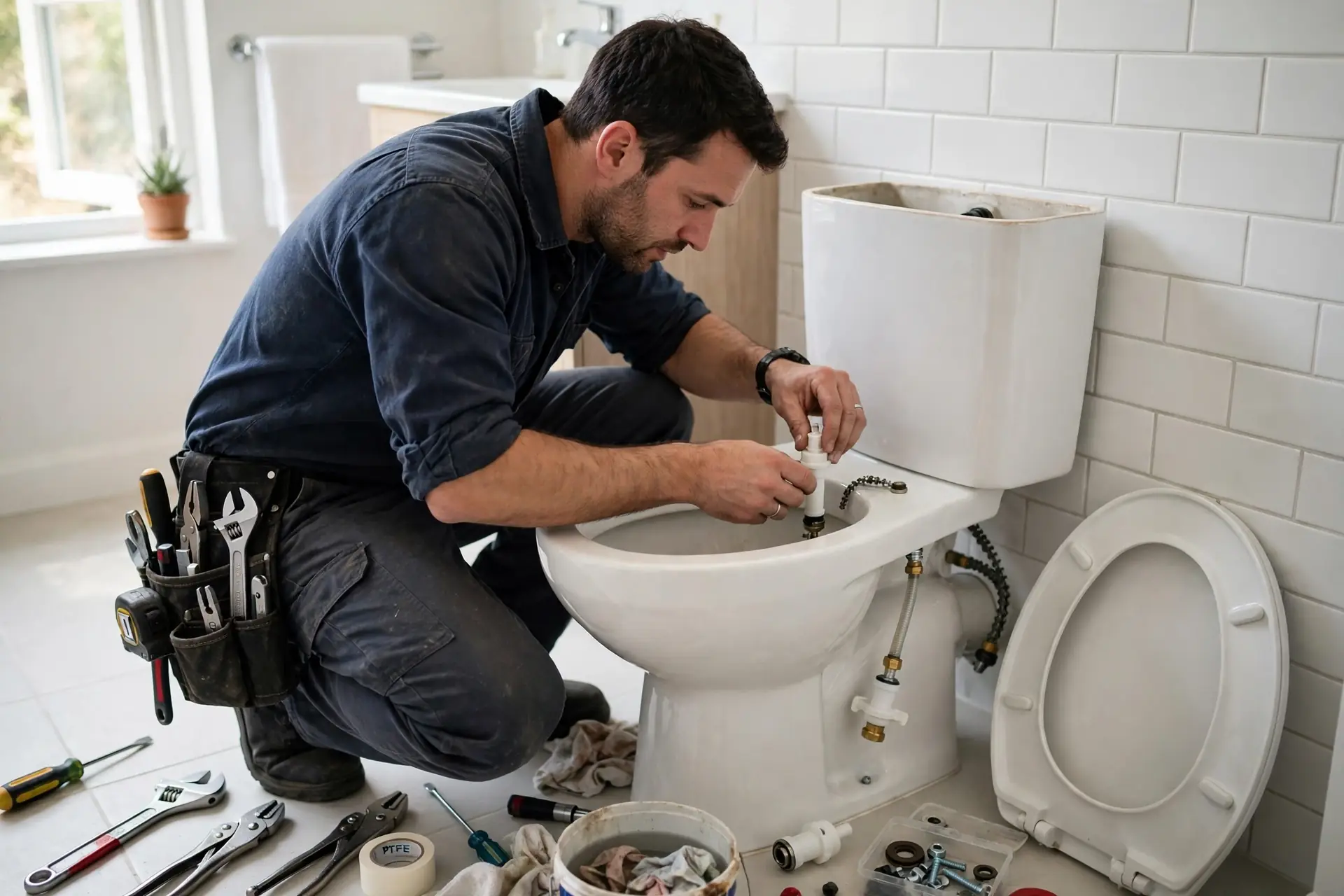
Toilet Problems Are Small Until They Are Not
A toilet that will not flush, keeps running, or leaks around its base wastes water and drives up your bill. A base leak left alone rots the subfloor and invites mold. A running toilet can waste hundreds of gallons a day. Most toilet repairs fall into a few familiar categories, and each has a standard fix that an experienced local plumber handles quickly.
Toilet repair is one of the most affordable plumbing services. Most repairs take 30 to 60 minutes. A flapper or fill valve swap is quick. A wax ring reset takes longer because the plumber must drain the tank, lift the toilet, clean the flange, and set everything back level. Either way, you get a working toilet the same visit.
The Deston is a referral service that connects homeowners with independent local plumbers. We are not a plumbing company. Whether your area is covered by a big metro or a small town, one call puts you in touch with a nearby pro. We serve homeowners across all 50 states.
Signs You Need Toilet Repair
Toilets rarely fail without warning. Watch for these signals that a repair visit is due.
The toilet keeps running
If you hear water running long after you flush, the flapper or fill valve inside the tank is failing. This can waste hundreds of gallons a day.
Weak or incomplete flushes
A toilet that needs two flushes to clear the bowl may have a clogged rim jet, a low tank level, or a partial blockage in the trap.
Water pooling around the base
Moisture at the floor line usually means the wax ring seal has failed. Left alone, it rots the subfloor and invites mold.
Frequent clogs
A toilet that clogs often with normal use has a deeper problem, such as a trapped object or buildup in the drain line.
The handle feels loose or sticks
A loose chain, worn handle, or broken flapper arm keeps the flush from working right and wastes water.
Cracks in the tank or bowl
Even hairline cracks can grow and suddenly leak gallons onto the floor. A cracked toilet needs attention fast.
Gurgling sounds or slow refill
Strange noises when the tank fills often point to a failing fill valve or pressure trouble in the supply line.
The bowl water level drops on its own
A falling water level without flushing hints at a leak at the base or a crack you cannot see.
Phantom flushes
The toilet flushes by itself every so often. This is usually a slow leak from the tank into the bowl through a flapper that no longer seats flat.
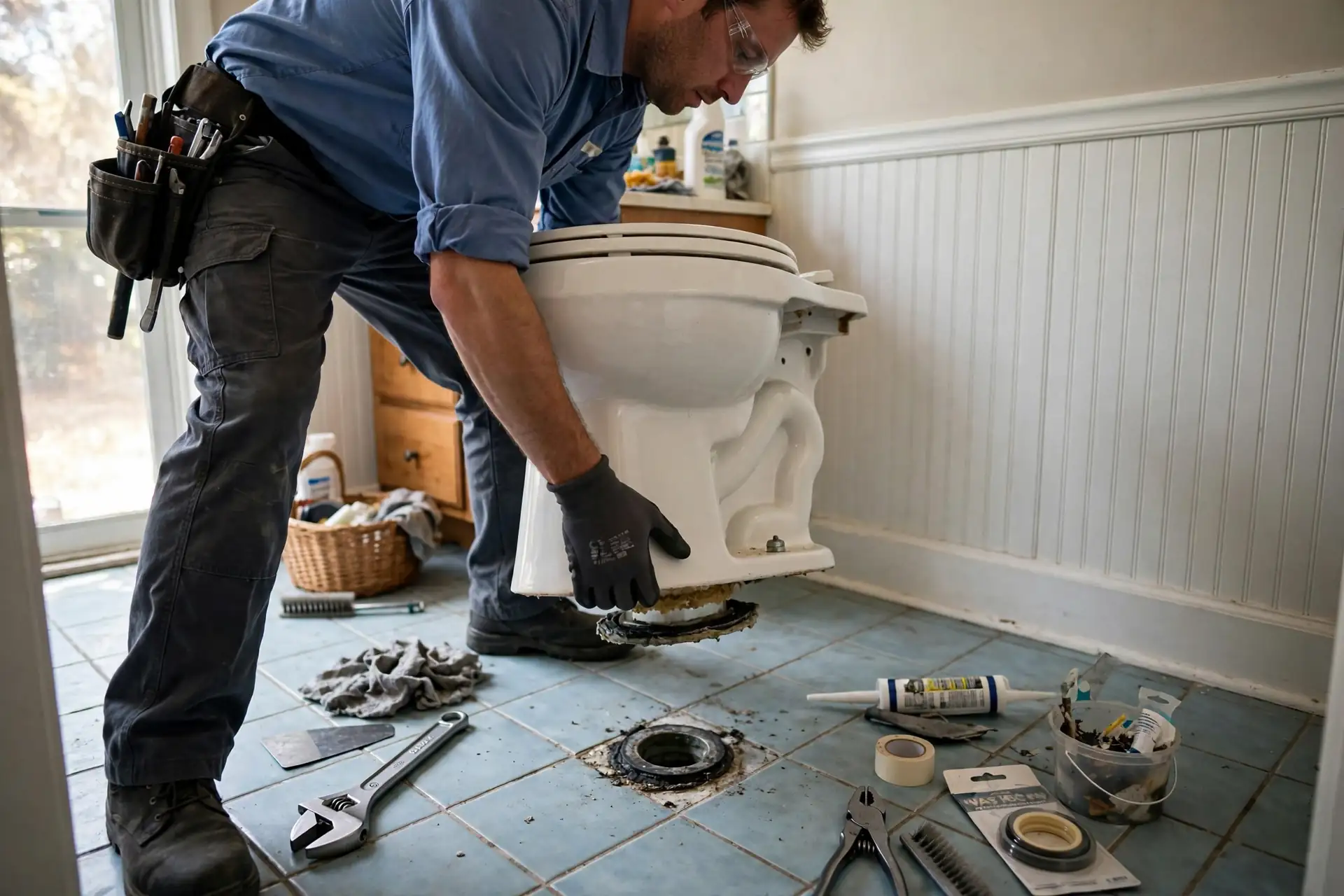
Describe It, We Match You, They Fix It
How a toilet repair visit usually goes.
- 1
You describe the problem
Tell us what the toilet is doing wrong. Constant running, leaking, no flush, or strange noises all point the plumber in the right direction.
- 2
A local pro comes to you
Call (888) 418-3086 and we match you with an independent local plumber who handles toilet repairs in your area. The plumber arrives ready with the parts that fit most toilet models.
- 3
They inspect tank and bowl
The plumber checks the fill valve, flapper, chain, handle, supply line, and the base seal to find the true cause.
- 4
You get a clear price before work starts
The local pro explains what needs fixing and gives an upfront price. You approve it before any work begins. Ask for the full price in writing and confirm whether parts and cleanup are included.
- 5
The repair is made
Most toilet repairs take under an hour. Worn parts get replaced, seals get reset, and adjustments get made on the spot.
- 6
They test every flush
Before leaving, the plumber flushes several times, checks for leaks at the base and supply line, and makes sure the tank fills and shuts off cleanly.
- 7
Replacement quoted when repair is not sensible
If the toilet is cracked or beyond sensible repair, the plumber will say so plainly and can quote a replacement instead.
Common Toilet Problems and How Plumbers Fix Them
Running toilet
A worn flapper no longer seals the flush valve, so water drains into the bowl nonstop and the fill valve keeps running to replace it. The fix is a new flapper, and often a fresh fill valve too. This is one of the most common and cheapest repairs.
Phantom flushes
The toilet flushes by itself every so often. This is usually a slow leak from the tank into the bowl, caused by a flapper that no longer seats flat or mineral buildup on the flush valve seat. The plumber replaces the flapper and cleans or reseats the valve.
Leak at the base
When the wax ring under the toilet dries out, cracks, or shifts, water and sewer gas escape around the base. The plumber lifts the toilet, removes the old wax ring, sets a new one, and bolts the toilet back down level. If the flange underneath is damaged, it gets repaired as part of the same job.
Loose or rocking toilet
A toilet that rocks when you sit can be a loose bolt, a worn wax ring, or a soft subfloor. The plumber tightens or replaces the flange bolts, resets the seal, and checks the floor underneath for rot.
Weak flush
Weak flushes come from clogged rim jets under the bowl rim, a tank water level set too low, or a partial clog in the trapway. The plumber cleans the jets, adjusts the fill level, and snakes the trap if needed.
Supply line leaks
The flexible line feeding the tank can corrode or crack where it meets the shutoff valve. The plumber swaps it for a new braided stainless line and checks the shutoff valve at the same time.
Cracked tank or bowl
Porcelain cracks cannot be patched safely. When the tank or bowl cracks, the plumber will tell you a replacement is the right call and quote a new toilet.
Sweating tank
In humid weather, cold tank water makes condensation drip onto the floor. A plumber can fit a tank liner or an anti-sweat valve that mixes warm water into the tank.
What Toilet Repair Costs
Toilet repair is one of the most affordable plumbing services. Typical ranges across the country, labeled as national averages for planning. Your local pro prices the job for your area.
| Repair | Typical national average | Notes |
|---|---|---|
| Simple internal repair | $75 to $200 | Flapper, chain, handle, fill valve; parts included |
| Wax ring replacement and reset | $150 to $300 | Costs rise if the flange or subfloor needs work too |
| Supply line or shutoff valve replacement | $100 to $250 | New braided stainless line, shutoff checked |
| Clog clearing in the toilet trap | $100 to $200 | Deeper drain line clogs cost more to clear |
| Full toilet replacement | $250 to $600 | Standard unit installed; more for comfort-height or high-efficiency models |
Before and After: Leaking Base to Dry Floor
The photos below are illustrations of a toilet leaking at the base and the dry, secure toilet that follows a proper reset. They show the kind of change to expect, not one specific job.
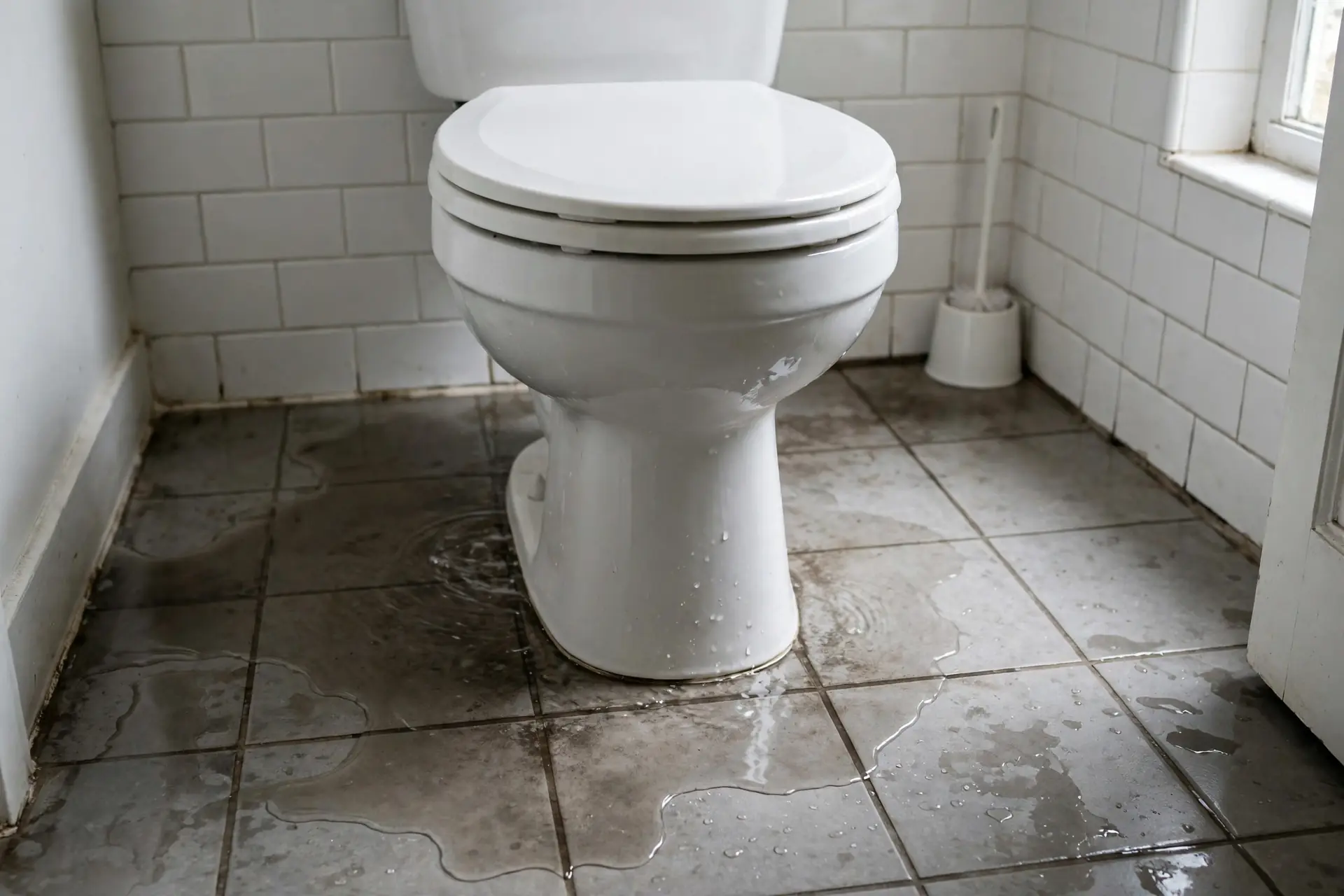 Before
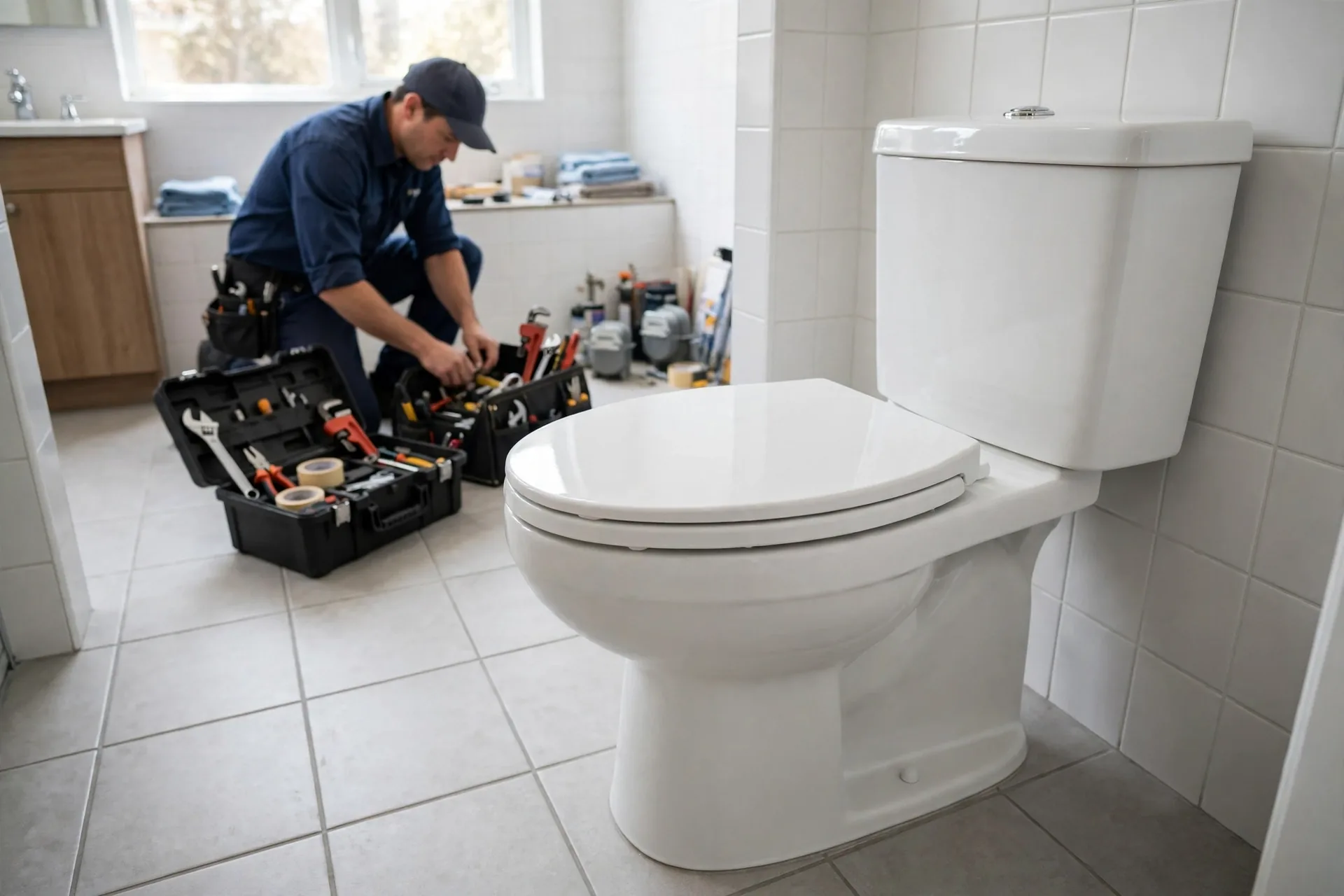 After
What to Do Before the Pro Arrives
These steps protect the floor and speed up the visit.
Shut off the water if it is actively leaking. Only if water is actively leaking onto the floor. Turn the shutoff valve behind the toilet clockwise to stop the flow. If the valve is stuck or missing, shut off the home’s main valve instead.
Mop up standing water. Towels on the floor keep water out of the subfloor while you wait. Note where the water appears: at the base, at the supply line, or from the tank.
Clear the area around the toilet. Move rugs, scales, and baskets so the plumber can lift the toilet and reach the shutoff valve without delay.
Note the symptoms. Running, phantom flushes, weak flushes, or clogs all point the plumber in the right direction. Tell them when it started and what changed.
Do not keep flushing a leaking base. Every flush can push more water under the toilet. Wait for the reset, then test with the plumber.
Check the floor for soft spots. Press around the base gently. Soft or spongy flooring hints at subfloor rot from a long leak. Tell the plumber before work starts.
Toilet Repair FAQs
Why does my toilet keep running after I flush?
Most often the flapper inside the tank is worn and no longer seals, so water keeps draining into the bowl and the fill valve keeps running to replace it. A plumber replaces the flapper, and usually checks the fill valve at the same time. The fix takes minutes and is one of the cheapest repairs you can get.
Is water around the base of the toilet an emergency?
It needs quick attention. Water at the base usually means the wax ring seal has failed, and every flush can push water under the toilet and into the subfloor. That leads to rot and mold. A local plumber can lift the toilet, fit a new wax ring, and reset the toilet, often the same day you call.
Can a cracked toilet be repaired?
No. Porcelain cracks cannot be patched in a way that stays safe under water pressure and daily use. A cracked tank or bowl will eventually leak or break further. The right move is a replacement toilet, which a local plumber can supply and install in a single visit.
Why does my toilet clog so often?
Frequent clogs with normal use usually mean something deeper: a trapped object, mineral buildup narrowing the trapway, or a partial blockage in the drain line. A plumber snakes the toilet trap first. If the problem sits further down the line, drain cleaning or a camera inspection finds it.
How long do toilet repairs take?
Most take 30 to 60 minutes. A flapper or fill valve swap is quick. A wax ring reset takes longer because the plumber must drain the tank, lift the toilet, clean the flange, and set everything back level. Either way, you get a working toilet the same visit.
Should I repair my old toilet or replace it?
Repair makes sense when the toilet body is sound and only the inside parts are worn. Replace it when the porcelain is cracked, the toilet is very old and uses 3.5 gallons or more per flush, or repairs keep piling up. A new high-efficiency toilet can cut water use in half, which shows up on your bill every month.
Do I need to shut off the water before the plumber arrives?
Only if water is actively leaking onto the floor. Turn the shutoff valve behind the toilet clockwise to stop the flow. If the valve is stuck or missing, shut off the home’s main valve instead. Then call (888) 418-3086 and we will connect you with a local plumbing pro.
Why does my toilet flush by itself?
That is a phantom flush: a slow leak from the tank into the bowl through a flapper that no longer seats flat, or mineral buildup on the flush valve seat. The plumber replaces the flapper and cleans or reseats the valve.
What causes a rocking toilet?
A loose bolt, a worn wax ring, or a soft subfloor. The plumber tightens or replaces the flange bolts, resets the seal, and checks the floor underneath for rot. Do not ignore rocking: movement breaks the seal further with every use.
Can a sweating tank be fixed?
Yes. In humid weather, cold tank water makes condensation drip onto the floor. A plumber can fit a tank liner or an anti-sweat valve that mixes warm water into the tank.
What if the clog is deeper than the toilet trap?
If snaking the trap does not clear it, the blockage sits further down the drain line. Drain cleaning or a camera inspection finds it. Tell the plumber if other fixtures drain slowly too, since that points to a line problem rather than the toilet itself.
More Bathroom Help
Bathroom Plumbing | Drain Cleaning | Leak Detection | Emergency Plumber
A Running Toilet Wastes Water Every Hour It Runs.
Call now and we will connect you with an independent local plumber who fixes toilets every day and prices the job before work starts.
(888) 418-3086 Call NowThe Deston is a referral service that connects homeowners with independent local plumbers. We are not a plumbing company.