
Bathroom Plumbing
Behind every toilet, shower, tub, and sink sits one connected system. When one part of that system struggles, the fixtures you use every day feel it. We connect you with a local pro who sees the whole system, not just one fixture.

Your Bathroom Works as One System
Supply lines bring fresh water in. Drain lines carry waste out. Vent pipes let air in so the drains flow right. A toilet, a shower, a tub, and a sink may look like separate fixtures, but they share pipes, vents, and pressure. A fault in the shared parts shows up at more than one fixture at the same time.
The Deston is a nationwide referral service that connects homeowners with independent local plumbers who work on whole bathroom plumbing every day. We are not a plumbing company. We introduce you to a nearby pro who understands how the full system fits together, and we serve homeowners across all 50 states.
That whole system view matters when you choose a fix. A single slow drain may need a simple clearing. Slow drains at every fixture point to a shared branch line or a blocked vent. A pro who checks the system finds the real cause, so you pay for one correct repair instead of a string of fixture fixes that never hold.
Signs Your Bathroom Plumbing Needs Attention
Single fixture trouble usually means a single fixture fix. These signs point to the system behind the fixtures.
Several drains run slow at once
When the tub, the sink, and the shower all drain slowly, the shared drain line or the main branch is restricted, not each fixture. Clearing one drain will not help for long when the blockage sits downstream of them all.
Gurgling from drains or the toilet
Gurgling means air is trapped in the drain system. A blocked vent or a partial clog forces air to bubble up through the nearest trap. The sound often shows up when a nearby fixture drains, which is a strong clue about where the trouble sits.
Sewer smells in the bathroom
A dry trap, a cracked vent, or a failing wax ring lets sewer gas into the room. The smell often comes and goes with wind and water use, which makes it easy to dismiss. A pro checks each source in turn until the smell is traced to its cause.
Low pressure at every fixture
Weak flow at the sink, the shower, and the tub points to the supply side. Corroded lines, a failing pressure regulator, or a partly closed main valve can all starve the whole room. Testing pressure at one tap tells the pro a lot about the rest.
Water stains on the ceiling below
A stain under the bathroom means a supply or drain leak in the floor cavity. The longer it runs, the bigger the repair grows, since water soaks framing, subfloor, and ceilings. A stain that keeps growing needs a prompt look, even if no drip is visible.
Pipes bang when water stops
Water hammer shakes the supply lines and stresses joints each time a fast closing valve snaps shut. Arrestors or pressure correction calm it before a joint gives way. Banging that is new, or getting louder, is worth a check rather than a shrug.
How Bathroom Plumbing Work Gets Done
System work follows a clear order. The pro proves the cause first, then prices the fix.
- 1
You describe the pattern
Tell the plumber which fixtures are affected and when the trouble shows up. Patterns like every drain slowing at once tell the pro where to look first, and they save diagnostic time on site.
- 2
The whole bathroom gets assessed
The pro runs each fixture, listens to the drains, checks water pressure, and looks under sinks and around toilets for active leaks. This full pass catches linked faults that a one fixture visit would miss.
- 3
Drains get camera checked when needed
For repeat clogs or slow drains across fixtures, a small camera goes into the line to show breaks, bellies, or root intrusion. Seeing the pipe beats guessing, and it keeps the repair plan honest.
- 4
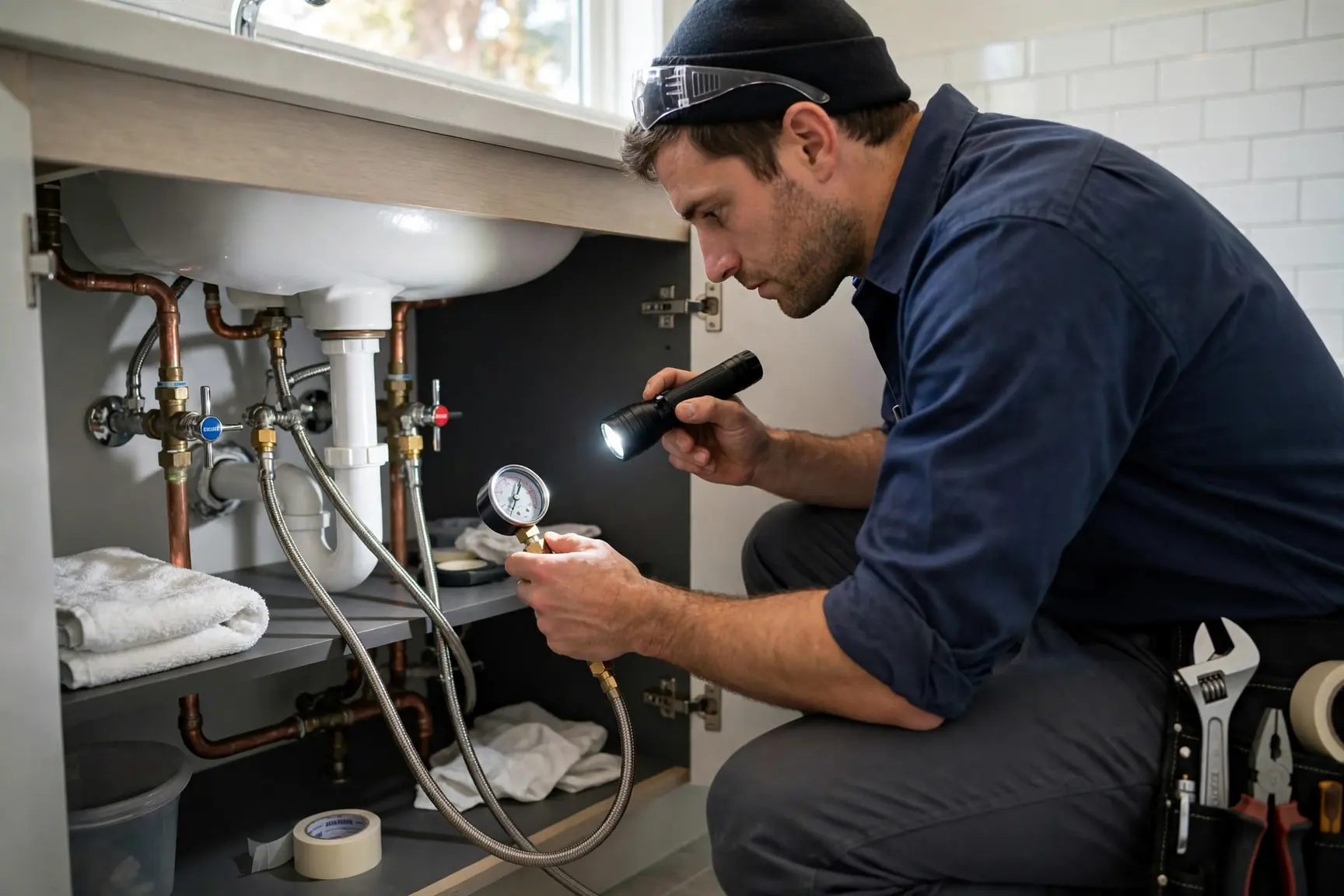
Supply pressure gets tested
A gauge on a hose bib or laundry tap shows whether house pressure is high, low, or swinging. The pro traces the cause from there, since pressure faults harm every valve and joint in the room.
- 5
Vents get checked
The plumber confirms each fixture has a working vent path. A vent blocked by debris or a nest causes the gurgling and slow drains homeowners often blame on clogs. Vents are a cheaper fix than a drain rebuild, so they get checked early.
- 6
You get a plan with an upfront price
System work can be phased. The pro explains what must happen now, what can wait, and the price of each phase before any work begins. After repairs, every fixture gets tested together to prove the system handles real use.
Three Networks, One Room
Supply lines carry pressurized fresh water to each fixture. In older homes these lines may be galvanized steel, which corrodes from the inside and chokes flow over decades. Newer homes often use copper or PEX. Each material has its place, and a pro picks based on your water, your home, and local code.
Drain lines carry waste away by gravity, which is why slope matters so much. Too flat and waste sits in the pipe. Too steep and water outruns the solids, leaving them behind. Either fault causes repeat clogs that no amount of drain cleaner will fix for good.
Vent pipes are the part most homeowners never see. Each fixture needs a vent path to the roof so air can follow water down the line. Without air, draining water creates suction that pulls water out of the traps under your fixtures. Empty traps let sewer gas into the room and cause the gurgling you hear. When a pro says the vent is the fault, that is often good news, since vent fixes are usually simpler than drain rebuilds.
Bathroom Plumbing Systems and Options
Here is what a local pro can upgrade, correct, or build out in your bathroom.
Supply line upgrades
Old galvanized or corroded supply lines choke water flow from the inside. Replacing them with PEX or copper restores full pressure to every fixture. PEX installs faster and costs less. Copper lasts for generations and handles heat well.
Drain and vent corrections
Correcting slope and venting fixes chronic slow drains and gurgling for good. Drains need the right slope and vents need a clear path to the roof so air follows water down the line. These corrections end the cycle of repeat clogs.
Full rough-in for remodels
Adding a bathroom or moving fixtures means running new supply, drain, and vent lines before the walls close. The plumber sets stub-outs at exact heights for each fixture so the finish work lands perfectly and inspections pass.
What Bathroom Plumbing Costs
System work varies more than fixture work because every house is different. Figures below are United States national averages for reference only.
| Job | Typical range |
|---|---|
| Supply line replacement, one bathroom | $1,000 to $3,000 |
| Vent or drain line section correction | $500 to $2,000 |
| Full rough-in, new bathroom, before fixtures | $3,000 to $8,000 |
| Pressure regulator testing and replacement | Priced on site, varies by access |
| Shutoff valve additions, per fixture | Priced on site, small added cost |
Before and After: Bathroom Plumbing
System work shows in how the room looks and how it behaves. The pair below shows that change.
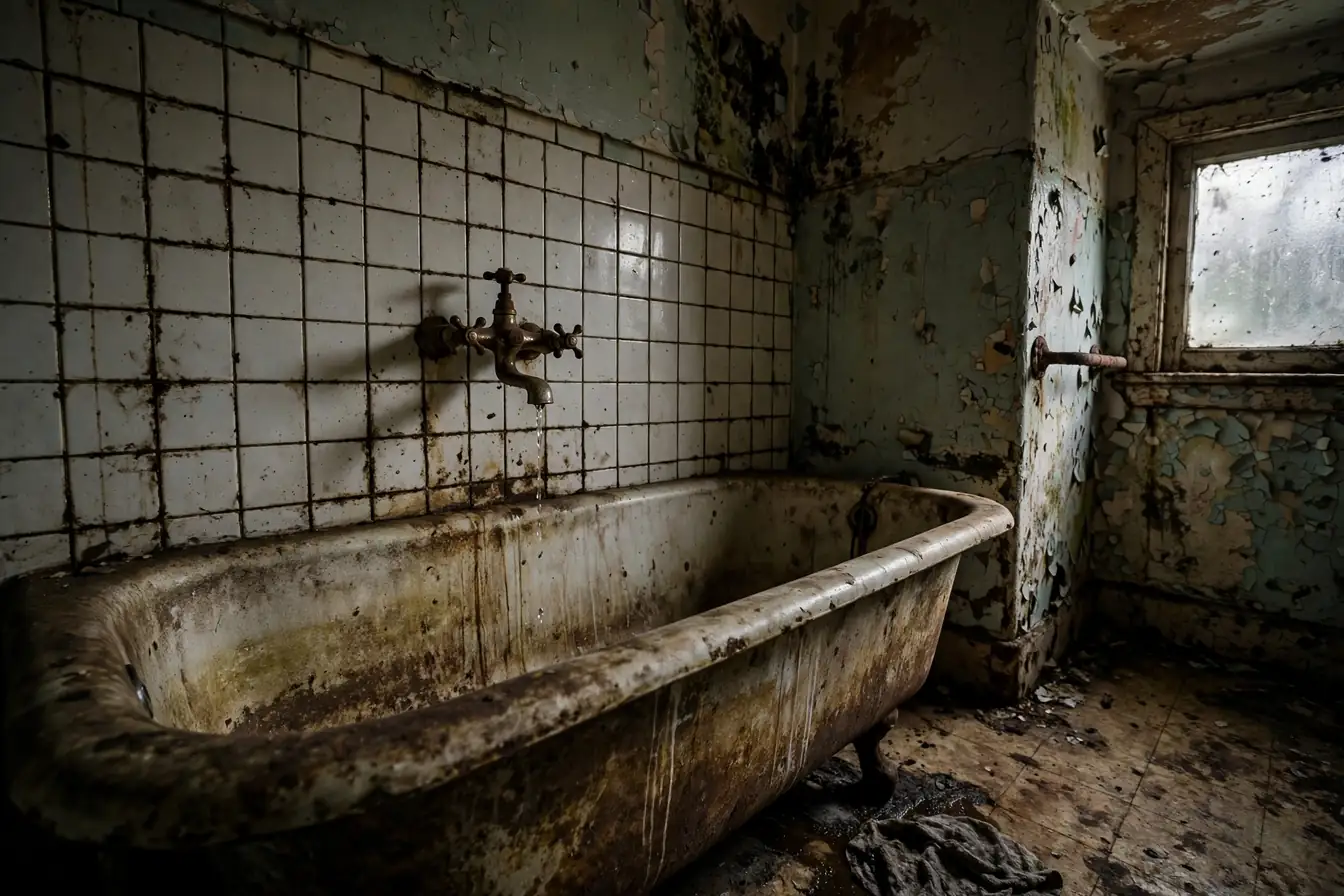 Before
 After
The photos above are illustrations that show the kind of change this work brings. They are not photos of a real job.
Preparing for Bathroom Plumbing Work
A little prep keeps the visit smooth and the diagnosis fast.
Note the pattern. Write down which fixtures are affected, when trouble shows up, and what you have already tried. Patterns help the pro find the cause faster.
Clear under sinks and around toilets. Move stored items so the pro can reach shutoffs, traps, and supply lines without delay.
Know where your main shutoff sits. If a leak starts during diagnosis, a fast shutoff limits damage. Ask the pro to show you if you are unsure.
Plan for a short water shutoff. Most system checks and repairs need water off for part of the visit. Fill a few jugs and hold off on laundry until the pro says the system is back.
Point out past repairs. Tell the pro about prior leaks, clogs, or remodel work. Old repairs often explain new faults.
Keep pets and kids clear. Open pipes, tools, and test water make the work area unsafe for wandering. A closed room works well.
Frequently Asked Questions
Why do all my bathroom drains run slow at the same time?
Shared trouble means a shared cause. Either the branch drain serving the bathroom is restricted, or a vent is blocked so air cannot follow the water down. A plumber checks the vent first because it is the cheaper fix, then cameras the drain line if the vent is clear. Fixing the shared cause once beats clearing each fixture again and again.
What does a vent pipe actually do?
It lets air into the drain system. Without air, draining water creates suction that pulls water out of the traps under your fixtures. Empty traps let sewer gas into the room and cause the gurgling you hear. Every fixture needs a vent path to work right, and a blocked vent can mimic a clog at every fixture at once.
Can I move my toilet during a remodel?
Often yes, within limits. The toilet drain is large and needs a steady downward slope to the main line, plus proper venting. Moves of a few feet are usually simple. Moves across the room can mean cutting the floor and re-running the line. A plumber maps it before you finalize the layout, so you do not plan a move the pipes cannot support.
How long does a full bathroom rough-in take?
A rough-in for a standard bathroom usually takes two to four days of plumbing work, plus inspection time. The plumber runs supply, drain, and vent lines and sets stub-outs for each fixture. Finish work like setting the toilet and shower happens after the walls are done and inspections pass.
Why does my bathroom smell like sewer sometimes?
The most common causes are a dry trap in a rarely used shower or sink, a failed wax ring under the toilet, or a cracked vent pipe. The smell comes and goes because wind and water use change the air pressure. A plumber finds the source by checking each possibility in turn, starting with the simplest. Running water in a rarely used fixture often refills a dry trap and ends the smell at once.
Is PEX or copper better for bathroom supply lines?
Both are proven. PEX costs less, installs faster, and resists freeze damage better. Copper lasts for decades, handles high heat, and is fully recyclable. Many plumbers use PEX for most runs and copper where it shows. Your water chemistry and local code help decide, and a good pro explains the trade off for your home.
Do I need new shutoff valves?
If your existing valves are frozen, corroded, or missing, yes. Quarter turn ball valves at each fixture let you stop water locally during future repairs. Plumbers often add them during any bathroom plumbing project because the added cost is small and the future convenience is large. A working shutoff also limits damage when a fixture line fails.
What causes water hammer in bathroom pipes?
Water hammer happens when a fast closing valve snaps shut and the moving water has nowhere to go. The shock wave shakes supply lines and stresses joints. Arrestors absorb that shock, and correcting high house pressure helps too. Banging that starts after a new fixture install often points to a valve that closes faster than the old one did.
Should I fix one fixture or the whole system?
If trouble is limited to one fixture, you may not need system work at all. A single dripping faucet or a single slow sink is a fixture job. When several fixtures share trouble, or when pipes are old and corroded throughout, system work saves repeat visits. A pro who assesses the whole room can tell you which case you are in.
Do bathroom plumbing jobs need permits?
Most cities require permits for new or moved plumbing, and inspections happen before walls close. Simple fixture swaps often do not need a permit, but rough-in work, moved drains, and new vent runs usually do. Your matched plumber pulls the permit and schedules the inspection as part of the job.
How do I stop repeat clogs across fixtures?
Repeat clogs across fixtures point to slope, venting, or line damage rather than user habits. A camera check shows which one it is. Correcting slope or venting ends the cycle, while repeated clearing only buys a few weeks. If the camera shows a damaged line, the pro will lay out repair options with prices before any work starts.
More Plumbing Help
Bathtub Installation|Toilet Installation|Shower Installation|Leak Detection|All Services
Your Bathroom Deserves a Pro Who Sees the Whole System.
One call connects you with a local plumber who checks supply, drain, and vent together and prices the fix upfront. Call now and describe the pattern you are seeing.
(888) 418-3086 Call NowThe Deston is a referral service that connects homeowners with independent local plumbers. We are not a plumbing company.