
PEX Repiping
PEX is the flexible plastic tubing that has taken over residential repiping. It bends around corners, snakes through walls with few joints, and installs in a fraction of the time copper takes. If your home needs new supply lines, PEX is probably the material your plumber will suggest first, and for most houses it is the right call.

PEX Repiping for Whole Homes
PEX is not perfect. It cannot sit in sunlight. Rodents can chew it. And some homeowners simply prefer metal pipe. Knowing the real tradeoffs keeps you from buying on hype or rejecting it on rumor.
The Deston is a nationwide referral service. We connect homeowners with independent local plumbers in all 50 states. We are not a plumbing company and we do not employ technicians. Call (888) 418-3086 and we will match you with a local pro who does PEX repipes. That plumber inspects your home and gives you upfront pricing.
The savings come from speed and material. Flexible tubing threads through framing with fewer wall openings, which cuts labor hours and drywall repair. The tubing and fittings themselves cost far less than copper pipe and soldered fittings. In most markets, a PEX repipe costs roughly half what the same house would cost in copper.
Signs You Need PEX Repiping
When repairs stop holding, the system is worn everywhere.
Galvanized steel near the end of its life
Dull gray threaded pipe over 40 years old is a repipe waiting to happen. PEX is the most cost-effective way to replace it.
Polybutylene pipe in the walls
Gray plastic pipe installed from the late 1970s to the mid-1990s is notorious for sudden failure. Many insurers dislike it. Replacing polybutylene with PEX is one of the smartest upgrades a homeowner can make.
Leaks multiplying across the house
When repairs stop holding because the system is worn everywhere, a full PEX repipe ends the cycle in days instead of dragging it out leak by leak.
Freezing problems every winter
PEX expands slightly when water freezes inside it, so it survives freeze cycles far better than rigid pipe. Homes with a history of burst pipes in winter are strong PEX candidates.
Remodeling with walls already open
If a renovation has exposed the framing, running new PEX lines costs little extra. It is the ideal moment to retire old pipe.
Water quality complaints tied to old pipe
Rusty water, metallic taste, and low pressure from scaled galvanized lines all disappear when the old metal comes out and PEX goes in.

How PEX Repiping Works
Plan the layout, pick the type, fixed quote, run the lines, test every fixture.
- 1
Get connected to a PEX installer
Call (888) 418-3086. The Deston matches you with an independent local plumber who repipes with PEX regularly. Ask which PEX type and fitting system they use, since methods vary.
- 2
Plan the manifold or branch layout
The plumber designs the system two ways. A manifold, or home-run, layout runs a dedicated line from a central panel to each fixture. A branch layout follows the old trunk-and-branch pattern. Manifolds cost a bit more but give even pressure and let you shut off one fixture at a time.
- 3
Choose PEX type and fittings
PEX-A is the most flexible and uses expansion fittings that grow stronger as the pipe contracts around them. PEX-B is slightly stiffer and uses crimp fittings. Both are code-approved. Your plumber will have a preference based on experience.
- 4
Receive a fixed quote
PEX repipes cost less than copper because the material is cheaper and the install is faster. The quote should still be fixed and detailed: PEX type, fitting system, fixture count, permits, and drywall patching.
- 5
Run the new lines
The crew fishes flexible tubing through walls, attics, and crawl spaces with far fewer openings than rigid pipe needs. Connections get made at the manifold and at each fixture. Water stays off during work hours and returns each evening.
- 6
Test every fixture
The system is pressurized and each line checked. The plumber runs hot and cold at every tap, shower, and appliance connection with you watching. Then patched drywall and a final walkthrough close out the job.
The Honest Downsides of PEX
PEX breaks down in UV light, so it cannot run outdoors or where sunlight hits it. Rodents can chew through it in some cases. It has a shorter track record than copper, about 30 years in North American homes versus 70 plus for copper. Some buyers still prefer metal pipe, which can matter at resale. None of these are hidden catches: they are the known limits, and a good plumber designs around them by keeping PEX indoors, protected, and away from sunlit runs.
Proper installation matters more than the type: kinks, UV exposure, and bad fittings shorten life. That is why the quote should name the PEX type and fitting system, and why the test at the end runs every fixture with you watching. A repipe is a whole-house job, and the closeout walkthrough is where sloppy runs show up.
Will a PEX repipe lower my water pressure? It usually improves it. Old scaled or corroded pipe restricts flow. New properly sized PEX restores full flow. A manifold layout can make pressure even steadier by giving each fixture its own dedicated line, so a shower does not sag when a toilet flushes.
PEX also runs quieter than copper, with less water hammer noise, and it does not corrode or develop pinholes from water chemistry. Those are the reasons it wins for most houses, even with the limits above. The right question is not whether PEX is perfect, but whether your house fits its strengths: indoor runs, freeze risk, and a budget that favors speed.
PEX Types and Layout Options
Ask which type and fitting system the quote covers.
PEX-A with expansion fittings
The premium PEX setup. The tubing is the most flexible of the three types, and expansion fittings create connections that tighten as the pipe memory pulls back around them. Many repipe specialists prefer this combination.
PEX-B with crimp fittings
A proven and widely used option. Slightly less flexible than PEX-A, joined with copper crimp rings. It costs a bit less and has decades of field history behind it.
PEX-C and manifold versus branch
PEX-C is less common in repipes. It works fine where code allows, but most residential specialists standardize on A or B. If a quote specifies PEX-C, ask why. A manifold panel gives each fixture its own line, which means steadier pressure and individual shutoffs. A branch layout reuses the old routing pattern and costs less. For most families, the manifold is worth the modest premium.
What PEX Repiping Costs
Figures below are United States national averages for reference only. Your local plumber quotes a fixed upfront price.
| Job | Typical range |
|---|---|
| Typical single-family home PEX repipe | $4,000 to $10,000 |
| One-bath homes | May come in under $4,000 |
| Larger two-story homes with many fixtures | Toward the top of the range |
| Same house in copper | Roughly double the PEX cost in most markets |
| Manifold layout premium | Adds some cost, improves performance |
Before and After: PEX Repiping
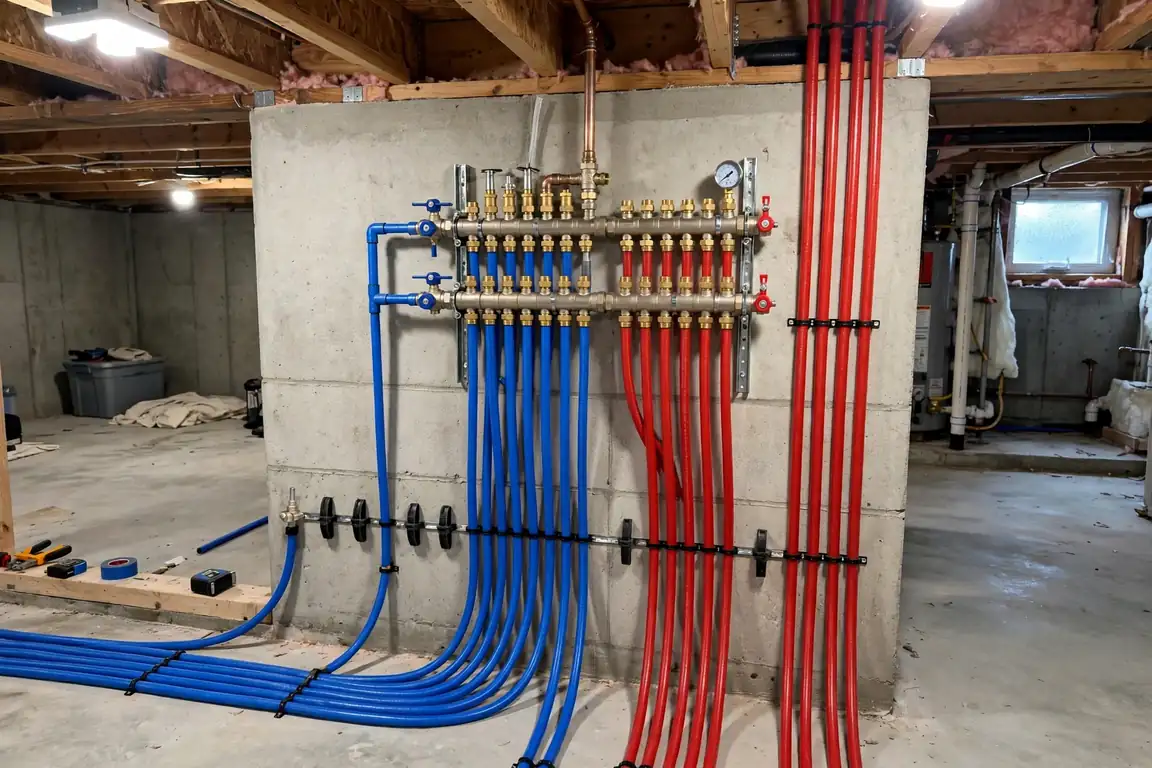
Scaled old metal out, clean PEX manifold in.
 Before
 After
The photos above are illustrations that show the kind of change this work brings. They are not photos of a real job.
Preparing for a PEX Repipe
A little prep keeps a multi-day job on schedule.
Know your current pipe. Galvanized, polybutylene, or copper: the old material shapes the plan.
Count your fixtures. The quote follows fixture count, so list every tap, shower, and appliance.
Ask about PEX type and fittings. A or B, expansion or crimp: the quote should name both.
Plan for water off during work hours. Water returns each evening, but daytime use is limited.
Clear access to walls and the manifold spot. Move stored items from utility walls and crawl spaces.
Ask for the warranty in writing. Tubing warranty plus labor warranty, both named in the quote.
Frequently Asked Questions
What are the real advantages of PEX over copper?
PEX costs much less installed. It goes in faster with fewer wall openings. It resists freeze damage better because it can expand. It does not corrode or develop pinholes from water chemistry. It also runs quieter than copper, with less water hammer noise.
What are the honest downsides of PEX?
PEX breaks down in UV light, so it cannot run outdoors or where sunlight hits it. Rodents can chew through it in some cases. It has a shorter track record than copper, about 30 years in North American homes versus 70 plus for copper. Some buyers still prefer metal pipe, which can matter at resale.
Is PEX safe for drinking water?
Yes. PEX tubing certified to NSF standards is approved for potable water in all 50 states. Some homeowners notice a slight plastic taste for the first days after install. It fades quickly. If it concerns you, run each tap for a few minutes before use.
Which is better, PEX-A or PEX-B?
Both are code-approved and perform well. PEX-A is more flexible and pairs with expansion fittings that many specialists trust most. PEX-B is a bit stiffer, uses crimp rings, and costs less. Either one will serve a home well for decades when installed correctly.
Can PEX be used for the main water line from the street?
Usually not. Most codes require sturdier materials underground, and PEX cannot handle UV exposure where the line enters the house. Underground service lines typically use copper, PVC, or HDPE. Ask your plumber what your local code allows.
How long does PEX last?
Manufacturers rate PEX tubing for 40 to 50 years, and warranties often run 25 years. Real-world North American history goes back to the 1980s with strong results. Proper installation matters more than the type: kinks, UV exposure, and bad fittings shorten life.
Will a PEX repipe lower my water pressure?
It usually improves it. Old scaled or corroded pipe restricts flow. New properly sized PEX restores full flow. A manifold layout can make pressure even steadier by giving each fixture its own dedicated line.
Manifold or branch layout: which should I pick?
A manifold gives each fixture its own line, which means steadier pressure and individual shutoffs. A branch layout reuses the old routing pattern and costs less. For most families, the manifold is worth the modest premium.
Can PEX run outdoors?
No. PEX breaks down in UV light, so it cannot run outdoors or where sunlight hits it. Outdoor runs need other materials, and the pro will plan the transition at the wall.
What about rodents chewing PEX?
Rodents can chew through it in some cases. The risk is highest in crawl spaces and attics with known rodent activity. The pro can route around hot spots and advise on protection where the risk is real.
Does a PEX repipe hurt resale?
Some buyers still prefer metal pipe, which can matter at resale. But a documented repipe with a named PEX type, a manifold panel, and a written warranty reads as a maintained home, not a shortcut. Keep the quote and warranty with your home records.
How long does a PEX repipe take?
A full repipe ends the leak cycle in days instead of dragging it out leak by leak. The crew fishes tubing through walls with far fewer openings than rigid pipe needs, and water returns each evening during the job.
Should I repipe during a remodel?
Yes, if walls are already open. Running new PEX lines costs little extra when framing is exposed, and it is the ideal moment to retire old pipe before it fails behind finished walls.
What does the fixed quote need to cover?
PEX type, fitting system, fixture count, permits, inspections, drywall patching, and the labor warranty. A quote missing any of those is not fixed yet.
More Plumbing Help
Copper Repiping|Repiping Services|Pipe Repair|Plumbing Repair|All Services
End the Leak Cycle in Days, Not Years.
One call connects you with a local PEX repipe pro who inspects your home, names the PEX type and fittings, and quotes a fixed upfront price. Call now.
(888) 418-3086 Call NowThe Deston is a referral service that connects homeowners with independent local plumbers. We are not a plumbing company.