
Copper Repiping
Copper has carried household water for nearly a century. It is the pipe most plumbers learned on and the material many homeowners ask for by name. Copper repiping replaces your home supply lines with new copper pipe and fittings, giving you a system with a proven track record measured in decades.
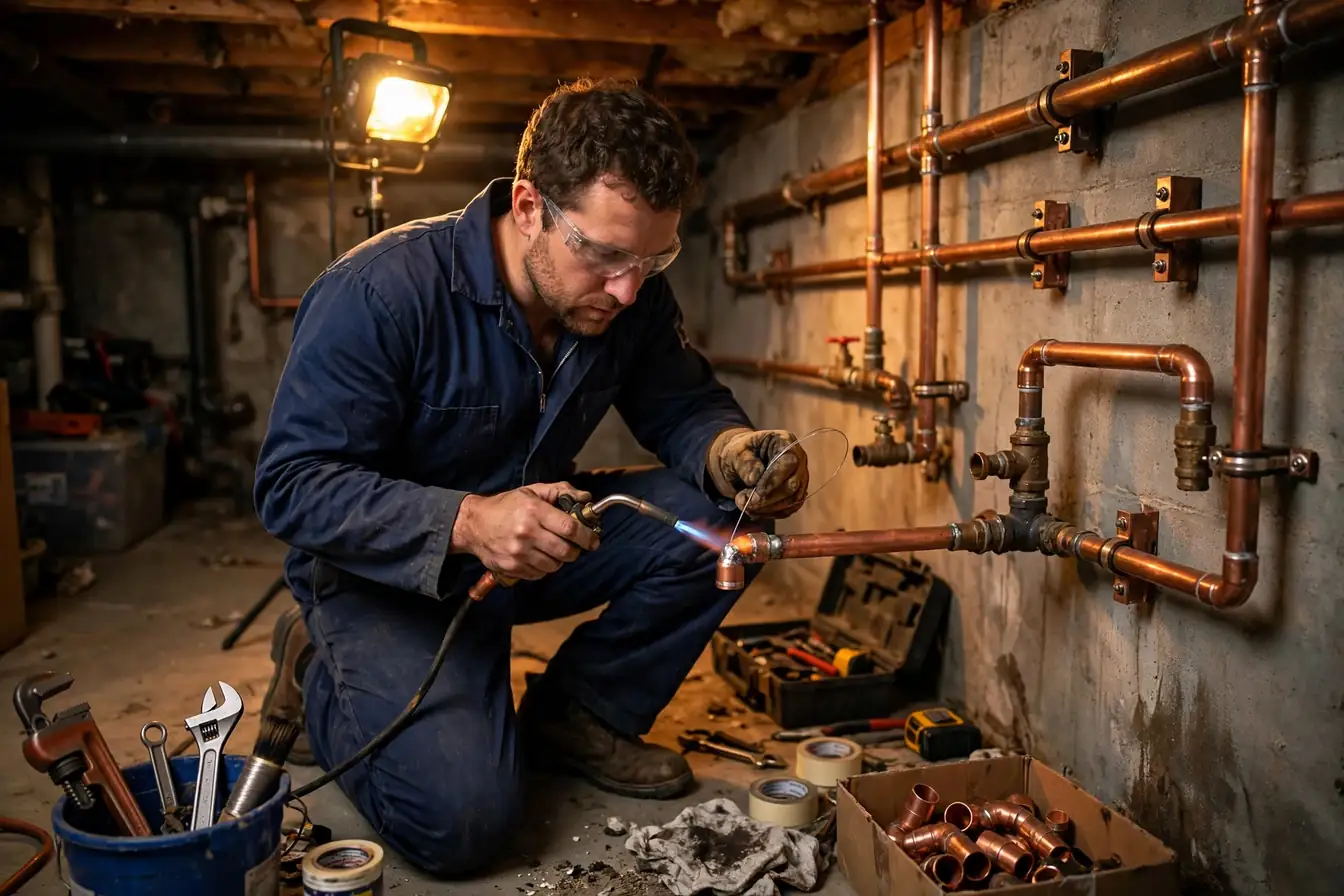
Copper Repiping, Done Right
Copper repiping replaces your home supply lines with new copper pipe and fittings. The crew routes new lines through the attic, crawl space, or walls, solders each joint by hand, pressure tests the system, and restores water each night during the job. The result is a supply system with a track record measured in decades, not years.
The Deston is a nationwide referral service that connects homeowners with independent local plumbers in all 50 states. We are not a plumbing company and we do not employ technicians. Call (888) 418-3086 and we will match you with a local pro who does copper repipes, inspects your home, tests your water if needed, and gives you upfront pricing.
Copper is not the right answer for every home. It costs more than the alternatives, and certain water conditions can shorten its life. An honest look at both sides helps you decide, and the water test before a repipe is what keeps a new copper system from meeting the same fate as the old one.
Signs You Need Copper Repiping
These signs point to supply lines at the end of their useful life.
Galvanized pipes past their prime
If your home still runs on galvanized steel, copper is the classic upgrade. Homeowners replacing old steel often choose copper for its long history and familiar feel, and for the clean pressure it restores.
Recurring pinhole leaks in old copper
Existing copper that has developed pinholes from aggressive water or age will keep leaking. New copper with proper installation and a water check can break the cycle, though your plumber should confirm your water suits copper first.
Green corrosion on visible lines
Heavy green crust and pitting on exposed copper in the basement or crawl space shows the metal is under attack. Replacement beats another patch, since patched sections fail beside the patch.
You want the longest documented lifespan
Copper supply lines routinely last 50 to 70 years. If you plan to stay in the home for decades, copper track record is unmatched by any material with a shorter history.
High heat near water lines
Copper handles hot water and high temperatures without any concern. Homes with recirculating hot water systems or very hot water heater settings suit copper well, since heat never softens the pipe.
Resale in a market that values copper
In some areas, buyers and inspectors view copper as the premium system. If you may sell within a few years, copper can be a selling point worth the extra cost, and it reads well on an inspection report.

How Copper Repiping Works
Water test first, fixed quote second, soldered joints and a pressure test last.
- 1
Connect with a copper specialist
Call (888) 418-3086. The Deston matches you with an independent local plumber experienced in copper repipes. Soldering clean, leak free joints is a skill, so ask about their copper experience specifically.
- 2
Water and home assessment
The plumber checks your water chemistry, since acidic or aggressive water can pit copper. They map fixtures, count bathrooms, and plan routes through the attic, crawl space, or walls.
- 3
Choose the copper type
Type M is the thinnest and most common for residential repipes. Type L is thicker and often used for higher pressure or commercial work. Your plumber will recommend one based on local code and your water pressure.
- 4
Get a fixed quote
Copper costs more in materials than plastic alternatives, and soldering takes more labor hours. The quote should be a fixed price covering pipe, fittings, permits, and drywall patching. Ask about the workmanship warranty terms.
- 5
Installation day by day
The crew shuts off water during work hours and restores it each night. They cut, fit, and solder each joint, then mount the lines securely. Good plumbers keep the work area clean and protect your floors.
- 6
Pressure test and walkthrough
The new copper system gets filled and pressure tested. Every joint is inspected for weeps. The plumber runs each fixture with you, checks hot and cold, and confirms pressure is even throughout the house.
The Honest Downsides of Copper
Cost is the big one, often double the price of a PEX repipe. Copper material alone can cost two to three times what PEX material costs for the same house, and every joint is measured, cleaned, fluxed, and soldered by hand. That craftsmanship takes time, and time costs money.
Acidic or aggressive water can cause pinhole leaks in copper. In good water conditions, 50 to 70 years is realistic. In aggressive water, pinholes can appear in 15 to 20 years. This is why a water test before repiping matters so much, and why a neutralizer or softener may be part of the plan.
Copper can also develop pinholes from high water velocity or leftover flux, and in freezing weather, rigid copper splits more readily than flexible PEX. None of these faults make copper a bad material. They make water testing, correct sizing, and clean soldering essential parts of the job.
On the plus side, copper resists UV light, so it can run where sunlight hits. It handles high heat without worry. It is fully recyclable, which matters to some homeowners. New copper can give water a slight metallic taste for the first weeks, which fades as the pipe interior develops a stable layer.
Copper Types and Options
Three grades exist. Most homes use the first two.
Type M copper
The standard for most residential repipes. Thinner walls keep material costs down while still meeting code for home water pressure. It is the most common choice when a plumber quotes a copper repipe.
Type L copper
Thicker walls and higher pressure ratings. Often chosen for larger homes, homes with high municipal water pressure, or owners who want extra margin. It costs more per foot than Type M.
Type K and water treatment
Type K is the thickest, mainly used underground for service lines rather than indoor repipes. If your water tests acidic or aggressive, a plumber may recommend a neutralizer or softener alongside the repipe, protecting new copper from the same water chemistry that killed the old pipe.
What Copper Repiping Costs
Figures below are United States national averages for reference only.
| Job | Typical range |
|---|---|
| Copper repipe, typical single family home | $8,000 to $20,000 or more |
| Small one bath home | Near the low end of the range |
| Larger two story home, many fixtures | Toward the high end of the range |
| Type L upgrade over Type M | Priced on site, real but not enormous difference |
| Water neutralizer or softener, if needed | Priced on site, varies by system |
Before and After: Copper Repiping
The change is hidden in walls, but visible wherever lines run open. The pair below shows it.
 Before
 After
The photos above are illustrations that show the kind of change this work brings. They are not photos of a real job.
Preparing for Copper Repiping
A repipe touches every room with water. A little prep keeps it smooth.
Clear access to attics and crawl spaces. Move stored items away from access hatches so crews can route lines without delay.
Know your fixture count. Count bathrooms, kitchens, laundry, and hose bibs. The count shapes the quote and the material order.
Ask for a water test first. Insist the quote covers water chemistry testing, since aggressive water changes the material call.
Plan for nightly water restoration. Crews restore water each night, but daytime shutoffs are normal. Fill jugs each morning.
Protect floors along the routes. Crews lay protection, but move rugs and fragile items from hallways and work paths.
Get the full scope in writing. Confirm copper type, permits, inspections, and drywall patching are all in the fixed price.
Frequently Asked Questions
What are the real advantages of copper over PEX?
Copper has a 70 plus year track record in homes. It resists UV light, so it can run where sunlight hits. It handles high heat without worry. Many buyers perceive it as premium. It is also fully recyclable, which matters to some homeowners.
What are the honest downsides of copper?
Cost is the big one, often double the price of a PEX repipe. Installation takes longer because every joint is soldered. Acidic or aggressive water can cause pinhole leaks in copper. Copper can also develop pinholes from high water velocity or leftover flux. In freezing weather, rigid copper splits more readily than flexible PEX.
How long does new copper pipe last?
In good water conditions, 50 to 70 years is realistic. In aggressive water, pinholes can appear in 15 to 20 years. This is why a water test before repiping matters. Good water plus good installation equals a system your grandchildren could inherit.
Is Type M or Type L better for my home?
Type M meets code for most homes and costs less. Type L offers thicker walls and more margin against corrosion and pressure. If your municipal pressure runs high or you simply want the sturdier pipe, Type L is worth discussing with your plumber. The price difference is real but not enormous.
Can copper pipes cause green stains in sinks?
Green or blue green stains come from copper corrosion, usually where water is acidic. If you see these stains now, test your water before repiping with copper again. A neutralizer may be needed, or PEX may be the smarter material for your water.
Does copper affect water taste?
New copper can give water a slight metallic taste for the first weeks. It fades as the pipe interior develops a stable layer. Persistent metallic taste points to ongoing corrosion and deserves a water test.
Is soldering safe inside my walls?
Professional plumbers solder safely every day. They use heat shields, keep a fire extinguisher within reach, and check the area after each joint. This is another reason to hire an experienced copper installer rather than a generalist.
How long does a copper repipe take?
Most single family repipes take several days of work, with water restored each night. Larger two story homes take longer, and drywall patching adds time after the pipes are in. Your plumber gives a schedule with the fixed quote.
Will my walls be opened everywhere?
Not everywhere. Crews route through attics and crawl spaces where possible and open walls only where lines must pass. Patching is part of the scope to confirm in writing, and paint touch up is often left to the homeowner.
Should I repipe with copper or PEX?
Copper wins on track record, heat tolerance, and resale perception. PEX wins on cost, speed, and freeze tolerance. Water chemistry often decides: aggressive water that pits copper argues for PEX, while a home with high heat needs argues for copper. Compare both guides before you commit.
Does a repipe need permits and inspections?
Most cities require permits for a full repipe, and inspections happen before walls close. Your matched plumber pulls the permit and schedules inspections as part of the job. Confirm this is in the fixed price.
More Plumbing Help
PEX Repiping|Repiping Services|Water Line Replacement|Plumbing Repair|All Services
Want Pipes That Last Decades? Start With a Water Test.
One call connects you with a local copper repipe pro who tests your water, maps your home, and prices the job fixed and upfront. Call now.
(888) 418-3086 Call NowThe Deston is a referral service that connects homeowners with independent local plumbers. We are not a plumbing company.