
Faucet Installation
A faucet should turn on fast, shut off clean, and look right in your room. When it is old, ugly, or barely working, a new faucet changes the whole space. Installing one sounds simple. The hard part is what hides under the sink.
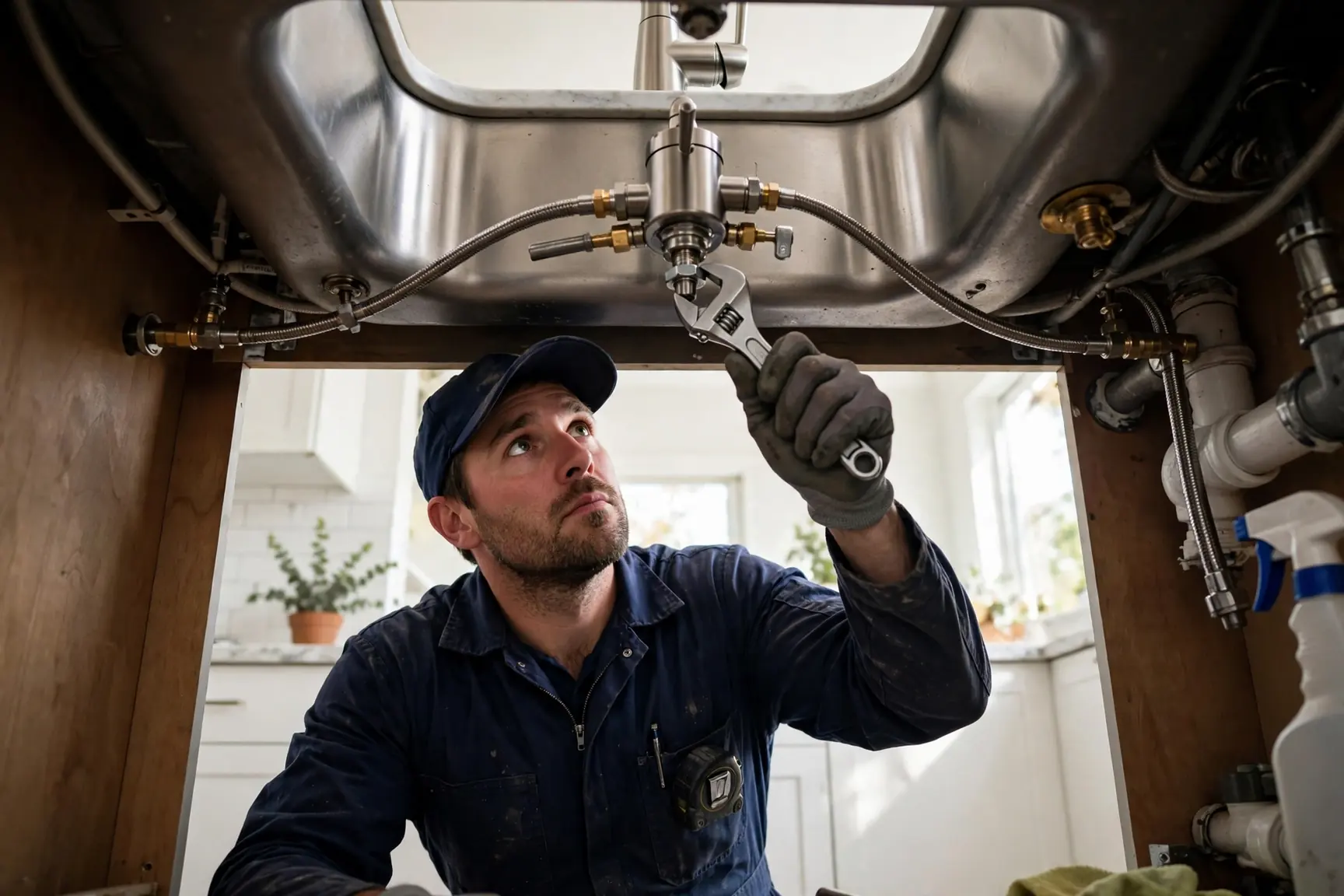
The Hard Part Hides Under the Sink
Shutoff valves stick. Supply lines are corroded. The hole pattern in your sink may not match the new faucet. A local plumber handles all of that in one visit. You get clean water flow, no leaks, and a faucet that feels solid the first time you touch it.
The Deston connects you with an independent local plumber who installs faucets every week. We are a referral service for homeowners across all 50 states. We are not a plumbing company. We match you with a nearby pro, and that pro does the work.
The finish you see is only half the job. Fresh supply lines, working shutoffs, a sealed base, and a tested sprayer are what keep the new faucet trouble free. A pro checks each of these before leaving, so the faucet you picked looks good and works right for years.
Signs You Need a New Faucet Installed
Any of these means replacement is worth pricing against repair.
Your faucet drips no matter how tight you turn the handles
A worn cartridge or seat means repair may cost as much as replacement. When the drip survives a cartridge swap, the body itself is worn.
The finish is flaking, corroded, or stained
Once the coating fails, no cleaner brings it back. Flaking finish also traps grime and looks worse each month, even with careful cleaning.
Water flow is weak even after you clean the aerator
Mineral buildup inside the body chokes flow for good. When the aerator is clean and pressure elsewhere is fine, the faucet body is the bottleneck.
Handles wobble or stick
Loose internals get worse over time and can snap without warning. A handle that sticks also wears the cartridge faster, since force replaces smooth motion.
You see water under the sink when the faucet runs
The base or supply connection has failed. Under sink water rots cabinet floors quietly, so a leak that only shows during use still needs a prompt fix.
You want a single-handle or touchless upgrade
Newer designs use less water and feel better to use. Touchless models turn on with a wave, which keeps germs off the handle, and single lever models adjust fast with full hands.

How Faucet Installation Works
Quote first, shutoff and removal second, testing last. Most swaps take one to two hours.
- 1
Call The Deston
Dial (888) 418-3086. Tell us what room the faucet is in and what you want installed. We connect you with an independent local plumber.
- 2
Get a quote
The plumber reviews your sink or counter, the hole pattern, and your new faucet. You get upfront pricing before any work starts, including supply lines and valves.
- 3
Pick your faucet
You can buy the faucet yourself or ask the plumber what fits your setup. Either way, the pro confirms the mounting style matches your holes before install day.
- 4
Shutoff and removal
The plumber turns off water at the local valves, drains pressure, and removes the old faucet and worn supply lines. Stuck valves get replaced at this stage, not worked around.
- 5
Install and seal
The new faucet gets set with fresh putty or a gasket, tightened from below, and connected with new supply lines. The base sits flat and sealed, so water cannot creep under it.
- 6
Test everything
Water runs hot and cold, the sprayer works, and every connection is checked for drips. The plumber also checks the shutoff valves, so the next service visit starts easy.
Faucet Styles, Finishes, and Hole Patterns
Center-set faucets fit standard 4 inch hole patterns in bathroom sinks. They are compact and easy to install. Widespread faucets spread across 8 inches with separate handles, a classic look for larger vanity tops. Count your holes and measure the spread before you buy, since the wrong spread cannot be fudged.
Single-handle kitchen faucets use one lever for hot and cold. They are fast to adjust while your hands are full. Pull-down and pull-out sprayers add reach for rinsing pots and washing produce. Touchless models turn on with a wave. Wall-mount faucets sit above vessel sinks and free up counter space, but they need supply lines run inside the wall, so plan for extra labor.
Finishes matter as much as style. Chrome is bright and easy to clean. Brushed nickel hides water spots. Matte black makes a bold statement but shows hard-water marks. Oil-rubbed bronze pairs well with warm wood tones. Match the finish to your cabinet hardware and you get a pulled together look without trying hard.
Bridge faucets with exposed hot and cold lines suit farmhouse and vintage styles. Whatever style you pick, ask about water-saving aerators too. They cut flow without hurting pressure and cost almost nothing extra. If you are torn between two models, describe your sink holes and counter thickness, and the pro will tell you which one actually fits.
Faucet Types at a Glance
Match the faucet to your holes, your room, and your hands.
Bathroom: center-set and widespread
Center-set fits 4 inch patterns and small vanities. Widespread fits 8 inch patterns and larger tops with a classic separate handle look.
Kitchen: single-handle and pull-down
One lever for fast control, plus a pull-down or pull-out sprayer for reach. The most practical daily setup for most kitchens.
Specialty: touchless and wall-mount
Touchless suits germ conscious kitchens. Wall-mount frees counter space above vessel sinks but needs in-wall supply work.
What Faucet Installation Costs
Most homeowners pay the range below for a standard install when they supply the faucet. Figures are United States national averages for reference only.
| Job | Typical range |
|---|---|
| Standard faucet installation, faucet supplied | $150 to $400 |
| Basic bathroom faucet swap, clean vanity | Toward the low end of the range |
| Pull-down kitchen faucet with sprayer | Higher, extra connections and alignment |
| Wall-mount or touchless models | Highest, extra labor and parts |
| Replacement shutoff valves, if corroded | Added to the quote, confirmed upfront |
Before and After: Faucet Installation
A new faucet changes the whole sink area. The pair below shows that change.
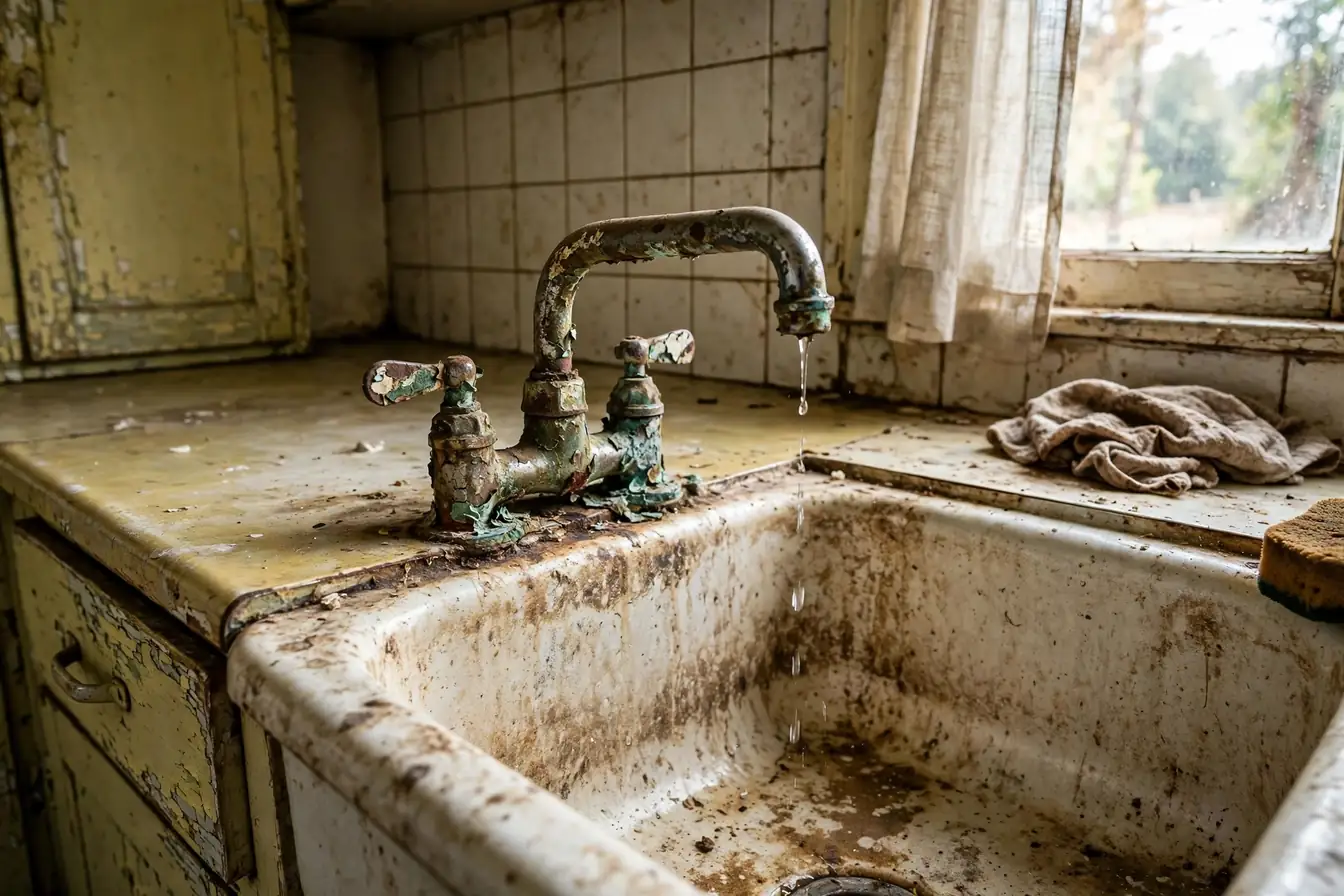 Before
 After
The photos above are illustrations that show the kind of change this work brings. They are not photos of a real job.
Preparing for Faucet Installation
A little prep keeps the swap to one visit.
Count holes and measure the spread. Note the hole count and the distance between outer holes. Bring a photo of the sink top.
Measure counter thickness. Thick counters need longer mounting hardware. Tell the pro before install day.
Buy the faucet or ask first. If you know your hole pattern, buy ahead. If unsure, call first so the pro confirms what fits.
Clear under the sink. Move stored items so the pro can reach valves and supply lines without delay.
Keep the box and manual. Bring the box with all parts and the manual. The plumber checks every piece is present before starting.
Note stuck valves or past leaks. Tell the pro about valves that never turn or past under sink water, so the quote covers them.
Frequently Asked Questions
Can I install a faucet myself?
You can, but stuck valves and mismatched hole patterns cause most DIY jobs to stall. A plumber brings the right wrenches, fresh supply lines, and the skill to seat the faucet without leaks. Most installs take under two hours with a pro.
Should I buy the faucet before the plumber arrives?
Yes, if you know your hole pattern and counter thickness. If you are unsure, call first. The plumber can confirm what fits your sink so you do not buy the wrong unit.
How long does faucet installation take?
A simple swap takes one to two hours. Wall-mount faucets, corroded valves, or new hole cuts can stretch the job to half a day.
Do you need to replace the supply lines too?
Good plumbers replace them. Old lines get brittle and are the top cause of under sink leaks after a new install. New braided stainless lines cost little and remove the risk.
What is the difference between faucet repair and replacement?
Repair fixes one part, like a cartridge or seal. Replacement swaps the whole unit. When the finish is gone or parts are no longer sold, replacement is the smarter move.
Will a new faucet lower my water bill?
It can. A dripping faucet wastes gallons every day. New faucets also carry lower flow rates that meet current standards without feeling weak.
Do plumbers install faucets I bought online?
Most do. Bring the box with all parts and the manual. The plumber will check that every piece is present before starting work.
Why is my new faucet flow weak?
Check the aerator first for debris from the install. If the aerator is clean, a kinked supply line or a partly closed valve is the likely cause. Both are quick fixes on a return visit.
What if my hole pattern does not match the new faucet?
An escutcheon plate can cover extra holes, or the countertop can be cut for a new pattern. The plumber confirms which path works before install day, so there is no mid job surprise.
Touchless or single-handle: which lasts longer?
Both last well when installed right. Touchless adds a sensor and power source to maintain, while single-handle adds nothing beyond a cartridge. Pick touchless for hygiene, single-handle for simplicity.
Can a new faucet fix low pressure at one sink?
Only if the old faucet was the bottleneck. If pressure is low at every fixture, the cause sits in the supply system, not the faucet. A pro tests pressure before blaming the faucet.
What finish hides water spots best?
Brushed nickel hides water spots better than chrome, since its soft texture breaks up mineral marks. Matte black shows hard water marks more plainly, so it needs wiping in hard water homes. Chrome wipes clean fast but shows every spot between cleanings. Pick the finish for your water, not just for the showroom light.
How often should faucet supply lines be replaced?
Replace braided supply lines whenever the faucet is replaced, and sooner if they show corrosion, bulging, or stiffness. Supply lines are cheap insurance against the most common under sink flood. A pro checks them on every faucet visit, even when the faucet itself is staying.
More Plumbing Help
Faucet Repair|Sink Installation|Kitchen Plumbing|Bathroom Plumbing|All Services
A Faucet That Turns On Fast and Shuts Off Clean.
One call connects you with a local pro who checks your holes, replaces worn lines and valves, and tests hot, cold, and sprayer before leaving. Call now.
(888) 418-3086 Call NowThe Deston is a referral service that connects homeowners with independent local plumbers. We are not a plumbing company.