
Kitchen Plumbing Services
Your kitchen runs on hidden plumbing. Supply lines feed the faucet, the dishwasher, and the fridge. Drain lines carry away everything the sink and disposal send down. A gas line may feed the range. When any link fails, the whole kitchen suffers.

Kitchen Plumbing Is the Big Picture
Kitchen plumbing is the big picture. It covers water supply, drainage, venting, the dishwasher loop, the disposal connection, and gas for cooking. A plumber who sees the whole system spots problems that a fixture-only fix would miss. Slow drains, low pressure, and mystery leaks often trace back to shared lines, not the fixture you see.
Supply lines feed the faucet, the dishwasher, and the fridge. Drain lines carry away everything the sink and disposal send down. A gas line may feed the range. When any link fails, the whole kitchen suffers, and the fix needs to reach the shared line, not just the visible fixture.
The Deston connects you with an independent local plumber who handles complete kitchen plumbing systems. We are a referral service for homeowners across all 50 states. We are not a plumbing company. We match you with a nearby pro, and that pro does the work.
Signs You Need Kitchen Plumbing Service
Multiple fixtures drain slowly at once
A shared drain line or vent is blocked, not just one trap. When the sink and dishwasher both drain slowly, the shared line is the cause.
Water pressure dropped at the kitchen faucet
Corroded supply lines or a failing shutoff valve restrict flow. If other fixtures are fine, the kitchen supply run is the suspect.
You smell gas near the range
This is urgent. Leave the house and call your gas utility first, then a plumber. Never attempt gas work yourself.
The dishwasher leaves dishes dirty
A kinked drain hose or a clogged air gap starves it of proper drainage. Dirty dishes after a full cycle often mean a drain problem, not a dishwasher problem.
Water stains spread on the ceiling below the kitchen
A supply or drain leak is soaking the floor above. Stains below the kitchen point to a leak above, even when the kitchen looks dry.
The sink gurgles when the dishwasher drains
The shared drain line cannot handle the flow, often a vent issue. Gurgling during the dishwasher cycle is a shared line symptom.
Hot water takes forever to reach the kitchen
Long pipe runs or a failing recirculation setup waste water and time. If the kitchen is far from the water heater, the run is the cause.
You are remodeling the kitchen
Moving the sink, adding an island, or installing a pot filler means new supply and drain rough-in. Involve the plumber early in the design.
Rusty water at the kitchen tap
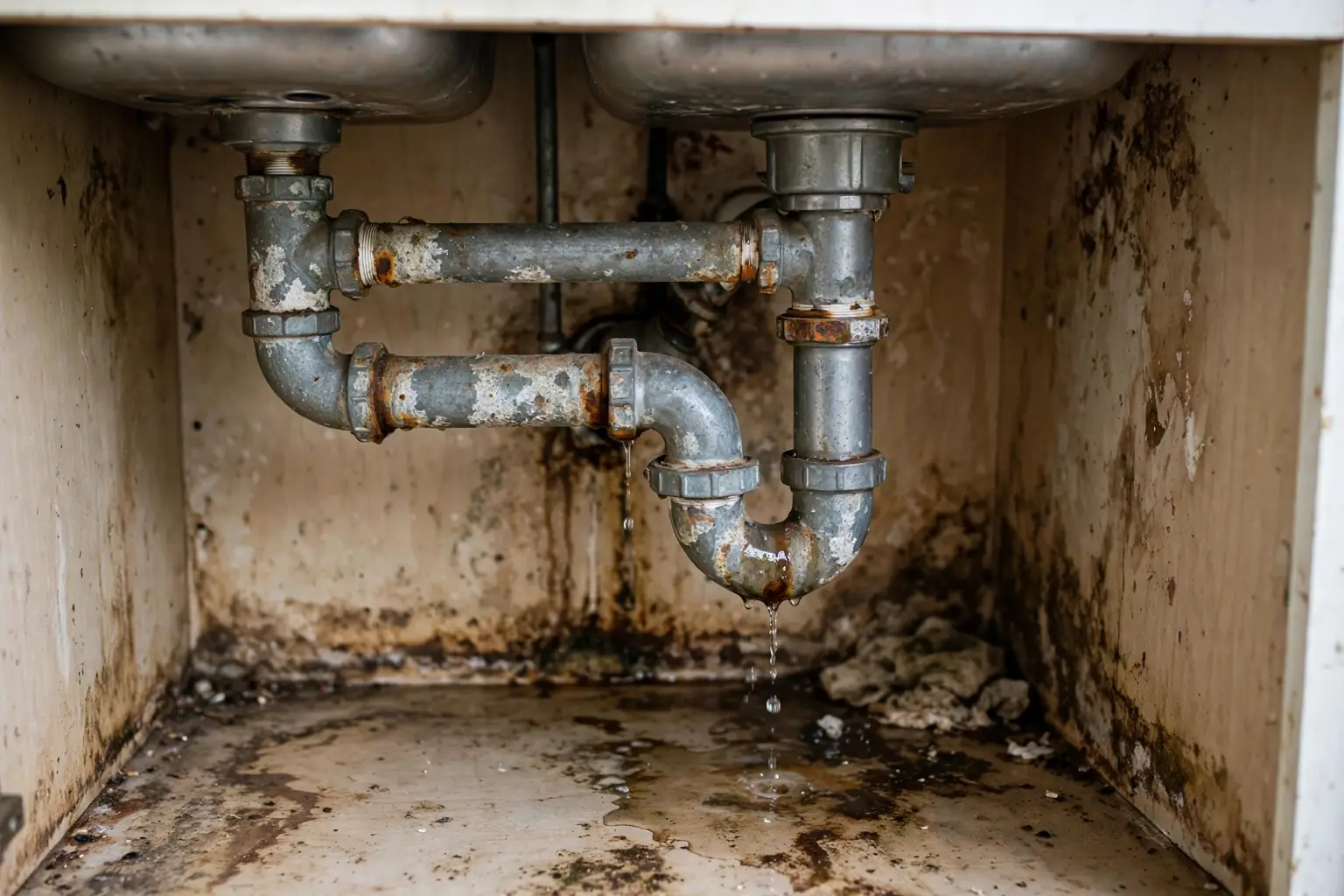
Rusty water points to corroded galvanized pipe. Galvanized pipe corrodes from the inside and narrows over decades, cutting pressure too.

Walkthrough, Plan, Repair or Rough-In, Test
How a kitchen plumbing visit usually goes.
- 1
Call The Deston
Dial (888) 418-3086. Describe the kitchen problem or the project: remodel, new appliance, leak, or slow drains. We connect you with an independent local plumber.
- 2
System walkthrough
The plumber traces your supply lines, drain lines, and appliance connections. You get a full picture, not just a guess about one fixture.
- 3
Upfront plan and price
The pro explains what needs fixing or installing, in what order, and what it costs. You approve before work begins.
- 4
Shutoffs and protection
Water and gas are shut off as needed. Floors and cabinets are protected before tools come out.
- 5
Repair or rough-in
The plumber repairs failed lines, clears shared drains, installs new supply runs, or roughs in plumbing for the new layout.
- 6
Full-system test
Every faucet, appliance, and drain runs at once. The plumber checks pressure, flow, drainage, and gas connections before calling it done.
Types and Options: Supply, Drain, Dishwasher Loop, Gas, Rough-In
Supply-side work
Supply-side work covers everything that brings water in. Replacing old galvanized or polybutylene lines with copper or PEX restores pressure and removes leak risk. Adding a dedicated line for a pot filler or a fridge ice maker is common during remodels. New shutoff valves at every fixture make future repairs easy.
Drain-side work
Drain-side work covers everything that carries water out. Kitchen drain lines clog with grease and food. The plumber clears the shared line past the trap, checks the vent stack, and may suggest a grease-trap approach for heavy cooks. Proper slope on new drain runs keeps water moving.
The dishwasher loop
The dishwasher loop is its own system. The drain hose needs a high loop or an air gap to stop dirty sink water from flowing back into the dishwasher. The plumber sets this correctly during every dishwasher connection.
Gas lines for ranges and cooktops
Gas lines feed ranges and cooktops. Only qualified pros touch gas. The plumber pressure-tests connections, installs proper shutoff valves, and verifies the range ignites safely. Never attempt gas work yourself.
Remodel rough-in
Remodel rough-in ties it all together. Moving a sink to an island means new supply and drain lines under the floor. The plumber coordinates with your contractor on timing. Island sinks need venting planned carefully, so involve the plumber early in the design.
Shutoff and leak protection
The plumber can install an automatic shutoff valve with leak sensors under the sink and behind the dishwasher. Know where your main shutoff is and turn it off for long trips. Sensors catch leaks while you are away.
What It Costs
Kitchen plumbing projects range widely, from $150 for a simple fix to $3,000 or more for a full remodel rough-in. The scope decides the price. The local pro gives upfront pricing after seeing the kitchen.
| Job | Typical national average | Notes |
|---|---|---|
| Simple fix | From $150 | Single-visit targeted repair |
| Targeted repairs | A few hundred dollars | Clearing a shared kitchen drain line, replacing a section of supply pipe, or fixing the dishwasher loop |
| Rough-in for a moved sink | $800 to $2,000 | Depends on access; opening walls or floors adds labor |
| Adding gas for a new range | Several hundred more | On top of the rough-in; pressure test and shutoff included |
| Full remodel rough-in | $3,000 or more | Full supply and drain layout for a new kitchen plan |
Before and After: Corroded Lines to Clean New Runs
The photos below are illustrations of corroded kitchen lines and the clean new supply and drain runs that replace them. They show the kind of change to expect, not one specific job.
 Before
 After
What to Do Before the Pro Arrives
These steps speed up the walkthrough and protect your kitchen.
Clear the cabinet under the sink. Move cleaners and stored items out so the plumber can trace supply lines, drains, and appliance connections.
Note which fixtures are affected. Multiple fixtures draining slowly at once points to a shared line. One slow fixture points to that fixture. The pattern guides the diagnosis.
Know where your main shutoff is. Know where your main shutoff is and turn it off for long trips. Show the plumber the shutoff location at the visit.
Smell gas? Leave first. If you smell gas near the range, leave the house and call your gas utility first, then a plumber. Do not wait for a scheduled visit.
Gather remodel plans if you have them. Moving the sink, adding an island, or installing a pot filler means new rough-in. Share the layout so the plumber can plan venting and runs early.
Note when symptoms started. When did pressure drop, when did the dishwasher start leaving dishes dirty, when did stains appear below? A timeline helps the pro aim the diagnosis.
Kitchen Plumbing FAQs
Why do my kitchen drains clog so often?
Grease is the main cause. It coats pipe walls and catches food particles until flow chokes. Long flat drain runs make it worse. The plumber clears the line and can suggest habits that keep it clear.
Should I replace old galvanized pipes in my kitchen?
Yes, if pressure is low or water looks rusty. Galvanized pipe corrodes from the inside and narrows over decades. Copper or PEX replacement restores flow and ends the leak risk.
What is a dishwasher high loop and do I need one?
A high loop is the drain hose arched up under the counter before it connects to the drain. It stops dirty sink water from siphoning back into the dishwasher. Most codes require a high loop or an air gap.
Can the plumber move my sink during a remodel?
Yes. The plumber runs new supply lines and a new drain to the new location. Island sinks need venting planned carefully, so involve the plumber early in the design.
Is low kitchen water pressure a supply or faucet problem?
It can be either. The plumber checks the faucet aerator first, then the shutoff valves, then the supply lines. If the whole house has low pressure, the main line or pressure regulator is the cause.
Do I need a plumber for a gas range hookup?
Yes. Gas connections need proper fittings, thread sealant rated for gas, and a pressure test. A qualified pro handles the hookup and verifies there are no leaks.
How do I prevent kitchen leaks when I am away?
Know where your main shutoff is and turn it off for long trips. The plumber can also install an automatic shutoff valve with leak sensors under the sink and behind the dishwasher.
Why does my sink gurgle when the dishwasher drains?
The shared drain line cannot handle the flow, often a vent issue. The plumber clears the shared line past the trap and checks the vent stack. Gurgling during the dishwasher cycle is a shared line symptom, not a dishwasher fault.
What causes stains on the ceiling below the kitchen?
A supply or drain leak soaking the floor above. The kitchen may look dry while water travels along joists and stains the ceiling below. The plumber traces the leak to its source before patching anything.
Can a plumber add a pot filler or fridge ice maker line?
Yes. Adding a dedicated line for a pot filler or a fridge ice maker is common during remodels. New shutoff valves at every fixture make future repairs easy.
Why does hot water take so long to reach the kitchen?
Long pipe runs between the water heater and the kitchen delay hot water, and a failing recirculation setup makes it worse. The plumber traces the run, checks the recirculation setup, and explains the fix options. Shorter runs and a working recirculation loop both cut the wait and the water wasted while waiting.
Should I replace polybutylene lines in my kitchen?
Yes, if your kitchen still has them. Replacing old galvanized or polybutylene lines with copper or PEX restores pressure and removes leak risk. The plumber checks what material your lines are during the walkthrough and prices the replacement as part of the plan.
How is a kitchen plumbing quote broken down?
For remodels, ask for the price broken into rough-in, fixture install, and appliance connections. A clear breakdown lets you phase the project if needed. The local pro gives upfront pricing after seeing the kitchen.
More Kitchen Help
Faucet Repair | Garbage Disposal Installation | Drain Cleaning | All Services
One Kitchen, One System, One Pro Who Sees It All.
Call now and The Deston will connect you with a local plumbing pro who traces the whole kitchen system and prices the plan before work begins.
(888) 418-3086 Call NowThe Deston is a referral service that connects homeowners with independent local plumbers. We are not a plumbing company.