
Bathtub Repair
A chipped tub, a drain that crawls, or a faucet that will not stop dripping takes the comfort out of the bathroom. Many tub problems can be fixed without tearing the tub out. Chips can be filled. Worn finishes can be recoated. Slow drains can be cleared.
Most Tub Problems Can Be Fixed
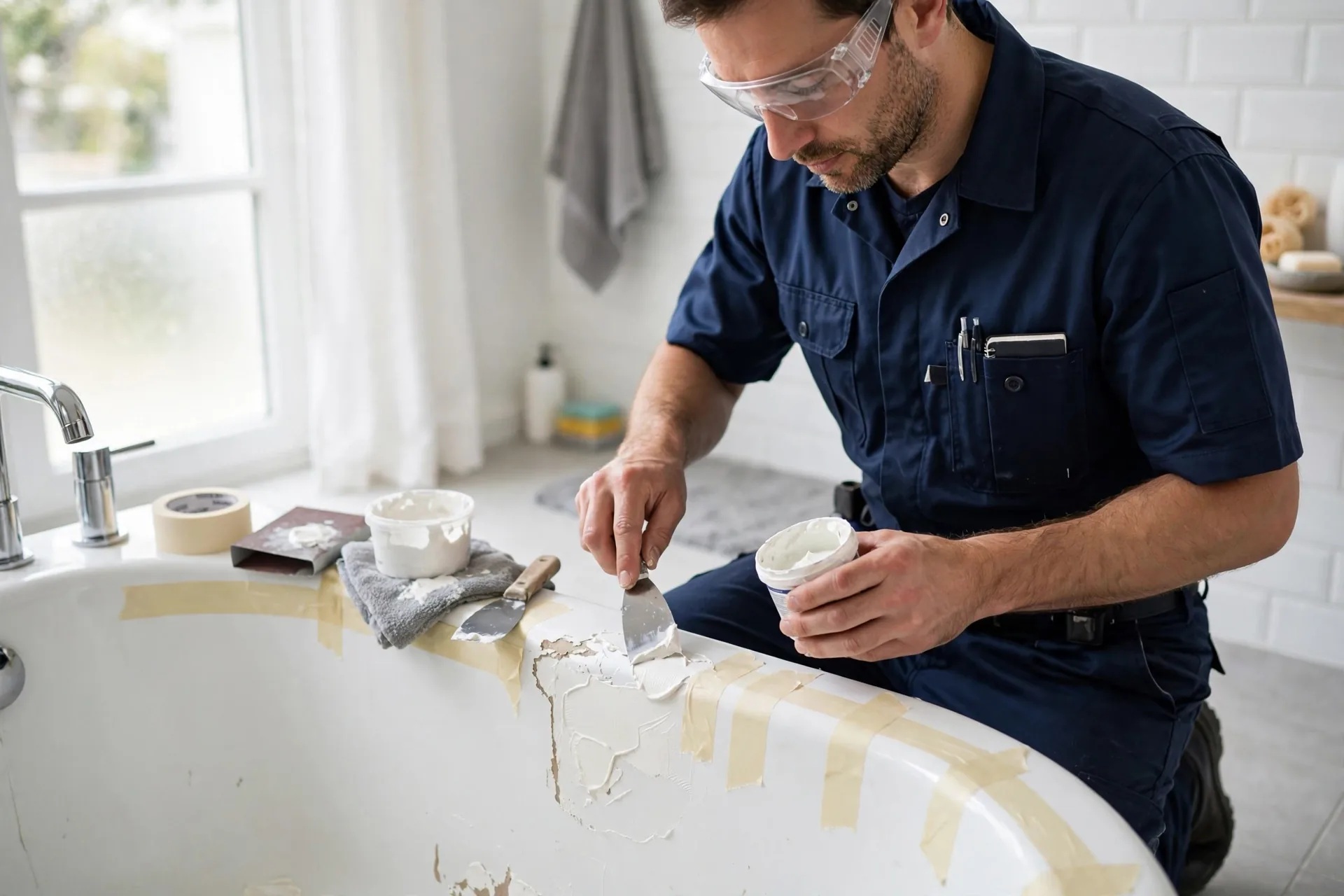
Tubs wear down slowly, then all at once. A dropped bottle chips the enamel. Years of use dull the finish. Hair and soap narrow the drain. A worn faucet stem drips between baths. Each fault on its own is a repair job, not a replacement job.
The Deston is a nationwide referral service that connects homeowners with independent local plumbers who repair bathtubs every day. We are not a plumbing company. We match you with a nearby pro who fixes what you have, and we serve homeowners across all 50 states.
The order of work matters. Drains and leaks come first, before any surface work. There is no point refinishing a tub that still leaks, since water under a fresh finish ruins it fast. A good pro inspects surface, drain, overflow, faucet, and caulk lines together, then fixes the plumbing faults before touching the finish.
Signs Your Bathtub Needs Repair
Watch for these signs that a repair visit is due.
Chips in the enamel
A dropped shampoo bottle or a slipped razor can chip porcelain or enamel down to the dark metal or filler below. Chips grow if water gets under the edge, so small chips deserve a prompt fill rather than a wait.
Rust spots are spreading
Once the coating is breached on a steel or cast iron tub, rust starts. Small spots can be treated and sealed. Wide rust means the surface is failing and the metal under it is thinning.
The finish is peeling or dull
An old recoat job or a worn factory finish turns rough and gray. Soap scum grips the rough surface and the tub never looks clean, no matter how hard you scrub.
The drain is slow
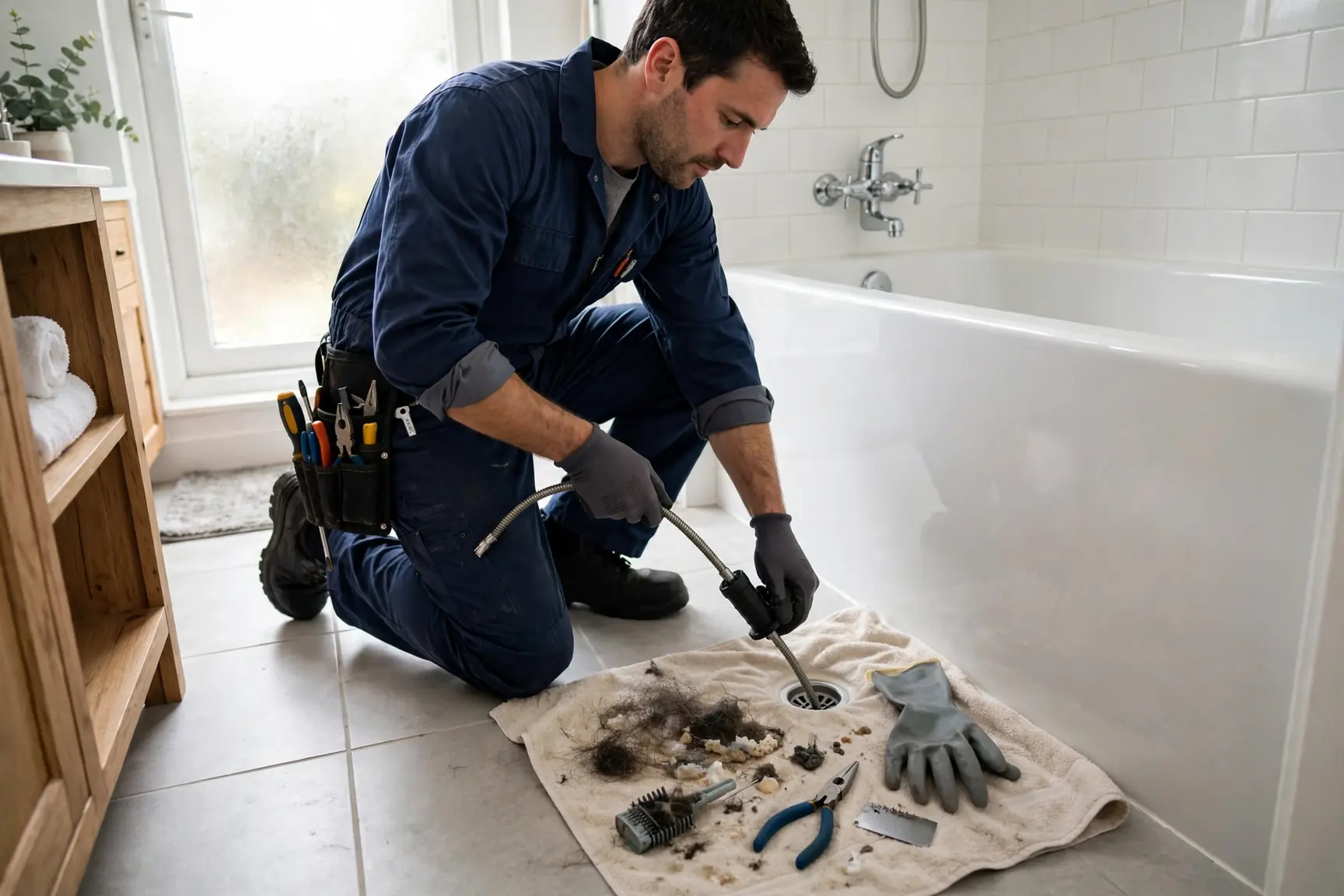
Hair and soap build a mat in the drain and the overflow. If plunging and hair removal do not fix it, the clog sits deeper in the line, where soap scum coats the pipe walls and narrows them.
Water appears around the base
A failed caulk line or a leaking overflow gasket lets bath water reach the floor. The subfloor stays wet long after you drain the tub, and hidden rot grows in that damp space.
The spout drips nonstop
A tub spout that drips between baths has a worn stem or cartridge in the faucet. It wastes water and stains the tub, and the drip usually gets worse, not better, with time.
How Bathtub Repair Works
Leaks and drains first, surface second, testing last. That order protects the repair.
- 1
You describe the damage
Tell the pro what you see: chips, rust, slow drain, drips, or water where it should not be. Photos help the plumber bring the right materials, including color match compounds for your tub.
- 2
The tub gets a full inspection
The pro checks the surface, the drain, the overflow, the faucet, and the caulk lines. Surface damage and plumbing leaks often show up together, and the plan must cover both.
- 3
Drains and leaks come first
If the drain is slow or the overflow gasket leaks, the plumber clears and reseals those before touching the surface. A leaking overflow gasket is a common hidden leak point that soaks walls.
- 4
Surface damage gets repaired
Chips get filled, sanded smooth, and color matched. Cracks in fiberglass get reinforced from behind when the plumber can reach them, which stops the flex that caused the crack.
- 5
The finish gets restored when needed
For a worn out surface, the pro can recoat the tub with a new finish after careful prep and masking. This is called reglazing or refinishing, and prep decides how long it lasts.
- 6
Caulk lines get renewed and all gets tested
Old caulk around the tub edge gets stripped and replaced so bath water stays in the tub and off the floor. Then the plumber fills the tub, checks drain speed, watches the overflow, and looks under the tub when there is access to confirm nothing leaks.
When Repair Wins and When It Does Not
Repair wins when the tub body is solid and the problems are surface chips, a slow drain, a dripping faucet, or a worn finish. These are all fixable faults, and a good repair costs a fraction of a replacement while keeping a tub you already like.
Replace when the tub is cracked through, rusted through, or flexing under your weight. A through crack leaks with every bath. Rust that has perforated the metal cannot be sealed back to strength. A tub that visibly moves when you stand in it has lost its support, and patching the surface will not restore it.
A tub that has been recoated too many times also argues for replacement. Each old coating needs stripping or heavy prep before a new one will bond, and the cost and risk climb with each layer. A plumber can tell you honestly which side of the line your tub sits on, and that honest read is worth more than any single repair price.
Cost is part of the call but not all of it. A full reglaze at a few hundred dollars makes sense when the tub body is sound. The same spend makes little sense when the shell is failing, since the finish will fail with it. The pro should lay out both paths with prices before you commit.
Common Bathtub Repairs and Options
Bathtub repair covers both the surface you see and the plumbing you do not.
Chip and crack repair
Small chips get cleaned, filled with a repair compound, sanded flush, and tinted to match. Fiberglass cracks get a reinforcing patch on the back side plus a cosmetic fill on top. The repair blends in and stops the damage from spreading.
Reglazing and refinishing
When the whole surface is worn, dull, or stained, the tub can be recoated. The pro etches the old surface, repairs flaws, and sprays a new finish. A quality reglaze looks like a new tub at a fraction of the replacement cost.
Drain, overflow, and faucet service
Hair clogs get pulled with a snake. Slow drains caused by buildup get cleared. The overflow gasket gets replaced when it is flattened or torn. Tub faucets drip from worn stems, cartridges, or seats, and the plumber rebuilds or replaces the working parts.
What Bathtub Repair Costs
Bathtub repair pricing depends on the damage and the tub material. Figures below are United States national averages for reference only.
| Job | Typical range |
|---|---|
| Single chip repair | $75 to $200 |
| Slow tub drain clearing | $100 to $250 |
| Dripping tub faucet rebuild | $150 to $350 |
| Full reglaze, by tub size and condition | $300 to $600 |
| Caulk line renewal, tub edge | Priced on site, small added cost |
Before and After: Bathtub Repair
Repair restores the tub you already have. The pair below shows that change.
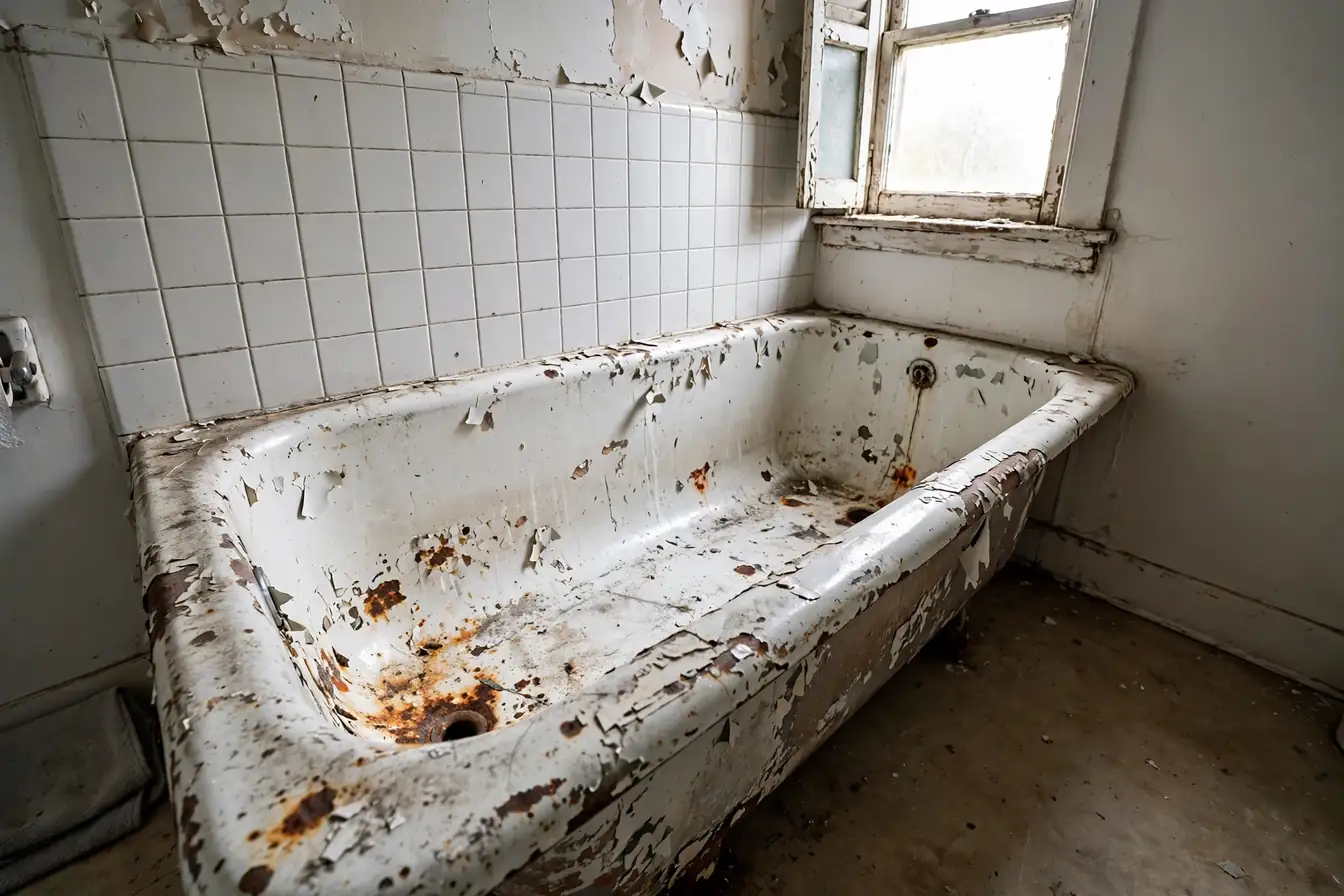 Before
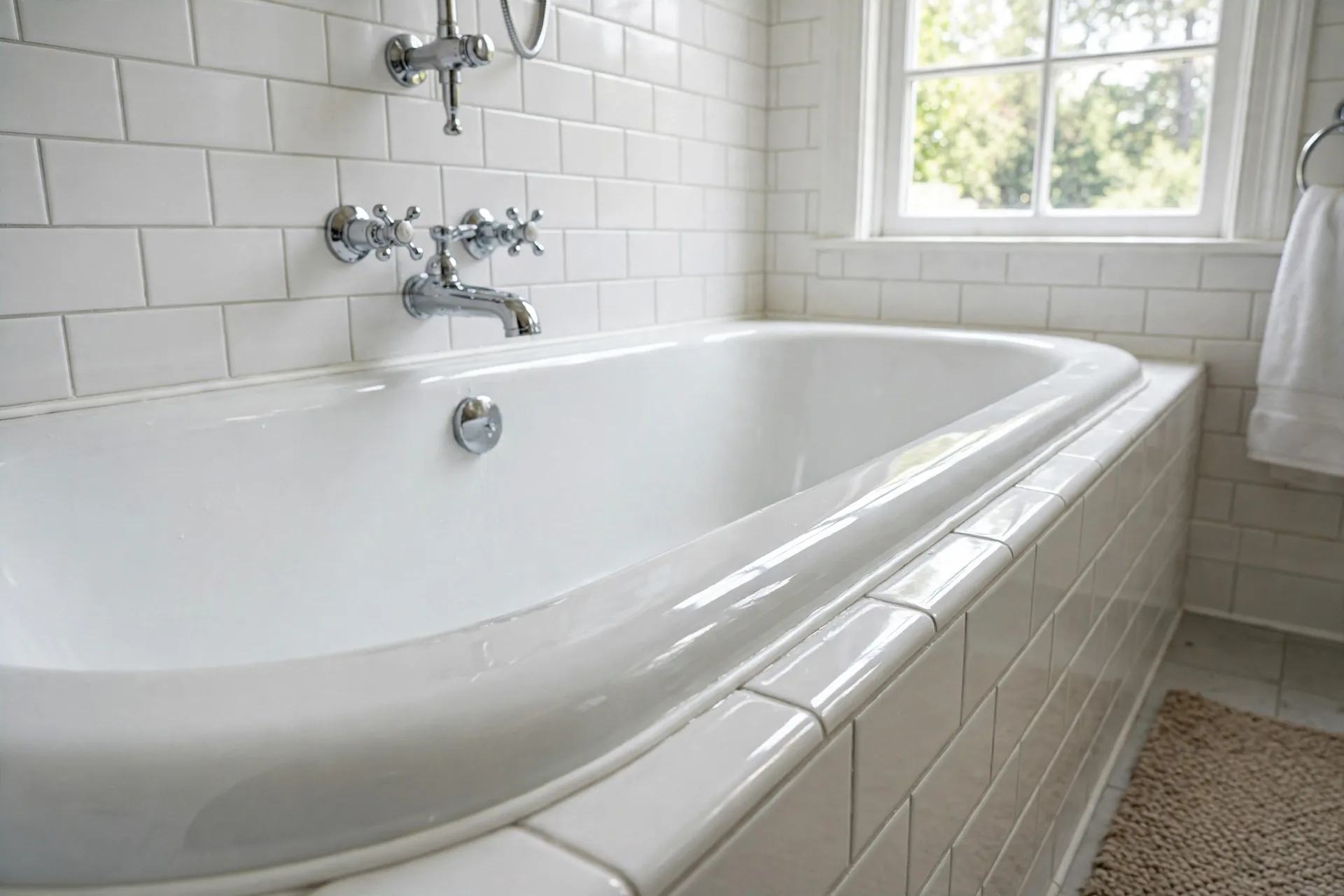 After
The photos above are illustrations that show the kind of change this work brings. They are not photos of a real job.
Preparing for Bathtub Repair
A little prep helps the pro match materials and protect the finish.
Take clear photos of the damage. Close photos of chips, cracks, and rust help the pro bring the right compounds and tints.
Note the tub material if you know it. Cast iron, steel, fiberglass, and acrylic each repair differently. The maker mark or age can help.
Clear the tub edge and access panel. Move bottles, mats, and stored items so the pro can reach caulk lines, drains, and the overflow.
Plan a cure wait after reglazing. Most finishes need 24 to 48 hours to cure before water touches them. Arrange shower access elsewhere.
Skip harsh cleaners before the visit. Abrasive cleaners can worsen chips and dull the finish further. Gentle cleaning is enough.
Tell the pro about past recoats. A tub recoated before needs different prep. Mention it so the quote covers stripping or heavy prep.
Frequently Asked Questions
Should I repair my tub or replace it?
Repair wins when the tub body is solid and the problems are surface chips, a slow drain, a dripping faucet, or a worn finish. Replace when the tub is cracked through, rusted through, or flexing under your weight. A plumber can tell you honestly which side of the line your tub sits on.
How long does a reglazed finish last?
A professional reglaze typically lasts 5 to 10 years with normal care. Avoid abrasive cleaners and bath mats with suction cups, which wear the coating. A cheap DIY kit peels far sooner, which is why pros prep and spray differently than a brush-on kit can.
Can cracks in a fiberglass tub be fixed?
Short stress cracks can. The plumber reinforces the back of the crack so the flex stops, then fills and finishes the front. Long cracks or a tub that visibly moves when you stand in it usually mean the tub needs replacing instead.
Are DIY chip repair kits worth trying?
They can hide a tiny chip for a while, but the color match is rarely close and the fill often pops out within months. A pro uses two-part compounds and tints on site, so the repair bonds and blends. For a tub you see every day, the pro result looks far better.
How long before I can use the tub after reglazing?
Most finishes need 24 to 48 hours to cure before water touches them. The plumber will give you the exact wait time for the product used. Running water too soon is the fastest way to ruin a fresh finish.
Will a reglazed tub peel?
Peeling happens when the old surface was not prepped right or the tub gets harsh treatment. A pro etches and primes so the new finish bonds to the old surface. With gentle cleaners and no suction-cup mats, peeling is rare.
Why does my tub drain slowly even after I remove the hair?
The visible hair is only part of the clog. Soap scum coats the pipe walls and narrows the line deeper down, past what you can reach. A plumber snakes the line to clear the full buildup. If the shower shares the drain and also runs slow, the trouble may sit in the shared line.
What causes water around the base of the tub?
Most often a failed caulk line or a leaking overflow gasket. Bath water splashes over the rim or through the overflow and runs down behind the tub, then out at the base. Both faults are cheap to fix and costly to ignore, since the subfloor stays wet.
Can rust spots on a steel tub be stopped?
Small rust spots can. The pro sands to bare metal, treats, primes, and top-coats the spot, which stops the spread and buys the tub years. Rust that has eaten through the metal cannot be saved this way, and that tub needs replacing.
How do I care for a repaired or reglazed tub?
Use gentle non abrasive cleaners, skip suction-cup mats, and wipe the tub dry after heavy use when you can. Recaulk when the bead starts to pull away, before water gets behind it. Small care habits are what stretch a 5 year finish toward 10.
Does repair change the tub color?
A reglaze can keep the same white or change to a new color, though custom colors add material cost. Chip repairs are tinted to match the existing finish. Tell the pro the color you want before work starts, so materials are on hand.
More Plumbing Help
Bathtub Installation|Bathroom Plumbing|Shower Repair|Faucet Repair|All Services
Do Not Live With a Tub That Is Getting Worse.
One call connects you with a local pro who fixes drains and leaks first, then restores the surface. Call now and describe what you see.
(888) 418-3086 Call NowThe Deston is a referral service that connects homeowners with independent local plumbers. We are not a plumbing company.