
Dishwasher Installation
A dishwasher should slide in, hook up, and wash quietly for years. The reality involves water supply, drain routing, electrical connection, and leveling. Get one part wrong and you get leaks, dirty dishes, or a unit that walks across the floor.
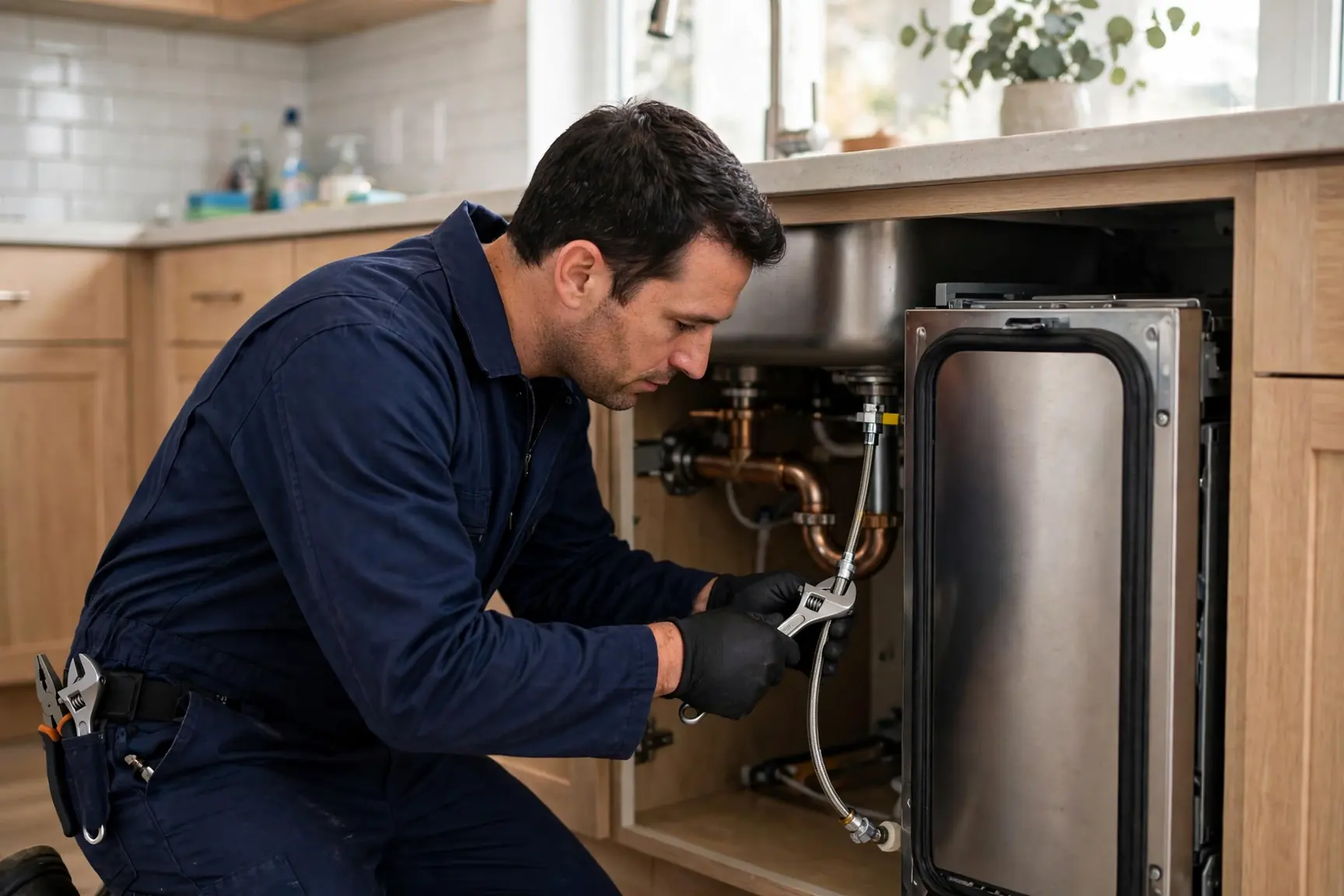
A Dishwasher Install Is Four Hookups at Once
Installation covers first time hookups and replacements of old units. The plumber connects the hot water supply, routes the drain hose with a proper high loop or air gap, wires the unit safely, levels it, and secures it to the cabinet. A full test cycle confirms it fills, washes, drains, and dries without a drop on the floor.
The Deston connects you with an independent local plumber who installs dishwashers every week. We are a referral service for homeowners across all 50 states. We are not a plumbing company. We match you with a nearby pro, and that pro does the work.
The small details decide whether the install lasts. A drain hose without a high loop lets dirty water flow back into the tub. A unit that is not level rocks, leaks at the door, and cleans poorly. A missing shutoff valve turns every future service call into a whole kitchen shutoff. A pro gets all four hookups right in one visit.
Signs You Need a Dishwasher Installed
Any of these means the old unit has earned retirement.
Your old dishwasher died
Pumps fail, control boards burn out, and racks rust past the point of repair. When the repair quote nears the price of a new unit, replacement is the better spend.
It leaks onto the floor
A cracked tub or failed door seal means the unit is done. Floor leaks rot cabinets and subfloors fast, so a leaking unit should not keep running while you shop.
Dishes come out dirty every cycle
Worn spray arms and weak pumps cannot be fixed cheaply. If cleaning has faded across every cycle despite a clean filter, the wash system is worn out.
You are remodeling the kitchen
New cabinets need a dishwasher fitted and leveled to match. A remodel is also the right moment to add the dedicated shutoff and proper drain routing the old install lacked.
Your kitchen never had one
Adding a dishwasher is one of the best upgrades for a busy household. A first time install needs new supply, drain, and electrical work, which a pro plans as one job.
The old unit is painfully loud
Modern dishwashers run so quietly you check to see if they are on. Budget units run around 50 decibels, while premium models drop to the low 40s, quieter than a normal conversation.
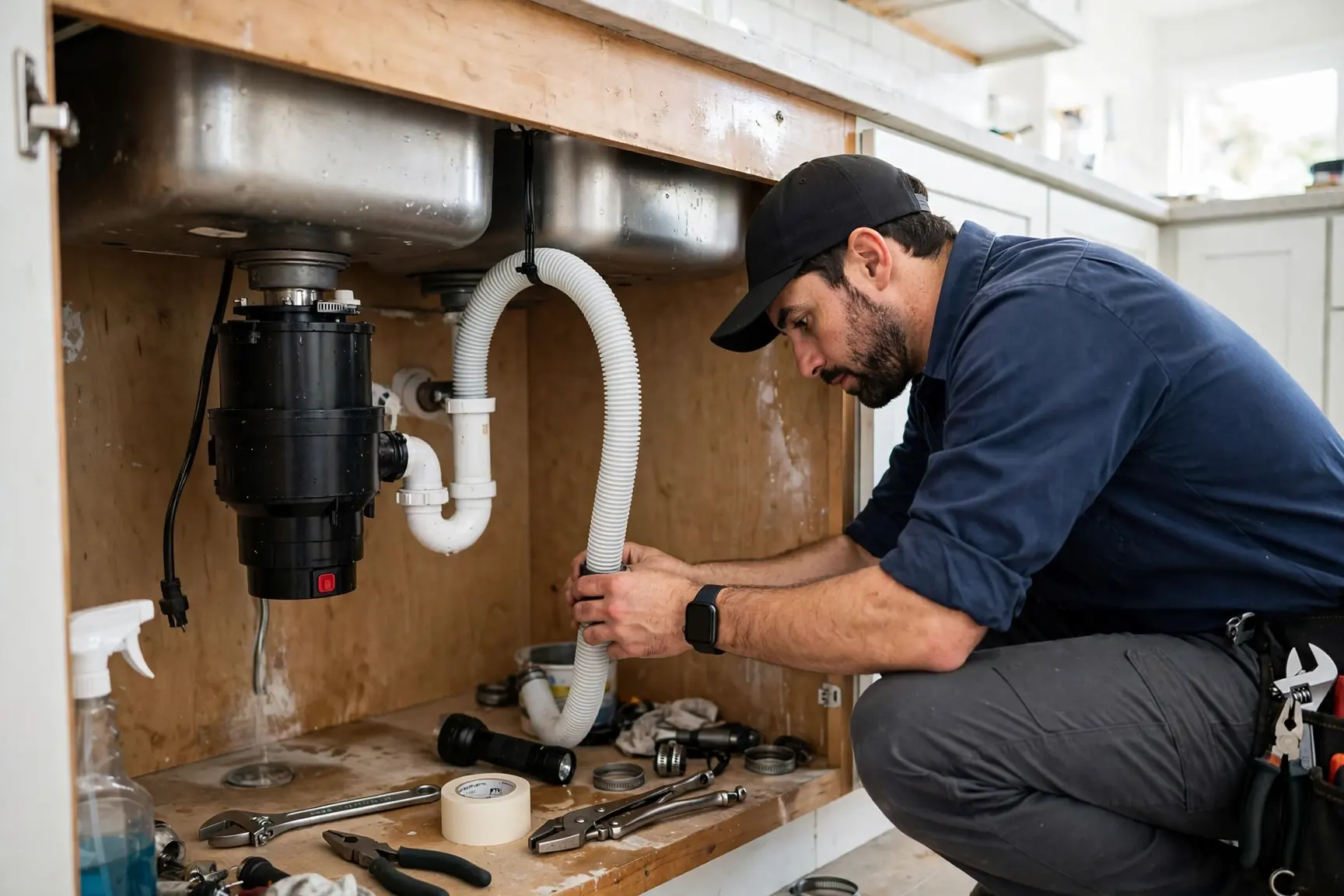
How Dishwasher Installation Works
Fit and hookups confirmed first, test cycle last. Nothing gets skipped.
- 1
Call The Deston
Dial (888) 418-3086. Tell us if this replaces an old unit or fills an empty cabinet, and the width of the opening. We connect you with an independent local plumber.
- 2
Confirm fit and hookups
The plumber checks the cabinet opening, the hot water supply, the drain connection, and the electrical box. You get upfront pricing before work starts, including haul away if you want it.
- 3
Remove the old unit
Power and water are shut off. The old dishwasher slides out and is hauled away if you want that service. The opening and hookups get inspected before the new unit goes in.
- 4
Connect water and drain
The hot water supply line attaches with a new braided line. The drain hose routes up in a high loop or to an air gap, then to the disposal or drain tailpiece, with no kinks in the run.
- 5
Wire and level
The unit wires to the existing electrical box or plug. The plumber levels all four feet and secures the mounting brackets to the counter or cabinet sides, so the unit cannot walk or tip.
- 6
Run a test cycle
The dishwasher fills, washes, drains, and dries while the plumber watches every connection. You learn the basic controls before the pro leaves, and any drip gets fixed on the spot.
Dishwasher Types and What Changes the Install
Standard built-in dishwashers are 24 inches wide and fit most kitchen cabinets. They hold a full load for a family and offer the most features per dollar. Compact 18 inch models suit apartments and small kitchens with lighter dish loads, and they use the same hookups in a narrower box.
Drawer dishwashers open like drawers instead of dropping down. Single or double drawer setups let you run small loads without waiting for a full rack. They cost more but fit modern kitchen designs well, and each drawer needs its own drain attention.
Portable dishwashers roll to the sink and connect to the faucet. They need no permanent hookup, which helps renters. Countertop models sit on the counter and serve one or two people. Neither needs a plumber for the hookup, but both still need a proper drain path and a filter habit.
Noise ratings matter in open kitchens. Stainless tubs dry better and resist odor more than plastic tubs. Racks with adjustable tines and a third rack for utensils make loading easier for real families. The drain connection shapes the install too: most dishwashers drain through the garbage disposal or a dedicated tailpiece, and the plumber confirms the knockout plug is removed and the hose has no kinks.
Types and Options at a Glance
Match the unit to your kitchen, your household, and your hookups.
Standard built-in, 24 inch
The default for most kitchens. Full family load, widest feature choice, and the simplest swap when an old 24 inch unit comes out.
Compact 18 inch and drawer models
Compact units suit small kitchens and light loads. Drawer models run small loads on demand. Both cost more per place setting than a standard unit.
Portable and countertop models
No permanent hookup needed, which suits renters and tiny kitchens. Smaller loads and manual faucet connection are the trade offs.
What Dishwasher Installation Costs
Most homeowners pay the range below for a standard install when they supply the unit. Figures are United States national averages for reference only.
| Job | Typical range |
|---|---|
| Standard install, unit supplied by homeowner | $180 to $400 |
| Direct swap, existing hookups in good shape | Toward the low end of the range |
| First time install, new supply, drain, electrical | Toward the high end, varies by work needed |
| Old unit haul away | Small added fee, confirm in the quote |
| New braided supply line and fittings | Usually included, confirm in the quote |
Before and After: Dishwasher Installation
The new unit should vanish into the cabinetry and wash quietly. The pair below shows that change.
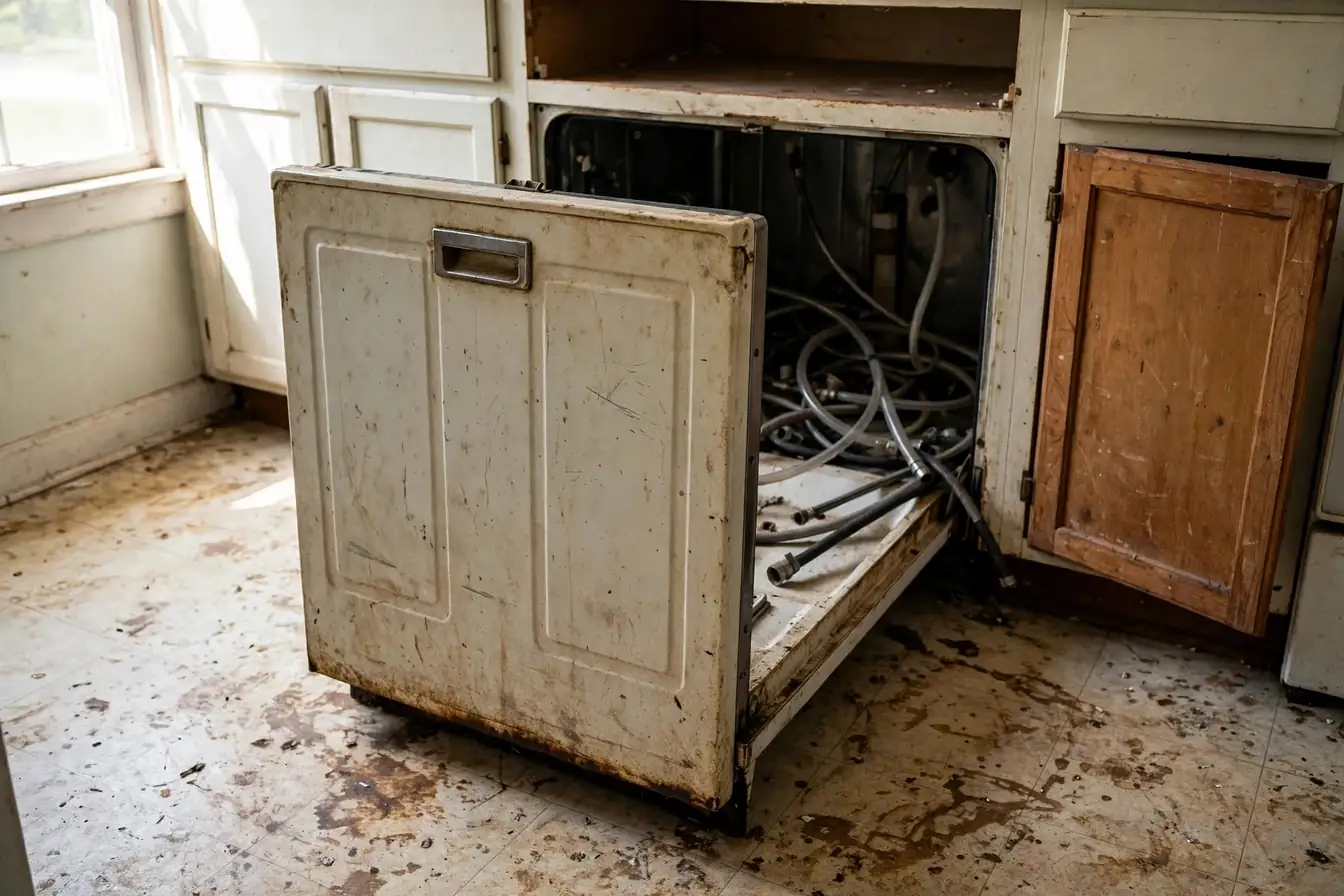 Before
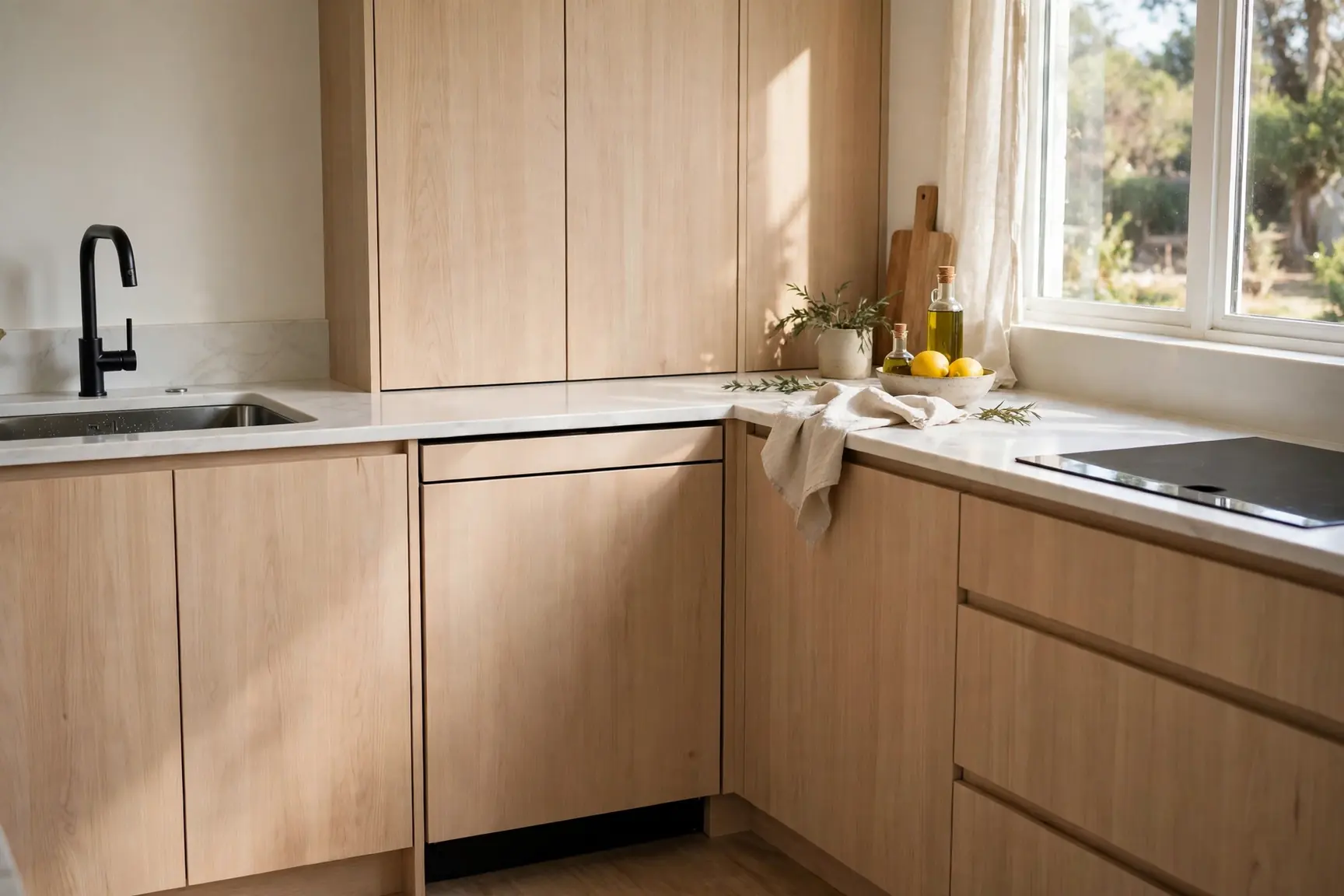 After
The photos above are illustrations that show the kind of change this work brings. They are not photos of a real job.
Preparing for Dishwasher Installation
A little prep keeps the swap to one visit.
Measure height, width, and depth. Most 24 inch units fit standard openings, but measure all three before buying. Depth surprises are the most common.
Clear under the sink and the cabinet. Move stored items so the pro can reach the supply, drain, and electrical box without delay.
Note the old unit width and hookups. Tell the pro if the old unit was hardwired or plugged in, and whether a disposal shares the drain.
Decide on haul away early. Ask when you get the quote so haul away is in the upfront price, not an afterthought.
Empty the old unit and the sink cabinet. Dishes, soap, and stored items slow the swap. Clear both before the visit.
Plan a test cycle window. Stay nearby for the test cycle so the pro can show you the controls and fix any drip at once.
Frequently Asked Questions
How long does dishwasher installation take?
A direct replacement takes one to two hours. A first time install with new water, drain, and electrical lines can take half a day. Cabinet trim work or a new circuit adds time, and the plumber gives a schedule with the quote.
Will a new dishwasher fit my old cabinet opening?
Most 24 inch units fit standard openings, but measure height, width, and depth before buying. The plumber confirms the fit and flags any trim work needed. Depth is the dimension most buyers forget.
Does the dishwasher need its own water shutoff valve?
It should have one. A dedicated shutoff under the sink lets you service the dishwasher without killing water to the whole kitchen. The plumber adds one if it is missing.
What is an air gap and do I need one?
An air gap is a small device on the sink deck that stops dirty drain water from flowing back into the dishwasher. Some local codes require it. Where it is not required, a high loop in the drain hose does the job.
Can the plumber haul away my old dishwasher?
Most plumbers offer haul away for a small fee. Ask when you get the quote so it is included in the upfront price.
Why does my new dishwasher smell?
New units sometimes smell of manufacturing oils for the first few cycles. A lasting smell points to a drain hose problem or food trapped in the filter. The plumber checks the hose routing and cleans the filter.
Do I need an electrician for the wiring?
Usually not. Plumbers connect dishwashers to existing electrical boxes every day. If your kitchen has no circuit for the dishwasher location, the pro will explain what electrical work is needed.
Why does my dishwasher not drain fully?
The usual causes are a kinked drain hose, a blocked disposal knockout plug, or a clogged filter. A pro checks the hose path first, since kinks hide behind the unit where you cannot see them.
Should the drain go through the disposal?
Most dishwashers drain through the garbage disposal or a dedicated tailpiece, and both work when routed right. The plumber confirms the knockout plug is removed when a disposal is used, since a missed plug blocks draining completely.
What is a high loop and why does it matter?
A high loop routes the drain hose up high under the sink before it drops to the drain. That loop stops dirty drain water from flowing back into the dishwasher tub. Without it, the tub can refill with drain water between cycles.
Can I install a dishwasher where none existed?
Yes, when supply, drain, and electrical can reach the spot. The plumber plans the new lines as one job and prices it after seeing the cabinet and the nearest hookups. Distance from the sink is the main cost driver.
More Plumbing Help
Garbage Disposal Installation|Kitchen Plumbing|Sink Installation|Plumbing Installation|All Services
A Quiet Dishwasher Starts With a Correct Install.
One call connects you with a local pro who checks fit and hookups, routes the drain right, and tests a full cycle before leaving. Call now.
(888) 418-3086 Call NowThe Deston is a referral service that connects homeowners with independent local plumbers. We are not a plumbing company.