
Sink Repair
A sink that leaks, drains slowly, or smells bad disrupts the room it serves. Most sink faults sit in a small set of parts under the basin: the trap, the drain assembly, the supply lines, and the seals. Find the failed part, fix it right, and the sink works like it should.
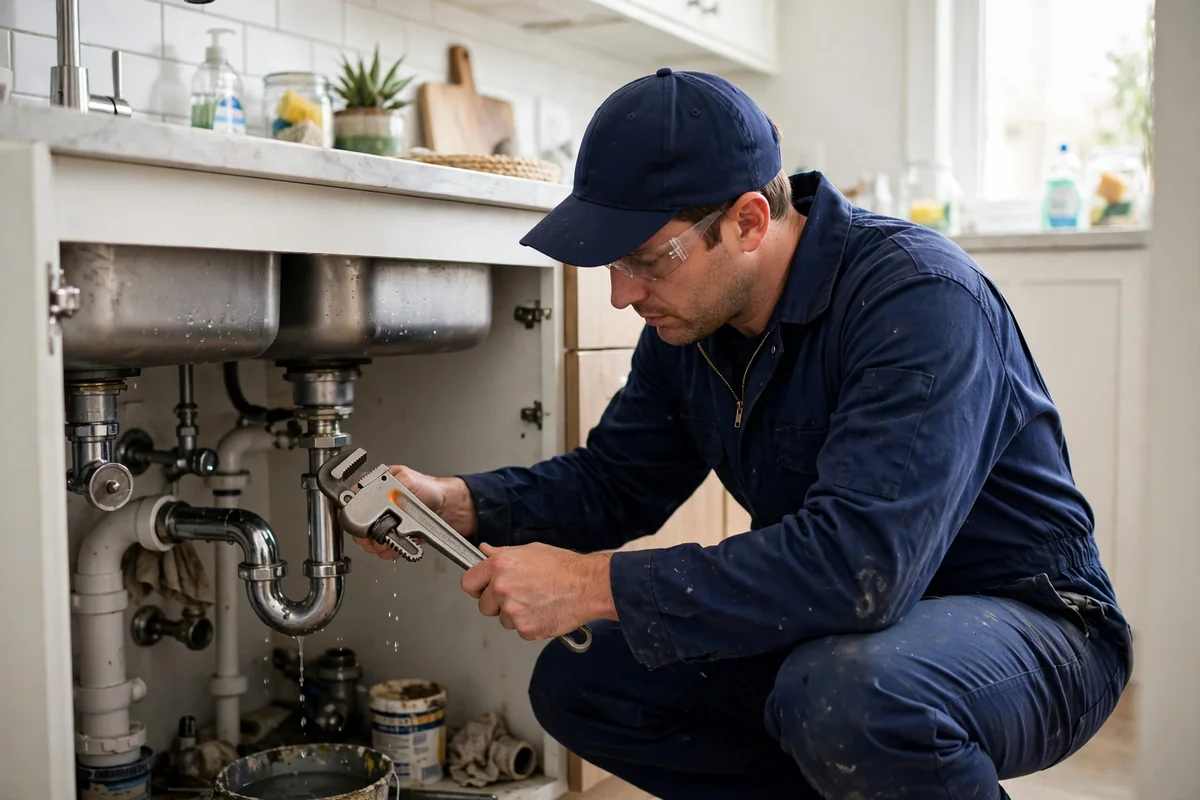
Why Sinks Leak, Clog, and Smell
Under every sink sits the same basic set: a drain strainer, a trap that holds water to block sewer gas, a drain arm to the wall, and hot and cold supply lines with shutoff valves. Each joint in that set has a seal, and seals age. Rubber washers harden. Slip joints loosen with vibration. Metal parts corrode in damp cabinets. When one seal fails, water finds the cabinet floor, often slowly, so damage builds before you notice.
The Deston is a referral service, not a plumbing company. We connect homeowners across all 50 states with independent local plumbers who repair sinks every day. We do not send our own crews. We match you with a nearby pro, you get an upfront price, and the work gets done right. The referral costs you nothing. You pay the plumber for the work, after you approve the price.
Most sink repairs cost between $120 and $350. That range covers common jobs such as a trap swap, a drain seal fix, and a simple clog clear. A corroded drain assembly, a failed faucet, or cabinet damage from a long leak costs more. Your plumber can price your exact job once they see under the sink and test the drain.
Signs Your Sink Needs Repair
Check under the sink often. These signs mean a repair is due, not a new sink.
Water in the cabinet below
A damp cabinet floor, a musty smell, or swollen wood points to a leak at a joint, a seal, or a supply line. Put a dry paper towel under each joint and run the tap to find which joint wets first.
The sink drains slowly
Grease in kitchen lines and hair and soap in bathroom lines narrow the drain over time. A slow drain that returns after plunging may need a trap clean or a line clear by a plumber.
A bad smell from the drain
A dry trap, buildup in the trap, or a blocked vent can all cause smell. Run water and see if the smell fades as the trap fills. If it stays, the trap or vent needs a look.
The faucet drips or the handles leak
A drip at the spout points to a worn cartridge. Water at the handle base points to a failed seal. Both waste water and stain the sink. A cartridge or seal swap usually fixes them.
The sprayer or side hose leaks
Kitchen sprayers fail at the hose, the diverter, or the head connection. A leaking sprayer can soak the cabinet while you wash dishes. A hose swap is a quick job when caught early.
The sink rocks or the rim seal failed
A sink that moves when you press it has a failed rim seal or loose clips. Water then runs under the rim into the cabinet. A reseal and clip fix stops it, as long as the counter and cabinet are still sound.
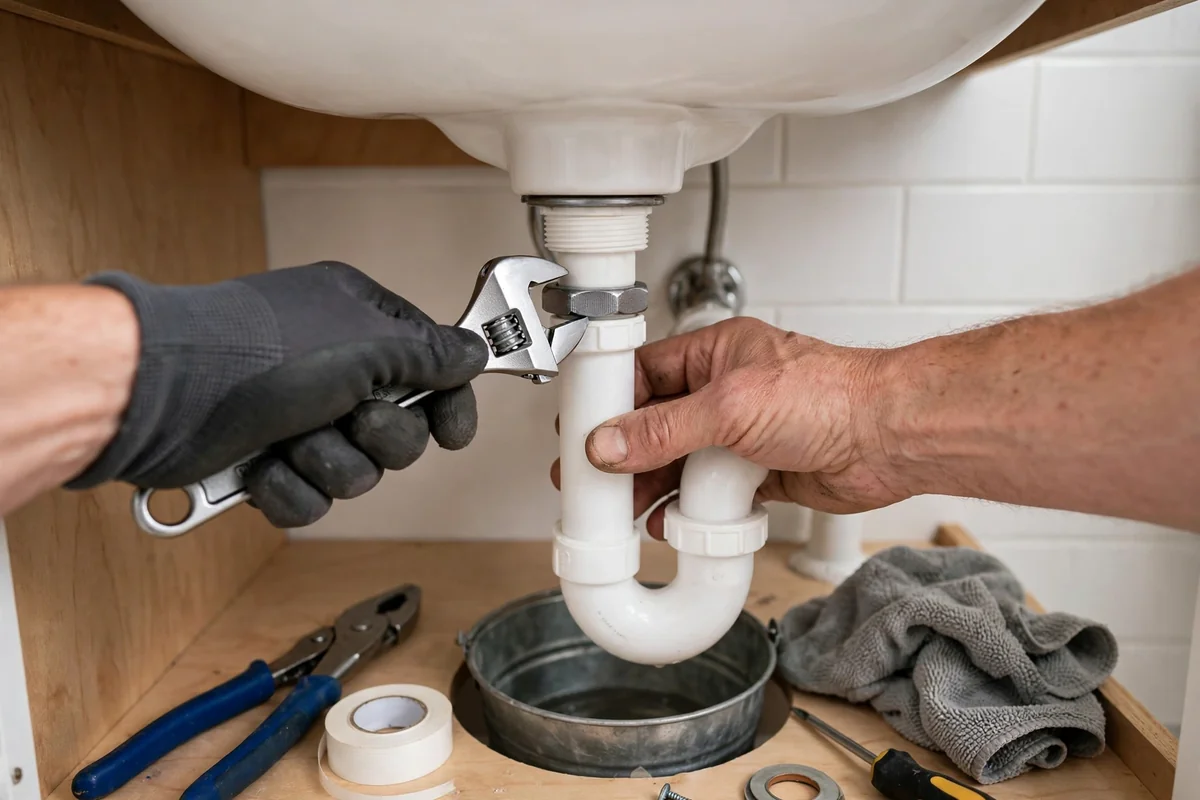
From Call to Dry Cabinet, in Six Steps
Most sink repairs take one visit. Corroded assemblies may need a parts run first.
- 1
You call
Dial (888) 418-3086 and describe the fault: leak, slow drain, smell, or drip. Note kitchen or bathroom, and whether the leak is steady or only when the tap runs.
- 2
We refer a local sink repair pro
We connect you with an independent local plumber who repairs sinks often. They bring common traps, seals, and drain parts.
- 3
The plumber finds the failed part
The pro checks each joint under the sink, tests the drain, and checks the faucet and supply lines. You get a clear cause in plain words.
- 4
You approve the price first
You get upfront pricing before work starts, with the part and labor listed. You approve the price. No work starts without your say so.
- 5
Repair and test at full flow
The pro swaps the failed part, reseals joints, and runs water at full flow while watching every joint. The cabinet should stay dry.
- 6
Prevention notes
The pro shows you what caused the fault and how to delay the next one, such as keeping grease out of kitchen drains and cleaning the trap screen.
Kitchen Sinks vs. Bathroom Sinks: Different Faults
Kitchen sinks take grease, food, and heavy daily use. Grease coats drain lines and traps food, which narrows the line over months. A disposal adds vibration that loosens slip joints. Dishwasher drain hoses tie into the same drain and can back up if the air gap or high loop is wrong. Kitchen sink repair often pairs a drain clear with a trap and seal check, because the fault is rarely one part alone.
Bathroom sinks take hair, soap, toothpaste, and small items dropped down the drain. Hair wraps around the pop-up stopper and slows the drain first. Soap scum coats the trap. A lost cap or ring can block the line fully. Bathroom sink repair often starts at the stopper and trap, which a plumber can clean without touching the wall line. If the drain still runs slow after a trap clean, the wall line needs a look.
Supply side faults hit both rooms the same way. Shutoff valves seize with age and leak when turned. Supply hoses crack and burst. Faucet cartridges wear and drip. If your shutoff valves have not moved in years, tell the plumber before the visit. A seized valve can turn a small repair into a valve swap, and the plumber can plan for it.
Sink Repair Services
One referral can cover the drain, the faucet, and the supply lines.
Drain and trap repair
Slow drains cleared, traps cleaned or swapped, drain assemblies resealed, and strainers replaced. The pro checks the wall line too, so a trap fix is not undone by a deeper blockage.
Leak and seal repair
Rim reseals, drain seal swaps, supply line and shutoff valve fixes, and sprayer hose swaps. Each joint is tested at full flow before the plumber leaves, so the cabinet stays dry.
Faucet and stopper repair
Dripping cartridges, leaking handles, stuck pop-up stoppers, and loose faucets. A cartridge swap restores shutoff, and a stopper fix restores drain control in bathroom sinks.
Repair vs. Replace the Sink
Most sink faults need a repair, not a new sink. This guide shows the line.
| Factor | Repair it | Replace it |
|---|---|---|
| Basin condition | Sound, no chips or rust | Chipped, rusted, or cracked |
| Fault location | Trap, seal, or faucet part | Basin or rim itself failed |
| Failure pattern | First fault, one part | Repeat faults, many parts worn |
| Cabinet state | Dry, no rot | Rotted from long leak |
| Best when | Sink looks and feels sound | Sink itself is worn out |
Before and After: From Leak to Dry Cabinet
The photos below are illustrations of the difference this work makes. They are not photos of a real job.
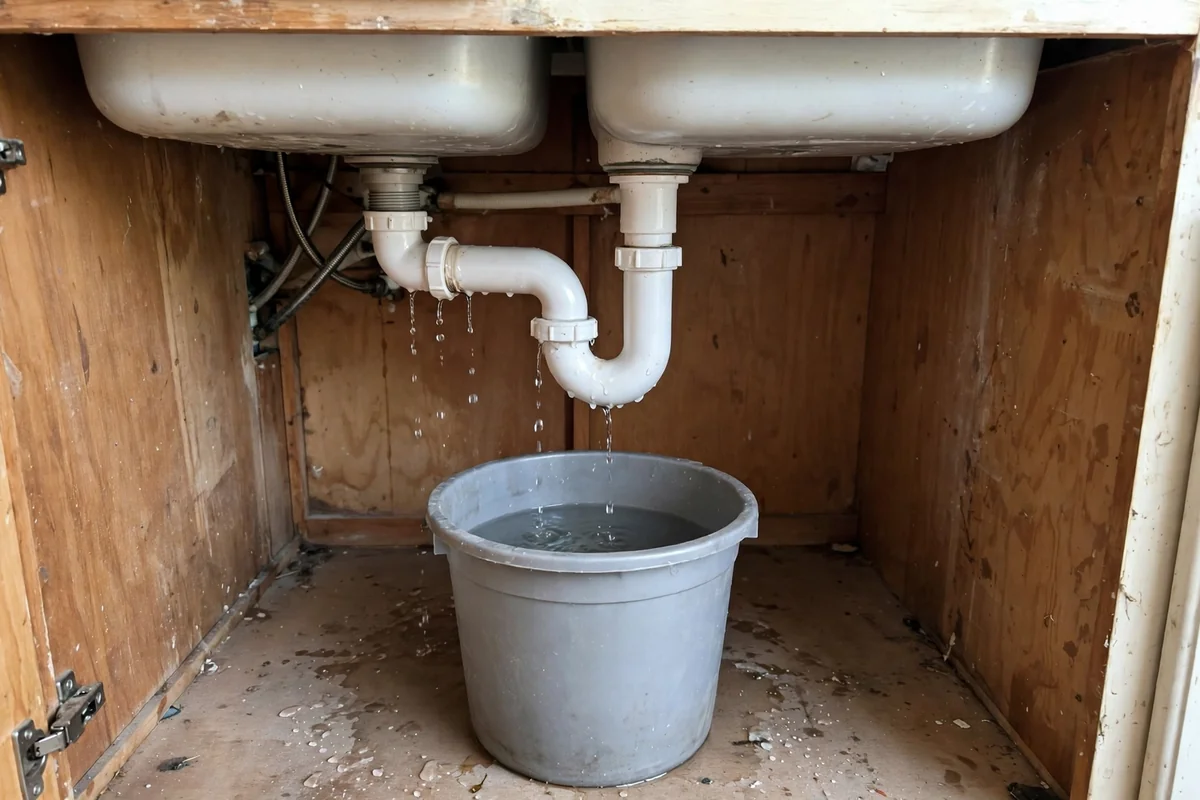 Before
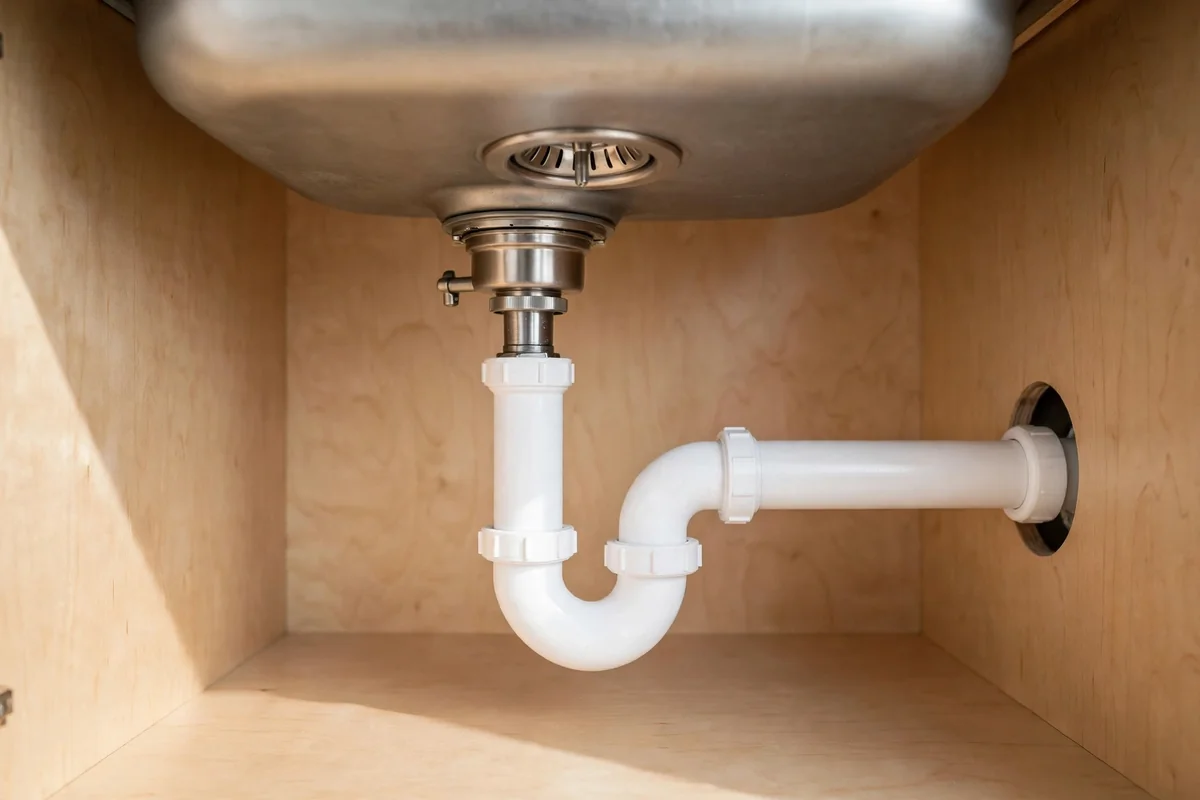 After
What Sink Repair Costs
Typical United States ranges, shown as national averages for planning only. Your matched plumber gives you the price for your home before work starts.
| Job | Typical range |
|---|---|
| Most sink repairs, typical range | $120 to $350 |
| Trap replacement | $150 to $300 |
| Drain assembly reseal or swap | $150 to $350 |
| Faucet cartridge replacement | $150 to $300 |
| Shutoff valve replacement | $150 to $300 |
| Kitchen drain clog clear | $150 to $300 |
Preparing for the Repair Visit
A little prep helps the plumber finish in one visit.
Clear the cabinet below. Remove cleaning supplies and stored items so the plumber can reach every joint and test the drain at once.
Note when the fault shows. Steady leak, leak only when the tap runs, slow drain, or smell after no use. Timing points to the failed part.
Put a towel down if it leaks. A towel or tray under a leaking joint protects the cabinet floor until the visit. Empty any bucket before the plumber arrives.
Do not over tighten joints. A hand tight joint that leaks needs a new seal, not more force. Over tightening can crack plastic traps and make the repair harder.
Tell the plumber about past repairs. Repeat faults point to a deeper cause than one part. Past work history helps the plumber find it faster.
Keep the area clear. Keep pets and kids out of the work area. Tools and drain parts under a sink make it unsafe for wandering.
Frequently Asked Questions
Why is water under my sink?
A joint seal, a trap, a supply line, or the rim seal has failed. Dry each joint with a paper towel, then run the tap and watch which joint wets first. That joint is the source. If the cabinet floor is already swollen or soft, the leak has run for a while and the cabinet may need repair too.
Why does my sink drain slowly?
Grease in kitchen lines and hair and soap in bathroom lines narrow the drain over time. A plunger can clear a soft blockage near the trap. A slow drain that returns after plunging needs a trap clean or a line clear. Never pour grease down a kitchen drain, it is the top cause of repeat clogs.
Why does my sink smell?
A dry trap lets sewer gas into the room. Run water to refill the trap and see if the smell fades. Buildup in the trap, a blocked vent, or a failed drain seal can also cause smell. If the smell stays after the trap fills, call a plumber to check the trap and vent.
Can I fix a leaking trap myself?
Some homeowners swap a trap with basic tools, but plastic traps crack if over tightened and metal traps can be corroded in place. A plumber matches the trap size, sets the seal right, and tests at full flow. For a first leak, a pro visit is worth it to avoid a second leak from a poor seal.
How do I know if I need a new sink or just a repair?
Repair when the basin is sound and one part failed. Replace when the basin is chipped, rusted, or cracked, or when faults repeat across many parts. A plumber can show you the basin condition and price both paths. Most sink faults are repairs, not replacements.
What causes a faucet to drip?
A worn cartridge or washer lets water pass when the handle is off. The fix is a cartridge or washer swap matched to your faucet brand. If the drip continues after a new cartridge, the valve body may be worn. Tell the plumber the faucet brand if you can see it, so they bring the right part.
Is a slow leak under the sink urgent?
Yes, in the sense that it should not wait weeks. A slow leak rots cabinet floors, feeds mold, and can damage the floor below. Put a tray under it, stop using that sink if the leak is heavy, and book a repair soon. Early leaks are cheap to fix. Late leaks are not.
Why does my kitchen sink gurgle?
Gurgling often points to a vent problem or a partial blockage in the drain line. Air trapped by a slow drain escapes through the trap and gurgles. If other drains gurgle too, the vent or the main line needs a look. A plumber can test the drain and vent and find the cause.
Should I use chemical drain cleaners?
Occasional light use is usually fine, but frequent use damages pipes and seals and rarely fixes real blockages. For repeat clogs, a plumber snake or trap clean clears the line without harming it. Tell your plumber if you already used a cleaner, so they can work safely.
Does The Deston charge homeowners for referrals?
No. Our matching service is free to you. You only pay the local plumber for the work done in your home. You approve the plumber price before work starts. The Deston is a referral service that connects homeowners with independent local plumbers. We are not a plumbing company.
How can I prevent sink leaks?
Check under the sink each month for damp spots, and run a dry paper towel along joints. Keep grease out of kitchen drains, and do not over tighten plastic joints. Replace supply hoses that look cracked or bulged. A monthly look catches most leaks before they rot the cabinet.
More Help for Your Home
Sink Installation|Faucet Repair|Drain Cleaning|Kitchen Plumbing|All Services
A Dry Cabinet and a Drain That Works.
Call now and we will refer you to a local sink repair pro. Get a diagnosis, an upfront price, and a sink fixed at the failed part.
(888) 418-3086Call NowThe Deston is a referral service that connects homeowners with independent local plumbers. We are not a plumbing company.