
Gas Line Services
Natural gas powers furnaces, water heaters, stoves, dryers, fireplaces, and outdoor grills in millions of American homes. The gas lines that feed those appliances must be sized correctly, installed to code, and kept leak-free. When you need a new gas line run, an existing line moved, or a suspected leak checked, the work belongs to a qualified pro with gas experience.
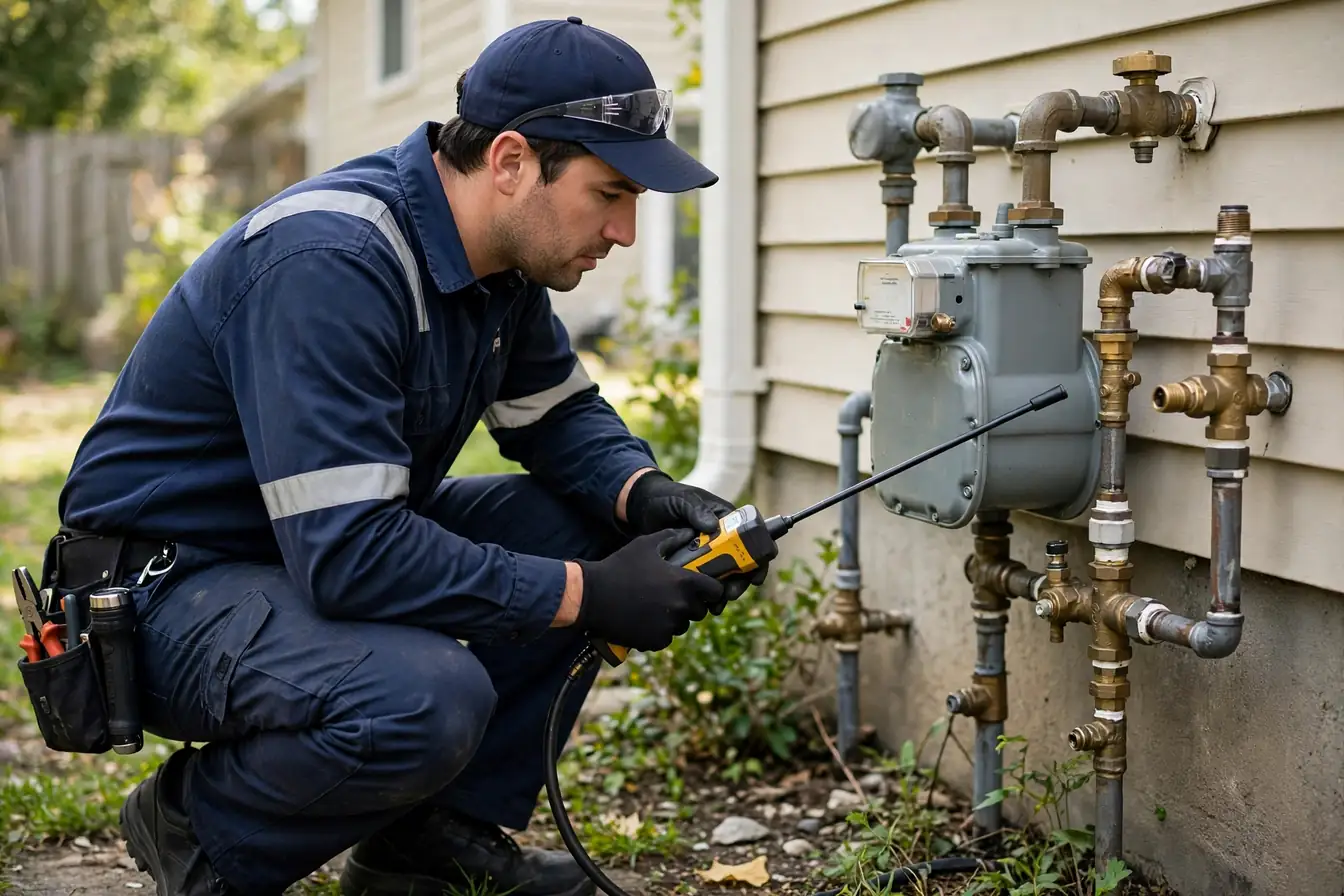
Gas Line Installation, Repair, and Leak Checks
Gas safety first. If you smell gas (a rotten egg odor), hear hissing near a gas line, or suspect a leak, leave your home right away. Do not flip light switches, use phones or appliances inside, light matches, or try to find the leak yourself. Once you are outside and at a safe distance, call your gas utility or 911. Only return when they say it is safe. Gas line diagnosis and repair come after the area is secure, never before.
The Deston is a nationwide referral service. We connect homeowners across all 50 states with independent local plumbers experienced in gas line installation and repair. We are not a plumbing company and we do not send our own technicians. We match you with a qualified local pro who follows local codes, pulls permits where required, and pressure tests every job.
Gas problems range from inconvenient to dangerous, and the same service covers the full arc: a new line for an appliance, an extension during a remodel, a reroute for a moved kitchen, a repair on a failed joint, and a leak inspection when something smells off. The throughline is the same on every job: load math, permitted work, and a pressure test that proves the line holds before gas flows.
Signs You Need Gas Line Service
Treat any of these signs seriously. For smell or hiss, leave first and call second.
You smell rotten eggs near an appliance, meter, or yard line
Utilities add that odor to odorless gas so leaks are easy to detect. Leave the area and call your gas utility or 911 first.
You hear hissing near a gas line or connection
Escaping gas under pressure makes a distinct hiss. Do not investigate. Get out and call for help.
Vegetation dies in a strip above a buried gas line
A patch of dead grass or plants along the line path can point to an underground leak.
Appliance flames look weak, yellow, or keep going out
Low gas flow from a damaged or undersized line starves burners. Pilot lights that will not stay lit are a related clue.
Your gas bill jumps with no change in usage
A leak wastes fuel before it reaches your appliances, and the meter still counts it.
You see corroded, rusted, or physically damaged pipe
Exposed gas pipe that is flaking, dented, or chewed by rodents needs professional attention.
How Gas Line Installation Works
Load math first, permit second, pipe third, test before gas flows.
- 1
Load calculation and pipe sizing
The pro adds up the BTU demand of every appliance the line will serve and sizes the pipe so each appliance gets full flow even when all run at once. Undersized pipe is a common cause of weak appliance performance.
- 2
Permits and planning
Most jurisdictions require a permit for gas line work. The pro plans the route, chooses materials allowed by local code, and schedules inspection.
- 3
Routing
Indoor lines typically run through basements, crawl spaces, or walls to the appliance. Outdoor runs to grills, fire pits, or pool heaters go underground in a trench at code-required depth with proper bedding.
- 4
Pipe installation
The pro cuts, threads, and joins black steel pipe, or runs flexible corrugated stainless steel tubing (CSST) where code allows. Every joint gets sealed with approved pipe dope or tape.
- 5
Shutoff valves
Each appliance gets its own accessible shutoff valve so you can isolate it for service or in an emergency without killing gas to the whole house.
- 6
Pressure test, inspection, activation
Before gas flows, the pro pressurizes the new line with air and watches a gauge for a set time. The line must hold pressure with zero drop. The local inspector reviews the work where required, then the pro connects the appliance, checks every joint with leak detection solution, lights pilots, and confirms proper burner operation.
How Gas Line Repair Works
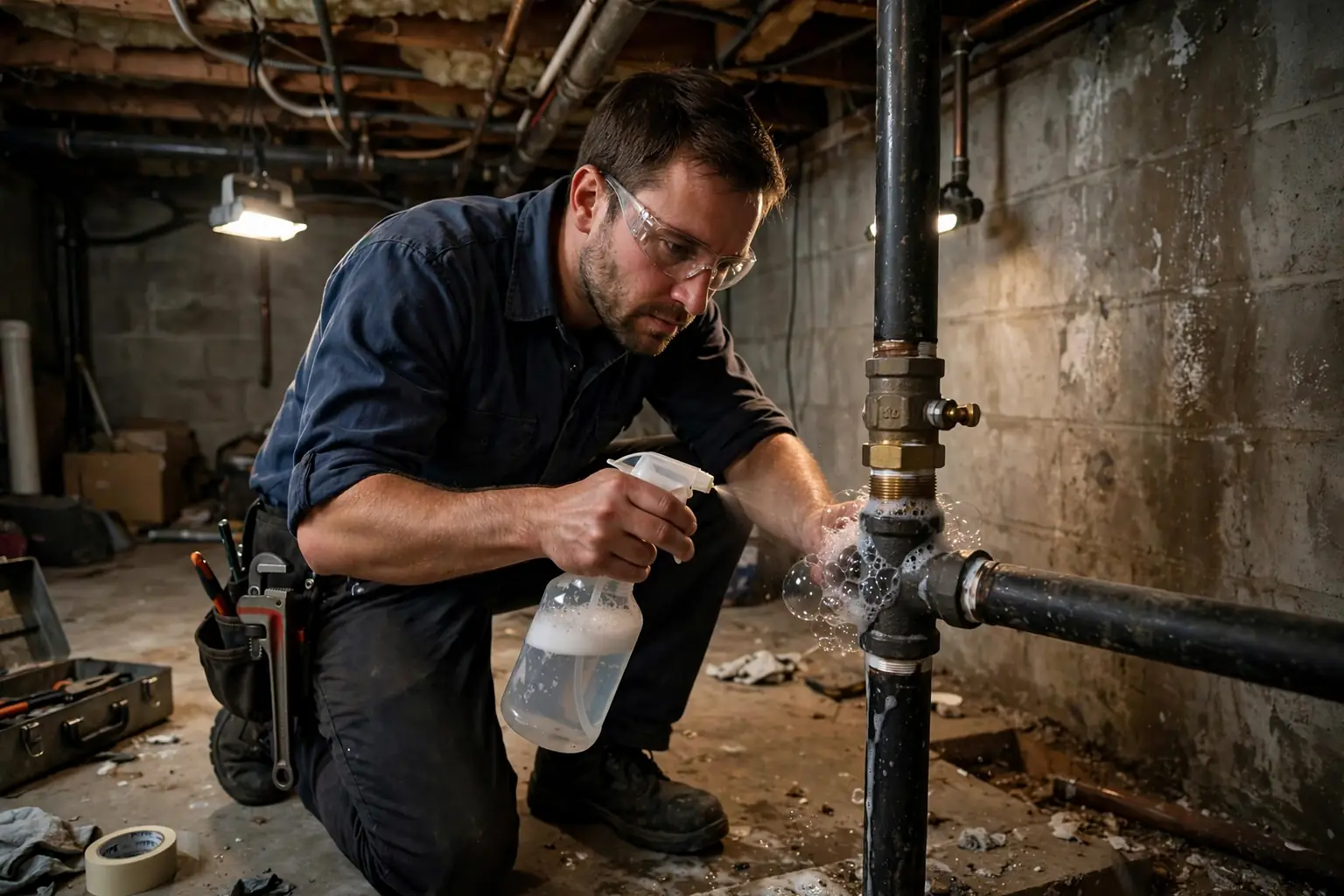
Repair starts with safety and ends with verification. If a leak is suspected, the pro confirms the gas is shut off at the meter or appliance valve before touching anything. Active leaks get the utility involved first. Then the pro uses electronic leak detectors and soapy leak solution on joints to pinpoint the exact failure point, whether it is a bad threaded joint, a corroded section, or damaged CSST.
Gas to the affected section stays off while the pro works, and nearby appliances are checked to make sure none are left in an unsafe state. Small joint failures may be resealed and retested. Corroded or damaged pipe sections get cut out and replaced. Old, undersized, or unbonded CSST is often replaced rather than patched, per local code. The repaired section is pressure tested just like a new installation: no drop on the gauge means the repair holds.
Then the pro turns gas back on, leak checks every joint, relights pilots, and confirms each appliance burns correctly with a steady blue flame. That closeout matters as much as the repair itself, since a joint that passes the pressure test but was never leak-checked at operating pressure is not fully proven.
You are adding a gas appliance when a new range, dryer, fireplace, tankless water heater, or outdoor grill usually needs a new line or an extension of an existing one. A remodel that moves the kitchen, laundry, or fireplace means rerouting gas lines, and the new layout must still meet code for pipe size and shutoff access. When an appliance moves a few feet during a remodel, the pro extends the current line with proper fittings and retests the whole run.
Types of Gas Line Work and Pipe Options
Local code decides which materials are permitted, and your pro will know the rules in your area.
New lines and extensions
Running a dedicated line to a range, dryer, fireplace, or tankless water heater is the most frequent gas job. The line branches from the main manifold or meter and is sized for that appliance plus a safety margin. Extensions move an appliance a few feet with proper fittings and a full retest.
Underground lines to outdoor features
Gas grills, fire pits, patio heaters, and pool heaters need buried lines. These runs use corrosion-protected pipe or sleeved CSST at proper depth, with risers that transition safely above ground.
Pipe materials, upsizing, and safety valves
Black steel pipe is the traditional standard: strong, durable, and accepted everywhere. CSST is flexible, which means fewer joints and faster installation through finished spaces. Some jurisdictions allow copper for gas in limited applications. Adding a high-BTU appliance like a tankless water heater or furnace can exceed what the existing pipe can deliver, so the pro replaces the undersized section with larger pipe. Beyond required appliance shutoffs, some homeowners add excess flow valves or earthquake shutoff valves that stop gas flow automatically during seismic events. When a gas appliance is removed permanently, the open line must be properly capped and tested, not just left behind a wall.
What Gas Line Services Cost
Figures below are United States national averages for reference only. Permits and inspections add to the total in most areas, and your pro should include them in the quote.
| Job | Typical range |
|---|---|
| New indoor gas line run to one appliance | $300 to $800 |
| Gas line through finished walls or long runs | $800 to $1,500 |
| Underground gas line, trenched | $1,000 to $3,000 or more |
| Gas line repair, joint reseal or section replacement | $200 to $800 |
| Pressure test and leak inspection, standalone | $100 to $300 |
| Capping an abandoned line | $100 to $250 |
Before and After: Gas Line Services
Old corroded pipe is a risk. The fix is a clean run, tested, with shutoffs in reach.
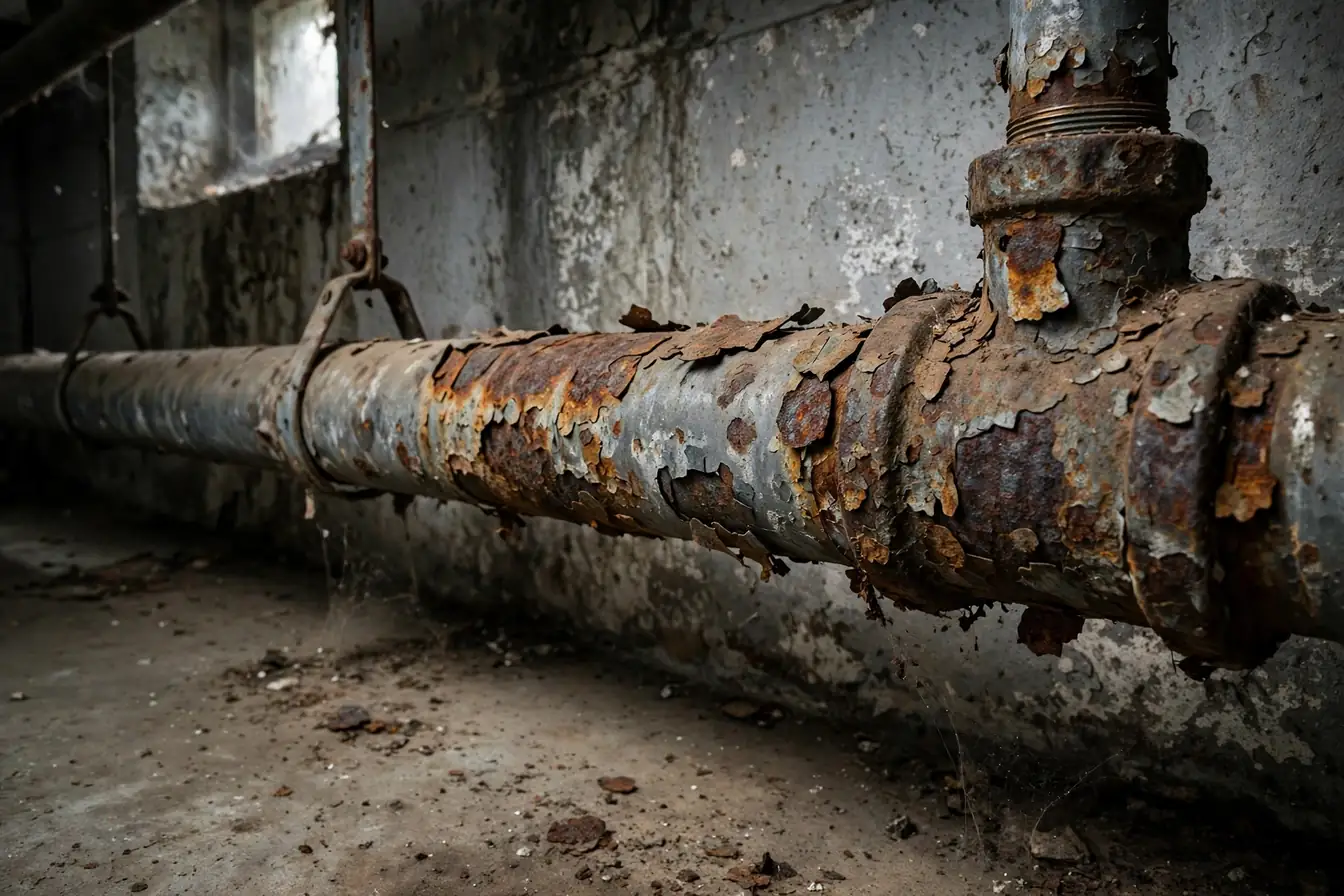 Before
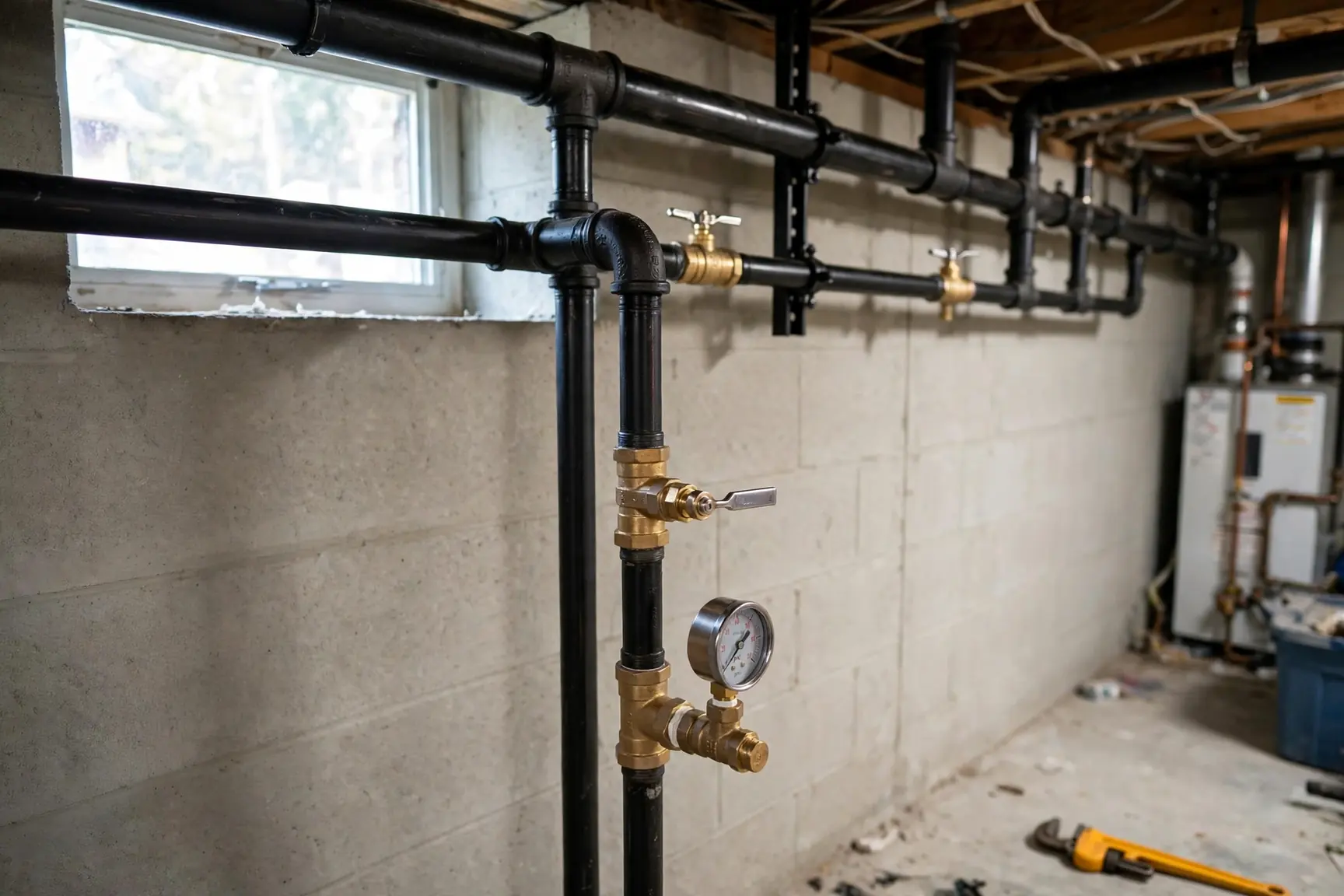 After
The photos above are illustrations that show the kind of change this work brings. They are not photos of a real job.
Preparing for Gas Line Service
Safety first, then paperwork and access.
If you smell gas, leave first. Do not flip switches or use a phone inside. Call the utility or 911 from outside, and only return when they say it is safe.
List every appliance on the line. The sizing math needs the full load, including plans for a future appliance.
Note flame and bill changes. Weak yellow flames, pilots that will not stay lit, and a bill jump with no usage change all help the diagnosis.
Clear access to the meter and runs. Move stored items from basements, crawl spaces, and wall runs the pipe will cross.
Ask for the permit, test, and inspection in the quote. All three should be in writing before work starts.
Keep the sign-off with your home records. Future buyers and insurers both ask for it.
Frequently Asked Questions
What should I do right now if I smell gas?
Leave your home immediately. Do not flip switches, use phones or electronics inside, or try to find the source. From a safe distance outside, call your gas utility or 911. Go back inside only when they say it is safe.
Can a plumber work on gas lines, or do I need a specialist?
In most states, licensed plumbers are permitted to install and repair gas lines, and many specialize in gas work. The Deston connects you with local pros experienced in gas piping who follow local codes and permit rules.
How long does gas line installation take?
A simple indoor run to one appliance often takes half a day. Underground runs with trenching can take one to two days. Permit review and inspection scheduling add time before and after the physical work in many jurisdictions.
Which pipe material is best for gas lines?
Black steel is the proven standard and is accepted everywhere. CSST installs faster with fewer joints in finished spaces. The right choice depends on your local code, the run length, and access. Your pro will recommend what fits your home and passes inspection.
Do I need a permit for gas line work?
In most areas, yes. Gas line installation and most repairs require a permit and an inspection. A reputable pro handles the permit as part of the job. Be wary of anyone who suggests skipping it.
Can I install a gas line myself?
This is not a DIY job. Gas piping requires load calculations, code knowledge, proper materials, and pressure testing. Mistakes can cause leaks, fires, or explosions, and unpermitted gas work can void your homeowners insurance. Hire a qualified pro.
How do plumbers test for gas leaks?
Pros use electronic gas detectors for quick screening and apply leak detection solution to every joint, watching for bubbles that reveal escaping gas. For new lines and repairs, they run a timed pressure test with a gauge. Zero pressure drop means the line is sound.
How often should gas lines be inspected?
Have visible gas piping checked any time you notice corrosion, damage, or appliance problems. Many pros recommend a professional look at your gas system every few years, and always after earthquakes, foundation work, or major renovations near gas lines.
What does capping an abandoned line involve?
When a gas appliance is removed permanently, the open line must be properly capped and tested, not just left behind a wall. It is a small job with real safety value, and the cap is pressure tested like any other joint.
Should I add an earthquake shutoff valve?
If you live in an earthquake zone, it is worth discussing. Excess flow valves and earthquake shutoff valves stop gas flow automatically during seismic events, which cuts the risk of a post-quake leak.
Why do appliance flames look yellow after a line change?
Weak or yellow flames often mean low gas flow from a damaged or undersized line, or an appliance that needs adjustment after the change. Tell your pro right away, since a steady blue flame is the sign of correct combustion.
What makes an underground gas run cost more?
Trench length, soil conditions, and surface restoration drive the price. Rock, concrete driveways, and landscaped yards all raise the cost, and longer runs need larger pipe, which adds material cost too.
More Plumbing Help
Gas Line Installation|Gas Line Repair|Emergency Plumber|Plumbing Installation|All Services
Gas Work Deserves a Pro, a Permit, and a Pressure Test.
One call connects you with a local gas-experienced pro who sizes the line, pulls the permit, and proves the work holds before gas flows. Call now.
(888) 418-3086 Call NowThe Deston is a referral service that connects homeowners with independent local plumbers. We are not a plumbing company.