
Sump Pump Installation
Water finds the lowest point in your home, and that is usually the basement or crawl space. Heavy rain, rising groundwater, and spring thaws can push water through foundation cracks and floor joints. A sump pump sits in a pit at that low point and pumps water out before it spreads across your floor. For homes in flood-prone areas, it is the single most important piece of equipment you own.
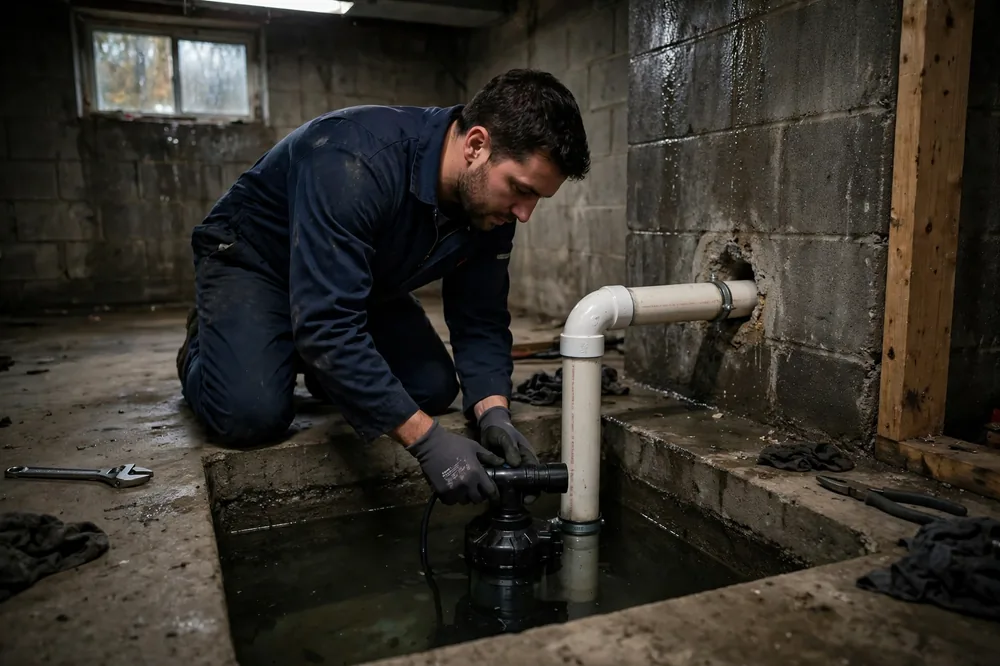
A Dry Basement Starts With the Right Pump
The Deston is a nationwide referral service. We connect homeowners across all 50 states with independent local plumbers who install sump pumps and drainage systems. We are not a plumbing company and we employ no technicians. We match you with a nearby pro who knows your area’s water table, soil, and storm patterns.
Installation involves more than dropping a pump in a hole. Proper sizing, a correctly dug pit, a reliable discharge line, and a check valve all matter. A pro gets each piece right so the pump works when the storm hits, not just on a calm test day.
Signs You Need a Sump Pump
Water pools in the basement after rain
Even shallow pooling signals that groundwater is winning. A pump at the low point stops the spread before it reaches stored items.
The basement smells musty
Damp concrete and persistent musty odors mean moisture is getting in. A pump plus drainage lowers the moisture that feeds mold and odor.
Efflorescence on foundation walls
Those white chalky streaks are mineral deposits left by seeping water. They mark where water travels through the wall.
You have no pump and a high water table
Neighbors with pumps are a strong hint about your street. If nearby homes pump regularly, yours likely needs one too.
The old pump is undersized
It runs constantly during storms and still cannot keep up. Sizing up, not running harder, is the fix.
You are finishing the basement
Drywall and flooring demand real water protection first. Finish only after the pump, backup, and alarm are in place.
Your home sits at the bottom of a slope
Runoff from higher ground heads straight for your foundation. A pump at the low point is your last line of defense.
Insurance or a buyer requires it
Some policies and sales contracts demand a working sump system. An installed, tested system satisfies both.
The pit fills even when it is not raining
Groundwater levels rise and fall with seasons, not just storms. A high water table keeps the pit active year-round. That is normal and exactly what the pump is for.
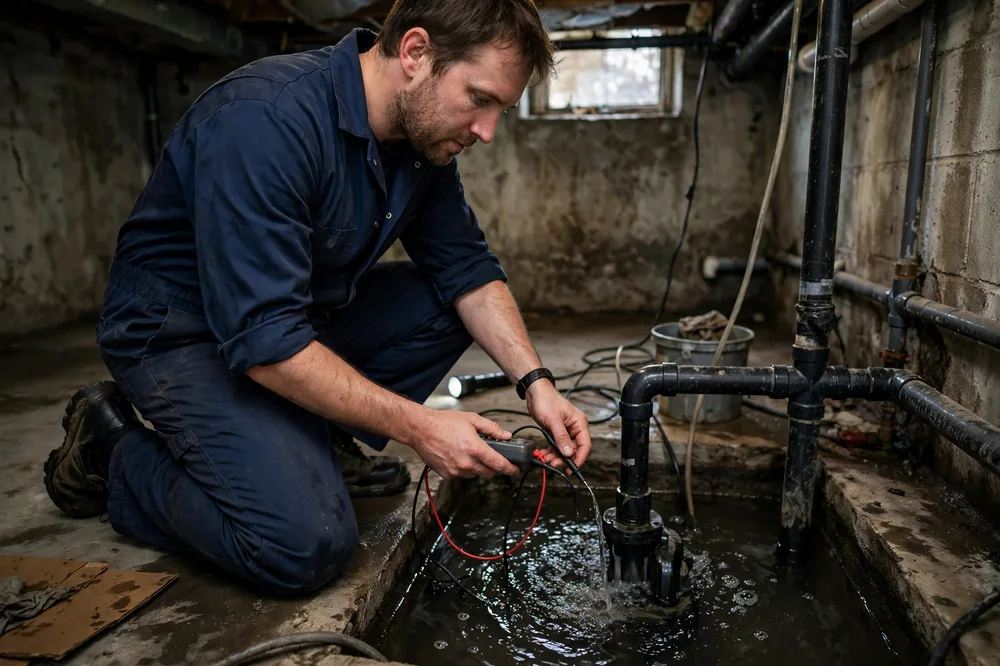
How Sump Pump Installation Works
- 1
Call The Deston
Dial (888) 418-3086. Tell us about your water problems, basement layout, and power situation.
- 2
We match you with a local pro
We connect you with an independent plumber near you who installs sump systems and understands local groundwater conditions.
- 3
Site assessment
The pro finds the lowest point, checks for existing drainage, and decides pit location and pump capacity.
- 4
Upfront price
You get a clear quote for the pit, pump, discharge line, and any extras like battery backup before work starts.
- 5
Pit and pump install
The pro breaks the floor, digs the pit, sets the basin, installs the pump and check valve, and runs the discharge line outside well away from the foundation.
- 6
Test and walkthrough
The pro floods the pit to verify the pump cycles on and off, checks the discharge flow, and shows you the alarm and maintenance basics.
Types and Options
Two pumps, two power sources, one pit: that is the standard for a finished basement.
Submersible pumps
Submersible pumps sit inside the pit, underwater. They run quieter, handle debris better, and last longer. Most pros recommend submersible for primary duty. Horsepower ranges from 1/4 to 1 HP for residential use.
Pedestal pumps
Pedestal pumps keep the motor above the pit on a long shaft. They cost less and are easier to service, but they run louder and have shorter lives. They suit tight budgets and shallow pits.
Battery backup systems
Battery backup systems are essential, not optional, in storm country. Power fails exactly when you need the pump most. A backup pump with a deep-cycle battery kicks in automatically during outages.
Water-powered backup pumps
Water-powered backup pumps use municipal water pressure instead of electricity. They need no battery and run as long as city water flows. They use a lot of water per gallon pumped, so check local rules.
Combination systems
Combination systems pair a primary electric pump with a battery backup in one pit. This is the gold standard for finished basements. Two pumps, two power sources, one pit.
Alarms and smart monitors
Alarms and smart monitors alert you when water rises too high or the pump fails. Wi-Fi models send phone alerts. A $50 alarm can save a $20,000 finished basement.
Pit Placement Decides How Well the Whole System Works
The lowest point in the basement is the natural choice, and the pro confirms it with a level rather than eyeballing. Keep the pit away from the furnace and water heater so service access stays clear. A sealed lid with a gasket cuts radon entry and dampens noise. Small details, but they separate a pro install from a rushed one.
The discharge line matters just as much as the pit. It should run at least 10 to 20 feet from the foundation, downhill if possible. Dumping it next to the house just recycles the same water. Some cities restrict discharge to storm drains, so the pro checks local rules. In cold climates, the discharge line needs freeze protection, since a frozen line can back water into the pit during a thaw.
Sizing follows two numbers: how much water arrives, and how high it must be lifted. The pro measures head height and inflow. Oversizing slightly beats undersizing. A pump that runs short, strong cycles lasts longer than one that runs flat out through every storm.
Keeping Your Sump System Ready for the Next Storm
A sump pump is the rare home system that must work perfectly on the worst day of the year and may sit idle for months before that day. That idle time is what kills pumps. Bearings seize, floats stick, and discharge lines clog while no one is watching. A simple routine, done a few times a year, keeps the system ready.
Test the pump every few months by pouring a bucket of water into the pit. The float should rise, the pump should start, and the pit should drain to its normal level before the pump shuts off. If the pump hums without pumping, or runs without stopping, call a pro before the next storm. Testing with a bucket is safe and takes five minutes, and it is the single most useful habit a homeowner can build around a sump system.
Clean the inlet screen yearly, and check the check valve and the discharge line for clogs each spring. The check valve stops pumped water from flowing back into the pit when the pump stops, and a failed valve makes the pump cycle twice as often. Outside, walk the discharge line after winter to confirm it is not crushed, frozen, or blocked by leaves and ice. A blocked discharge line can flood a basement even with a perfect pump.
Battery backup needs its own check. Test the backup pump the same way you test the primary, and replace the battery on the schedule the maker gives, usually every few years. A dead backup battery is the most common reason a storm flood happens in a home that already owns a backup system. Keep the battery on its charger, and replace it at the first sign of weak performance rather than after a failure.
Plan replacement before failure, not after. A quality pump lasts seven to ten years with light use, and hard-working pumps in wet areas may last five. Note the install date on the pit lid or in your home records, and budget for a replacement in the final year of that range. Replacing a working pump a year early costs far less than replacing a flooded basement.
What Sump Pump Installation Costs
Call (888) 418-3086 for an upfront quote from a local pro.
| Job | Typical range |
|---|---|
| Standard installation, pit + pump + discharge line | $800 to $2,000 |
| Adding battery backup, most jobs | $1,500 to $3,000 |
| Combination primary-plus-backup system | $2,000 to $3,500 |
Before and After: A Basement Protected
The photos below are illustrations of the difference a sump system makes. They are not photos of a real job.
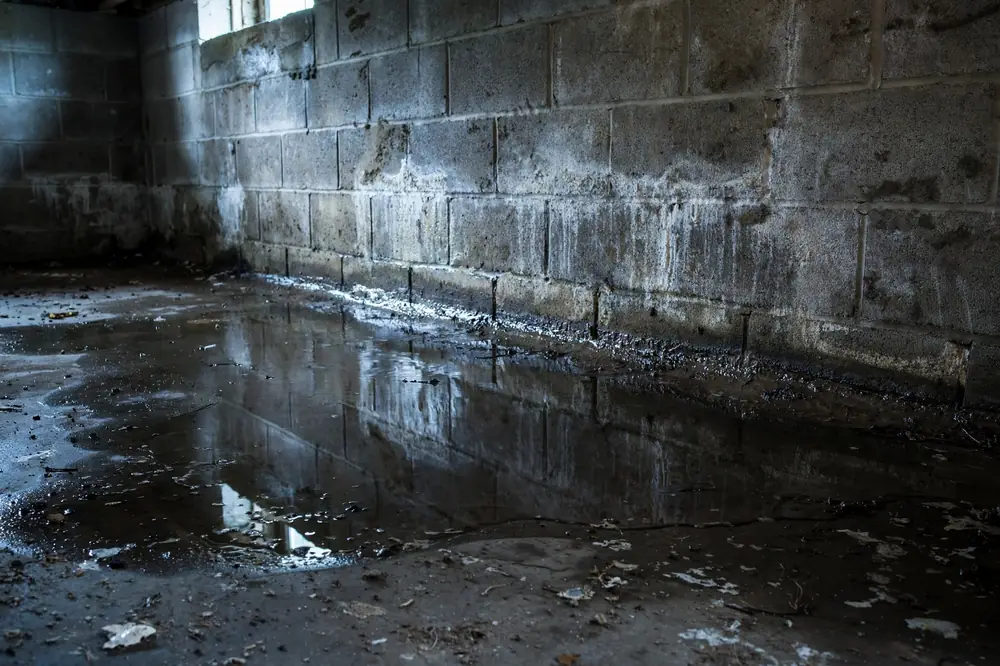 Before
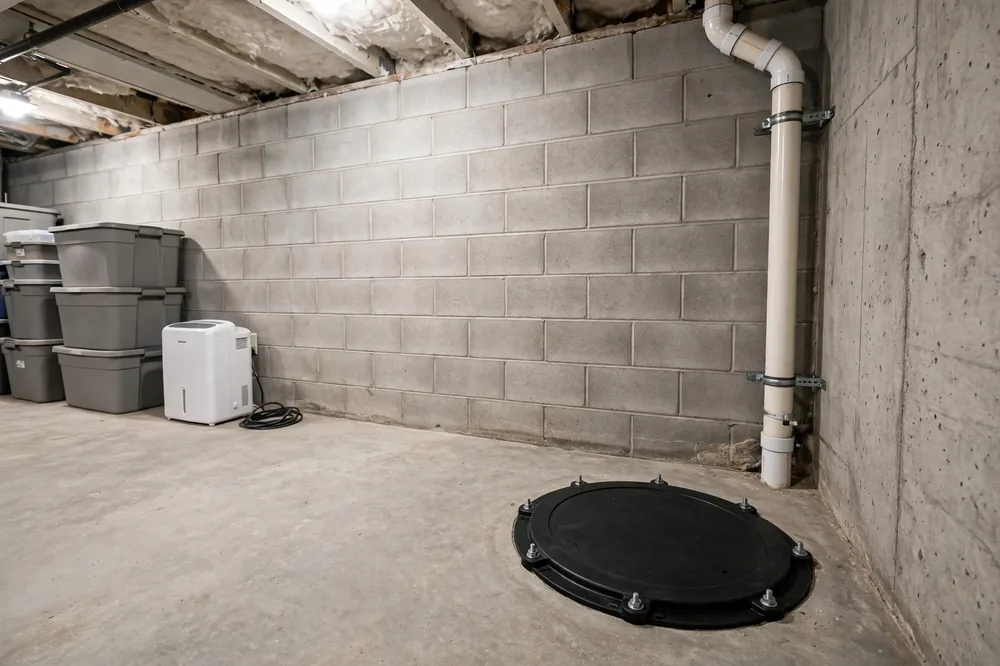 After
Frequently Asked Questions
Where should the discharge line go?
At least 10 to 20 feet from the foundation, downhill if possible. Dumping it next to the house just recycles the same water. Some cities restrict discharge to storm drains, so the pro checks local rules.
Do I really need battery backup?
Yes, if storms knock out your power. Outages and heavy rain arrive together. A pump with no power is a decoration. Battery or water-powered backup covers the gap.
How long do sump pumps last?
Seven to ten years for a quality pump with light use. Hard-working pumps in wet areas may last five. Replace proactively, not after a flood.
Can a sump pump handle a finished basement?
Yes, and finished basements are exactly where you want the best system: primary plus backup plus alarm. The cost of protection is tiny next to the cost of ruined drywall and flooring.
Why does my pit fill even when it is not raining?
Groundwater levels rise and fall with seasons, not just storms. A high water table keeps the pit active year-round. That is normal and exactly what the pump is for.
What size pump do I need?
It depends on how much water arrives and how high it must be lifted. The pro measures head height and inflow. Oversizing slightly beats undersizing.
What if my existing pump stops working?
That is a repair job, not a new install. See our sump pump repair page for troubleshooting and replacement guidance.
Does a sump pump need maintenance?
Yes. Test it every few months by pouring water in the pit. Clean the inlet screen yearly. Check the check valve and the discharge line for clogs each spring.
Should I add an alarm even with a backup pump?
Yes. A backup pump can fail silently, and the alarm is what tells you water is rising before it reaches the floor. Wi-Fi models alert your phone when you are away.
Can a sump pump run dry?
No, and it should not. The float switch stops the pump when the pit empties. A pump that runs dry overheats, so the switch setting matters as much as the pump itself.
More Basement and Flood Help
Sump Pump Repair | Emergency Plumber | Well Pump Services | All Services
A Dry Basement Starts With the Right Pump Installed the Right Way.
The Deston serves homeowners across all 50 states, matching each with a local pro who installs sump systems built for local conditions.
(888) 418-3086 Call NowThe Deston is a referral service that connects homeowners with independent local plumbers. We are not a plumbing company.