
Frozen Pipe Repair
When temperatures drop hard, water inside your pipes can turn to ice. Ice blocks the line. Pressure builds behind the blockage. If the pressure wins, the pipe splits and you get a flood the moment it thaws.
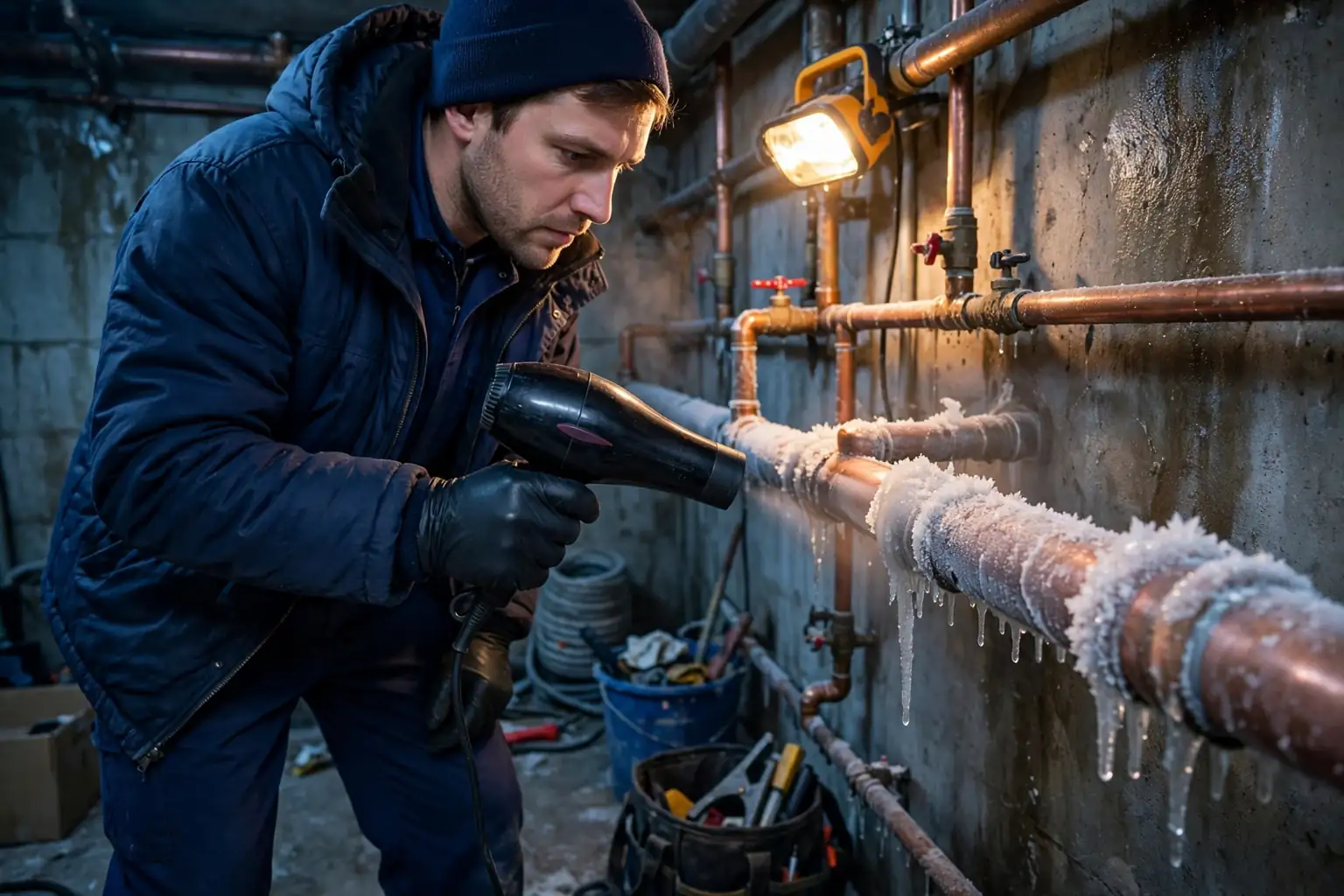
Thawing Done Right, Damage Fixed Fast
Frozen pipe repair covers both sides of this problem: thawing lines safely and fixing the damage freezing leaves behind. Thawing a frozen pipe the wrong way is dangerous. Open flames, torches, and heat guns can start fires or crack the pipe. A pro knows how to bring a line back without damage.
The hard part is that a freeze often hides its damage. A pipe can look fine while it is still frozen, then split open the moment water flows again. That is why a careful thaw includes a close watch on the thawed section and a check of the joints nearby. Freeze stress weakens joints even where the pipe itself holds.
The Deston is a referral service that connects homeowners with independent local plumbers in all 50 states. We are not a plumbing company and we do not employ technicians. Call (888) 418-3086 and we will match you with a local pro who handles frozen pipes. That plumber gives you upfront pricing and does the work.
Signs You Need Frozen Pipe Repair
Cold weather symptoms are easy to miss until the thaw turns them into a flood.
A tap that gives no water
The classic sign. One faucet runs dry while others work fine. The line feeding that tap has likely frozen solid. Note which taps are dead. That map helps the plumber find the freeze fast.
Water that slows to a trickle
A partial freeze narrows the pipe. Flow drops to a thin stream even with the tap wide open. A trickle on a bitter morning is a warning, not a quirk. Act before it becomes a full blockage.
Frost on exposed pipes
Visible white frost or ice on pipes in the basement, garage, or crawl space means the water inside is at or below freezing. Frost on the outside is the freeze announcing itself. Do not wait for the tap to go dry.
Bulging or cracked pipe
Ice expansion swells the pipe wall. A visible bulge is a pipe about to split, or one that already has. If you see a bulge, find your main shutoff valve now, before the thaw arrives.
Strange smells from a tap
A frozen line can trap odors, or a blocked drain line can push sewer gas back. Either way, an odor tied to cold weather deserves a check. Smells that appear only during a cold snap point to a freeze problem.
Wet spots after a thaw
Temperatures rise and suddenly a wall is damp or a ceiling drips. The freeze split the pipe, and the thaw let water pour out. Shut the water off at the main valve and call right away. Every minute adds water damage.
Gurgling or banging in the walls
Air and ice moving through a line make odd noises. Gurgling on a bitter cold morning often comes before a full freeze. Banging can mean pressure building behind an ice blockage.
One side of the house loses water
Freezes hit the coldest runs first: north facing walls, rooms over garages, and additions with thin insulation. When one zone goes dry while the rest of the house runs fine, the frozen section is almost always in that zone’s exterior wall or crawl space.
Outdoor taps that will not shut off right
Hose bibs and their feed lines freeze early and thaw late. A bib that drips after you close it, or a handle that will not turn in cold weather, often means ice inside the line behind it.
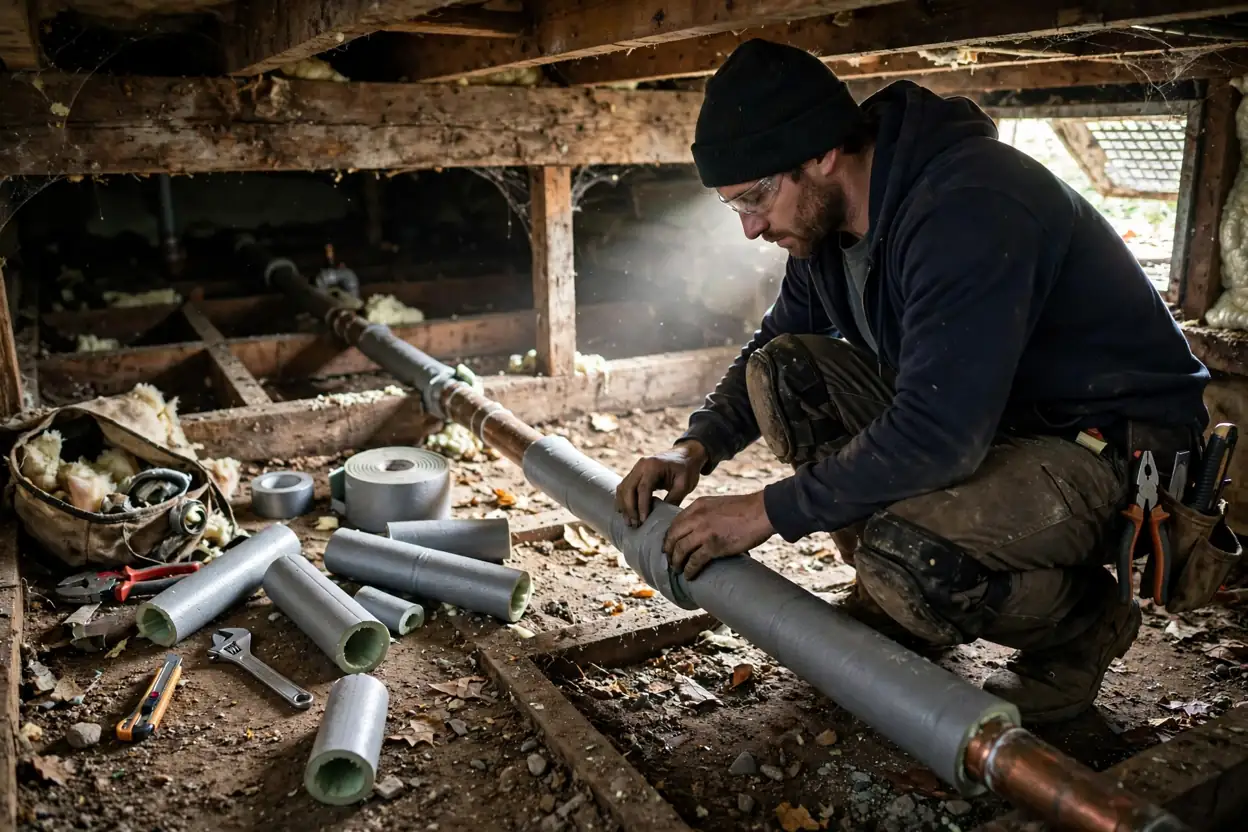
Locate, Thaw, Inspect, Protect
A good frozen pipe visit follows clear stages.
- 1
Call for a local pro
Dial (888) 418-3086. Mention which taps are affected and how cold it has been. This helps the plumber bring the right thawing gear.
- 2
Locate the frozen section
The plumber traces the dead line from the tap back toward the main. They feel along exposed pipe for the ice cold section and check likely freeze points: exterior walls, unheated crawl spaces, and attics.
- 3
Thaw the line gradually
The plumber opens the affected tap, then applies steady, gentle heat starting at the tap end and moving back toward the blockage. Electric heat tape, warm towels, and hair dryers on low are common tools. The open tap lets melting water and steam escape instead of building pressure.
- 4
Inspect for splits
Once water flows, the plumber watches the thawed section closely. Freeze damage often hides until the ice melts. Any split or cracked length gets marked for repair.
- 5
Repair burst sections
Damaged pipe gets cut out and replaced with new material, just like any other pipe break. The plumber checks joints nearby too, since freeze stress weakens them.
- 6
Winterize the line
Before leaving, the plumber recommends protection: pipe insulation, heat tape on exposed runs, or rerouting a line out of an exterior wall. This step turns a repair visit into lasting prevention.
Types of Frozen Pipe Help
From a same day thaw to a permanent fix for a line that freezes every winter.
Professional thawing
For a frozen line that has not burst, a plumber thaws it safely and checks the full run for damage. This is the right call when you are unsure where the freeze sits or the pipe runs inside a finished wall.
Freeze break repair
When thawing reveals a split, the damaged section comes out and new pipe goes in. Copper, PEX, and CPVC each have their own fittings, and the plumber matches the existing system.
Pipe insulation
Foam sleeves slip over exposed pipes in basements, crawl spaces, and garages. Insulation slows heat loss and buys the line time during cold snaps. It is cheap protection that pays for itself after one avoided freeze.
Heat tape and cables
Electric heat tape wraps around vulnerable pipes and switches on in cold weather. Self regulating cable adjusts its own heat output. A plumber can install it on the runs that freeze year after year.
Rerouting problem lines
Some pipes freeze because they never should have run through an exterior wall or an unheated attic. Moving the line into conditioned space ends the cycle permanently. It costs more than insulation but solves the root cause.
Sealing air leaks
Cold air pouring through gaps around pipe penetrations freezes lines from the outside in. Sealing those gaps with caulk or foam, plus insulating the wall cavity, cuts the cold air reaching the pipe.
Where Freezes Happen, and Why
Knowing the freeze points helps you protect them before the next cold snap.
Exterior walls
Supply lines in exterior walls sit inches from cold air with only drywall and thin insulation between. Wind drives cold straight through gaps and outlets. These lines freeze first in most homes.
Protect: insulate the wall cavity, seal gaps around the pipe, and keep a slow drip running on the coldest nights.
Crawl spaces and attics
Unheated spaces under and above the house drop to outdoor temperatures fast. Pipes there have no warm air around them at all. A vent left open in a crawl space can freeze a line overnight.
Protect: foam sleeves on every exposed run, close crawl vents in winter, and add heat cable to the worst runs.
Garages
Garage walls and ceilings are rarely insulated like living space. Lines feeding a garage sink, a laundry room above the garage, or an outdoor bib freeze early in the season.
Protect: insulate garage lines, keep the garage door closed in cold snaps, and drain outdoor bibs before winter.
Outdoor hose bibs
A hose left attached traps water in the bib and its feed line. That trapped water freezes, expands, and splits the pipe inside the wall where you cannot see it until spring.
Protect: disconnect hoses in fall, shut off the interior valve, and drain the bib.
What Frozen Pipe Repair Costs
Costs split into two parts: the thaw and any repair the thaw reveals. United States ranges:
| Job | Typical range |
|---|---|
| Professional thawing visit | $100 to $300 |
| Burst pipe repair (added when a split is found) | $200 to $800 or more, depending on access and material |
| Insulating exposed runs | $100 to $400 for a typical basement or crawl space |
| Heat tape installation on a few vulnerable lines | $200 to $500 |
Before and After: Burst Pipe to Protected Pipe
The photos below are illustrations of freeze damage and the protected repair that follows. They show the kind of change to expect, not one specific job.
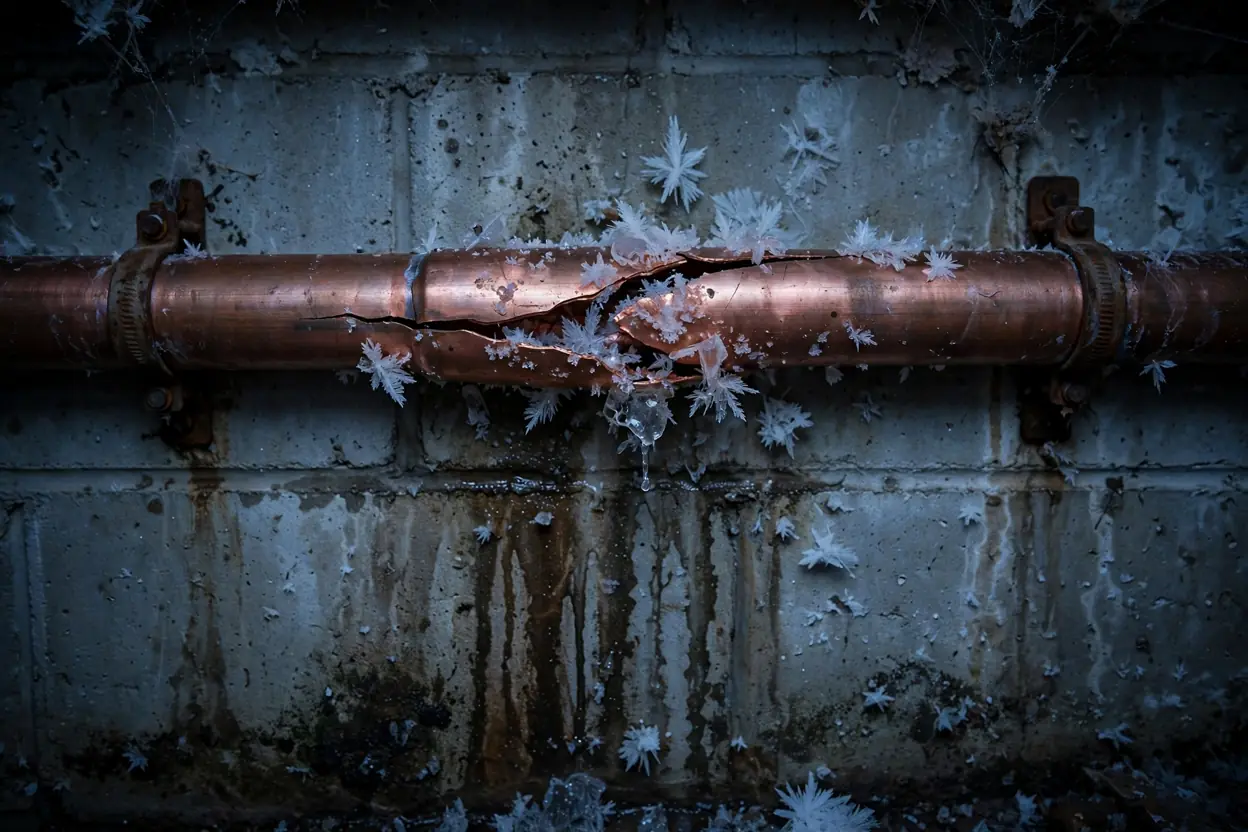 Before
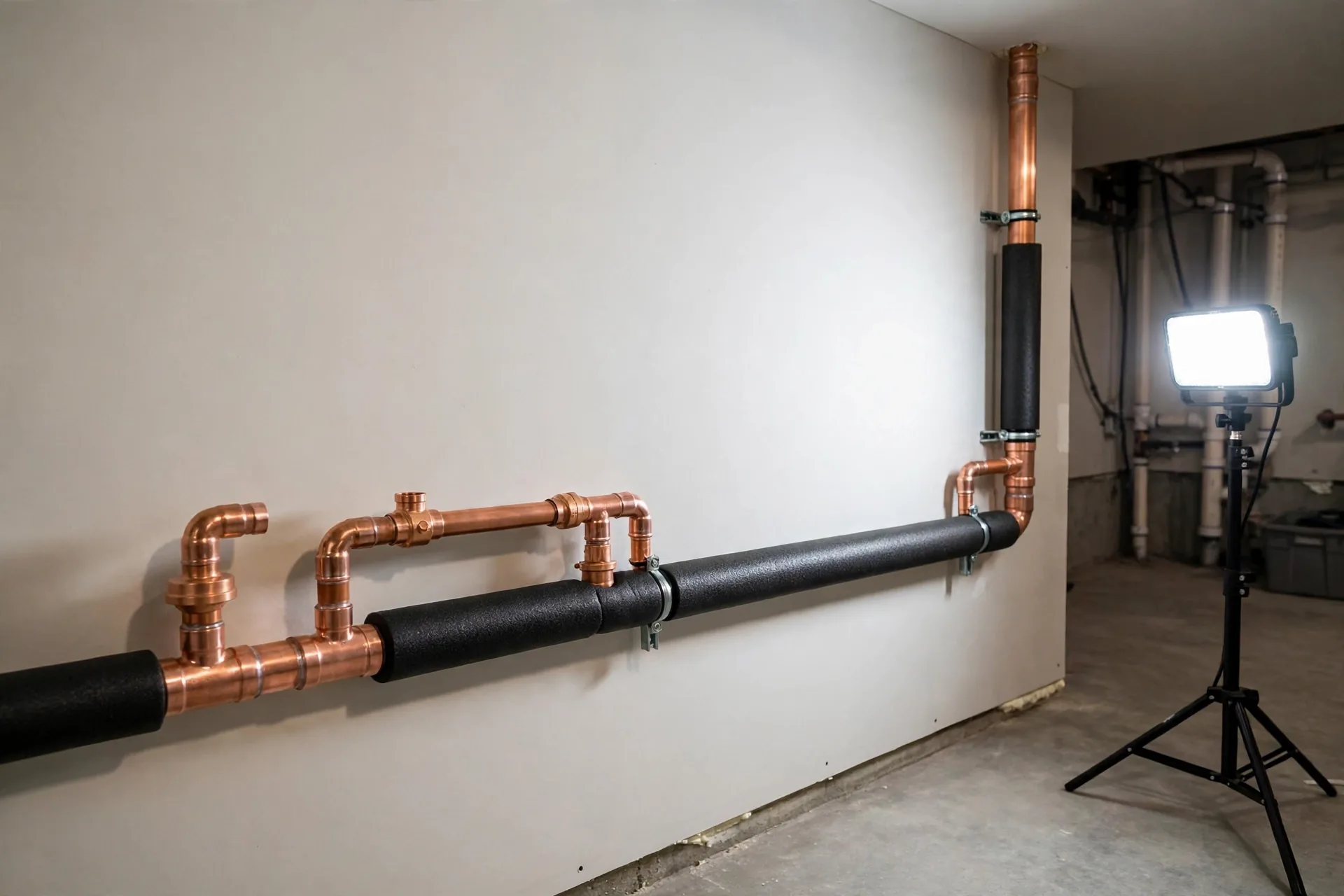 After
Before the Plumber Arrives
These steps protect your home while you wait, and they help the plumber work faster.
Find your main shutoff valve now. If a thaw reveals a burst, you will need to kill the water in seconds. Make sure every adult in the home knows where the valve sits and that it turns.
Keep the dead tap open. An open tap gives melting water and steam a way out instead of building pressure behind the ice. Leave it open until the plumber says otherwise.
Do not use flames. No torches, no heat guns, no open flame on a frozen pipe. Fire risk and cracked pipes are both worse than the freeze itself.
Note which taps are dead and when they stopped. The pattern tells the plumber which line froze and roughly where. Write it down while it is fresh.
Move stored items away from the suspect pipes. Clear the basement wall, crawl access, or garage run so the plumber can reach the line at once.
Watch for the thaw. As temperatures rise, check walls and ceilings below the frozen line for damp spots. A split shows itself at thaw time, and fast action limits the damage.
Frequently Asked Questions
Can I thaw a frozen pipe myself?
You can try gentle heat on an exposed pipe you can see and reach. Use a hair dryer on low or warm towels, and keep the tap open. Never use a torch, heat gun, or open flame. If the pipe sits inside a wall, if you cannot find the frozen section, or if you see any bulging, call a plumber instead.
At what temperature do pipes freeze?
Pipes can freeze when temperatures sit at or below 20 degrees Fahrenheit for several hours, though poorly insulated lines have frozen in the upper 20s. Wind chill against an exposed wall speeds it up. Pipes in exterior walls, attics, and crawl spaces freeze first.
Should I leave taps dripping during a cold snap?
Yes, a slow drip on taps fed by vulnerable lines keeps water moving, and moving water resists freezing. Drip both hot and cold on lines that run through exterior walls. The small water cost beats a burst pipe repair by a wide margin.
How do I know if my frozen pipe also burst?
You often cannot tell until it thaws. Watch the thawed section closely as water returns. Any spray, drip, or damp spot means a split. Keep the main shutoff valve location in mind during every thaw so you can kill the water fast if a burst shows itself.
Which pipes are most likely to freeze?
Supply lines in exterior walls, unheated garages, crawl spaces, and attics top the list. Outdoor hose bibs and the lines feeding them are also common victims. Pipes on the north side of a house get less sun and freeze sooner.
Does PEX handle freezing better than copper?
PEX can expand slightly as water freezes inside it, so it survives freeze cycles better than rigid copper or CPVC. It is not freeze proof, though. Fittings can still crack, and repeated freezing wears any material. Insulation remains the smart move for every pipe type.
What does winterizing my pipes involve?
A plumber insulates exposed lines, installs heat tape where needed, seals air leaks around pipe penetrations, and shuts off and drains outdoor hose bibs. For homes with a history of freezes, rerouting the worst lines into heated space may be the recommendation.
How long does a thaw take?
An exposed, easy to reach freeze often thaws in under an hour. A freeze inside a wall or in a far crawl space takes longer, both to find and to thaw safely. Rushing with high heat cracks pipes, so a careful pro works at a steady pace and checks for splits as the water returns.
Should I shut off the water before the plumber arrives?
Only if you see a burst or active leaking. For a simple freeze with no sign of a split, leave the water on and the dead tap open. The plumber needs water pressure to test the line as it thaws. If you are unsure, shut the main valve and tell the plumber you did. Either way is safe when the plumber knows.
Will insulation alone stop my pipes freezing?
Insulation buys time, it does not make heat. In a long, deep freeze, even insulated pipes in unheated spaces can freeze. Insulation plus heat cable plus sealed air leaks is the combination that holds through the worst nights. A plumber can tell you which layers your worst runs need.
Is a burst from freezing covered by the repair visit?
The thaw and the repair are two jobs with two prices. Ask for both lines on the quote before work starts. The burst repair price depends on access and material, and a wall opening adds drywall repair that a plumber may or may not include. Get the full scope in writing.
More Cold Weather Help
Burst Pipe Repair | Pipe Repair | Emergency Plumber | All Services
A Frozen Pipe Is a Flood Waiting for the Thaw.
Thaw it safely, check it for splits, and protect it before the next cold snap. Call now and we will connect you with a local pro who handles frozen pipes every winter.
(888) 418-3086 Call NowThe Deston is a referral service that connects homeowners with independent local plumbers. We are not a plumbing company.