
Water Line Replacement
Every home has one pipe that matters more than all the others. The water service line runs from the city main at the street to your house. It feeds every tap, toilet, and appliance you own.
When Patching Stops Paying Off
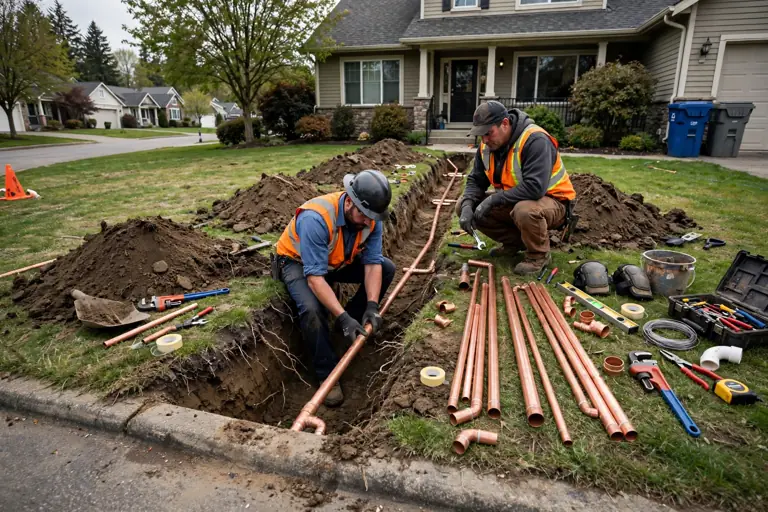
When a water service line reaches the end of its life, patching it buys less and less time. Full replacement gives you a new line rated for decades. Service lines last 40 to 60 years depending on material and soil. Past that age, replacement is a matter of when, not if. Planning it beats reacting to a failure.
Replacing a water line is a bigger project than repairing one. It involves permits, utility coordination, excavation or trenchless installation, and a new connection at both ends. That scope is exactly why experience matters. A crew that does service lines regularly handles the utility coordination and the inspection schedule without drama.
The Deston is a referral service that connects homeowners with independent local plumbers in all 50 states. We are not a plumbing company and we do not employ technicians. Call (888) 418-3086 and we will match you with a local pro who replaces water service lines. That plumber evaluates your line, lays out the methods, and gives you upfront pricing.
Signs You Need Water Line Replacement
One leak is bad luck. A pattern is a verdict on the whole line.
Repeated leaks in the same line
One repair is bad luck. Two or three mean the pipe is failing along its length. Each new leak costs nearly as much as the last, while a replacement ends the cycle.
Galvanized or lead service line
Old galvanized steel corrodes from the inside until flow chokes off. Lead lines pose a health concern and many cities now require their replacement. Check what material feeds your house.
Chronically low pressure with no indoor cause
When indoor pipes test fine but pressure stays weak, the restriction is often in the buried service line. Scale and corrosion narrow old lines year by year.
Rusty water that never clears
If flushing the taps does not clear discoloration, the corrosion source is likely the service line itself, not the indoor plumbing. Rust that returns after every flush points outside.
Wet yard that keeps returning
A soggy patch that reappears after every repair tells you the line has more weak points waiting to open. Replacement addresses all of them at once.
Visible corrosion at the entry point
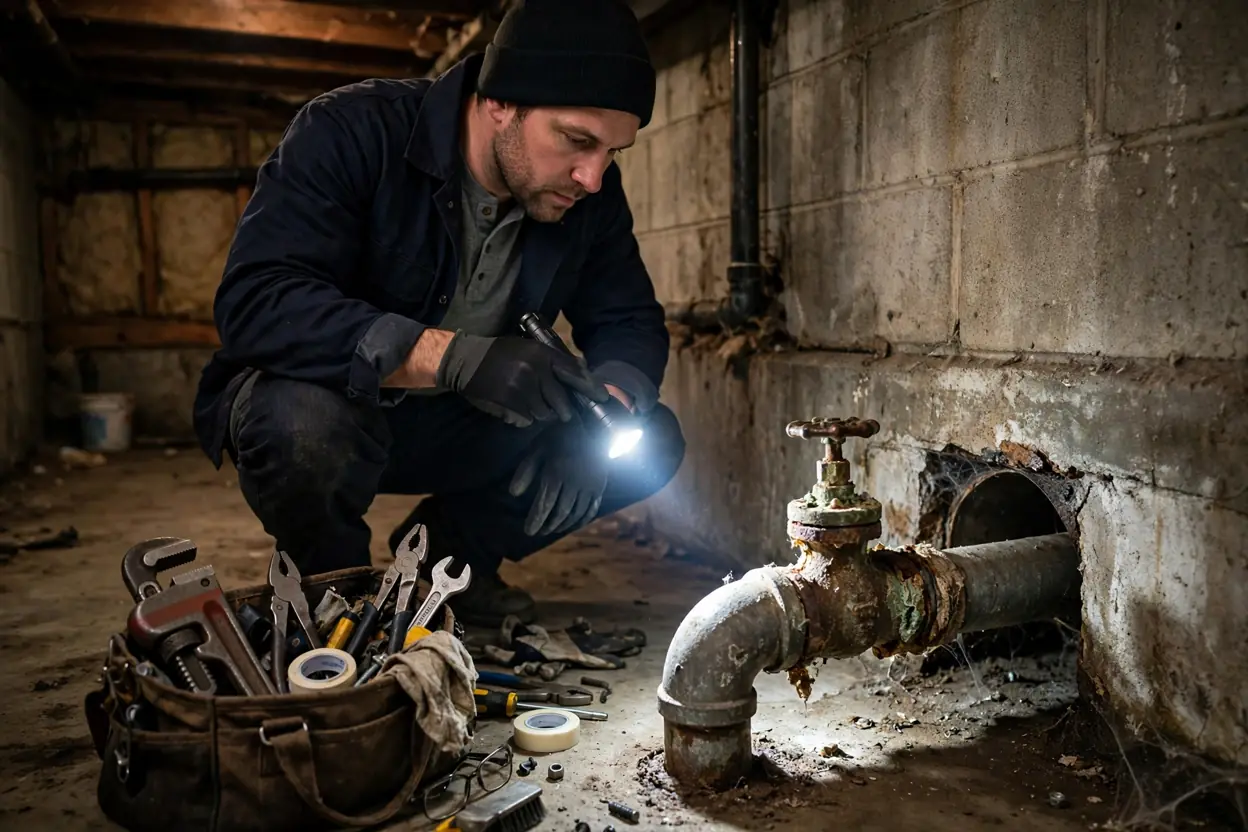
Where the line enters your basement or crawl space, heavy rust, flaking, or weeping joints preview what the buried portion looks like. The entry point is the one part of the line you can actually see.
A home over 50 years old with original plumbing
Service lines last 40 to 60 years depending on material and soil. A home past that age with its original line is living on borrowed time. A planned replacement beats a midnight failure.
Pressure that drops when two fixtures run
A shower that goes weak when a toilet flushes can mean an undersized or narrowed service line. If the indoor pipes are sound, the buried line is starving the house.
Unexplained jump in the water bill
A service line leak can run for weeks underground before it surfaces. A bill that jumps with no change in use, and no indoor leak found, points to the buried line.
Inspect, Choose, Permit, Install, Test
Most residential replacements finish in one to two days.
- 1
Get matched with a service line pro
Call (888) 418-3086. The Deston connects you with an independent local plumber experienced in full service line replacement. This work involves permits and utility coordination, so experience counts.
- 2
Inspect and measure
The plumber confirms the line material, often by checking the entry point and the meter connection. They measure the run length, note the depth, and map obstacles like driveways, trees, and other utilities.
- 3
Choose the installation method
Open trench excavation removes the old line and lays new pipe in the same path. Trenchless pipe bursting pulls new pipe through while fracturing the old one, needing only entry and exit pits. Your plumber recommends based on soil, obstacles, and cost.
- 4
Handle permits and utility marking
Most cities require a permit for service line work. The plumber or the utility marks gas, electric, and telecom lines before digging. This step protects everyone and keeps the job legal.
- 5
Install the new line
New pipe goes in at the proper depth below the frost line, bedded in sand or fine soil to protect it. Connections are made at the city main or meter on one end and at your home’s main valve on the other.
- 6
Test, backfill, and restore
The new line is pressure tested and flushed before the trench is filled. Backfill goes in layers and gets compacted. Sod, concrete, or pavers are restored. The plumber verifies pressure at every fixture inside.
Materials and Methods
Your pro matches material and method to your soil, your code, and your yard.
Copper service line
The traditional choice for underground service. Type K copper is the thick grade used below ground. It lasts 50 years or more and handles pressure well. It costs the most in materials.
HDPE service line
High density polyethylene is flexible, corrosion proof, and joined with heat fusion that creates a single continuous pipe with no joints to fail. It has become the go to for many plumbers replacing service lines.
PVC service line
Rigid PVC is affordable and code approved for service lines in many areas. It uses glued joints and needs careful bedding to avoid stress cracks. Check local code, since some cities prefer other materials.
Trenchless pipe bursting
Instead of an open trench, a bursting head pulls the new line through the path of the old one. Landscaping, driveways, and walkways stay largely intact. It typically adds cost over open trench but saves expensive surface restoration.
Open trench replacement
Digging the full path, removing the old line, and laying new pipe. It disturbs the surface the most but gives the plumber full visibility and works in any soil. For short runs in open lawn, it is often the cheapest path.
Line size upgrade
Replacement is the ideal time to upsize. Going from 3/4 inch to 1 inch costs little extra in pipe but noticeably improves pressure when several fixtures run at once. Tell your plumber about irrigation, pools, or future additions so the size covers them.
Trench vs. Trenchless for a Water Line
Both end with a new line. They differ in digging, time, and restoration.
| Factor | Open trench | Pipe bursting |
|---|---|---|
| Digging | Full path open | Entry and exit pits only |
| Yard and surfaces | Strip along the path disturbed | Largely intact |
| Time on site | Often one day for short runs | Often up to two days |
| Extra cost | Baseline | Usually $1,000 to $3,000 more |
| Best when | Short run in open lawn | Line under driveway, patio, or mature landscaping |
What Water Line Replacement Costs
Full water line replacement for a typical home often runs from $2,000 to $8,000. United States ranges:
| Job | Typical range |
|---|---|
| Full replacement, typical home | $2,000 to $8,000 |
| Trenchless method, added over open trench | $1,000 to $3,000 more, but saves on restoring expensive surfaces |
| Short run, easy soil, open trench | Near the bottom of the range |
| Long run, deep burial, rocky soil, or line under a driveway | Toward the top of the range |
Before and After: Rusted Line to New Line
The photos below are illustrations of an aged service line and the new line that replaces it. They show the kind of change to expect, not one specific job.
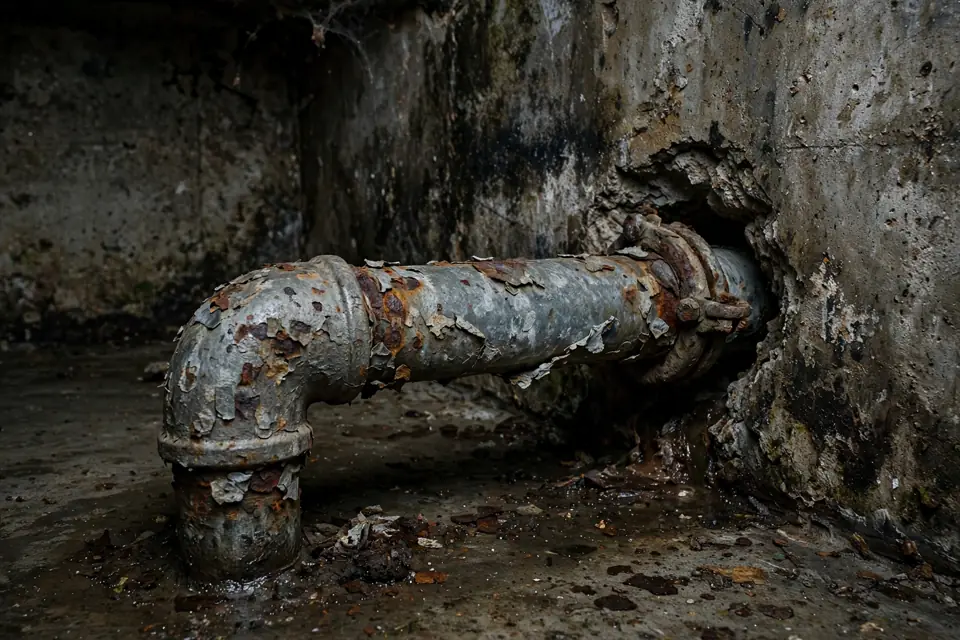 Before
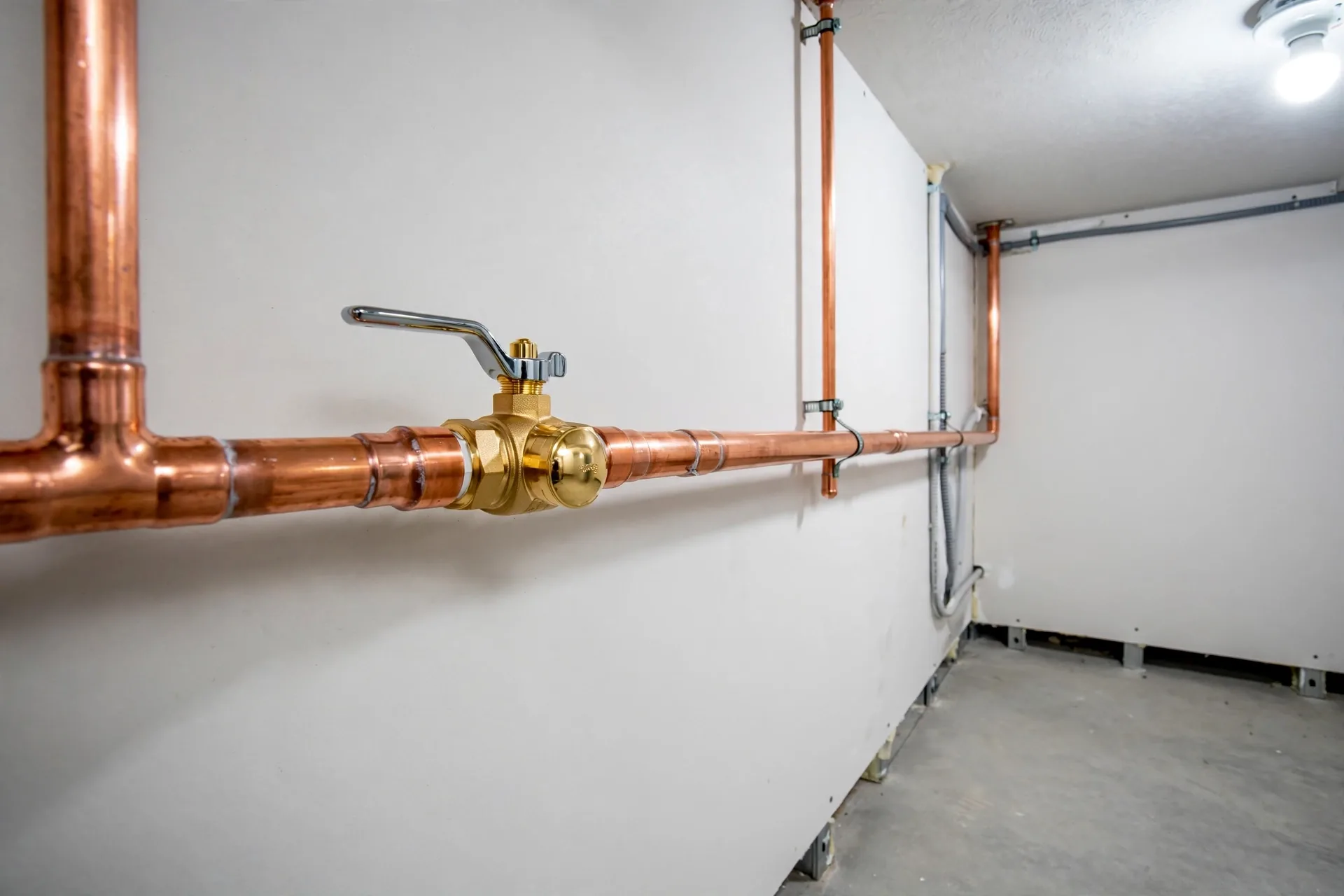 After
Before the Crew Arrives
A little prep keeps a big job on schedule.
Photograph the yard before work. Photos of lawn, beds, driveways, and walkways help settle any restoration question after backfill.
Mark private lines you know about. The crew arranges official utility marking. Tell them about sprinkler lines, invisible fences, and any private wiring you know about.
Clear the line path. Move cars, bins, and stored items off the route. Crews need room for a trench or pits plus soil piles and pipe staging.
Plan a water outage window. The home loses water while the new line is connected at both ends. Fill jugs, plan meals, and know the shutoff hours in advance.
Ask about lead line programs. Many cities have programs that help fund lead line replacement, and some now require it at sale or renovation. Ask your water utility about local assistance programs before the job starts.
Confirm who restores what. Get the restoration scope in writing: backfill, compaction, sod, concrete, and pavers. Surface restoration scheduled a few days later lets the ground settle first.
Frequently Asked Questions
How long does a water line replacement take?
Most residential replacements finish in one to two days. Open trench jobs on short runs can finish in a day. Trenchless work may take two days. Surface restoration like concrete or sod sometimes gets scheduled a few days later to let the ground settle.
Will my yard be destroyed?
Open trench work disturbs a strip along the pipe path, but a good crew restores it. Trenchless methods disturb only two small pits. Discuss the method choice with your plumber if landscaping matters to you. Photos of the yard before work starts help settle any restoration disputes.
Do I need a permit to replace my water line?
Almost always yes. Most cities require a permit and an inspection for service line replacement. Your plumber usually handles the permit as part of the job. Unpermitted work can cause problems at resale and with insurance, so do not skip it.
Should I replace a lead service line?
Yes, and soon. Lead in drinking water is a health risk, especially for children. Many cities have programs that help fund lead line replacement, and some now require it at sale or renovation. Ask your water utility about local assistance programs.
What size water line do I need?
Most homes use a 3/4 inch or 1 inch service line. Larger homes with irrigation systems or multiple bathrooms may need 1 inch or more. Undersized lines starve fixtures of pressure. Your plumber sizes the new line to your home’s fixture count and any outdoor water use.
Can I upgrade my line size during replacement?
Yes, and it is the ideal time to do it. Going from 3/4 inch to 1 inch costs little extra in pipe but noticeably improves pressure when several fixtures run at once. Tell your plumber about irrigation, pools, or future additions so the size covers them.
How long will the new water line last?
Copper service lines last 50 years or more. HDPE and PVC lines are rated for 50 to 100 years since they cannot corrode. Soil conditions affect life. Proper depth, bedding, and installation matter as much as the material you pick.
How do I know the problem is the service line and not indoor plumbing?
The entry point check is the first clue. Heavy corrosion where the line enters the house, plus weak pressure at every fixture while indoor pipes test fine, points outside. A plumber can test pressure at the meter and at the house valve to isolate which side is losing pressure.
Will I have water during the work?
Not during the connection steps. The crew shuts the water off while the new line is tied in at the street end and at the house valve. Most of the digging happens with the old line still in service. Your plumber will give you the outage window in advance.
What if the line runs under my driveway?
That is the classic case for trenchless bursting. The new pipe pulls through the old path with only entry and exit pits, so the driveway stays intact. Open trench under a driveway means cutting and replacing concrete, which is often the most expensive part of the job.
Does the quote include the utility connection?
Ask directly. Some quotes include coordination with the water utility for the main connection. Others leave that step to you. On a project this size, the fixed written price should name who handles permits, marking, both connections, backfill, and restoration.
More Water Line Help
Water Line Repair | Whole House Repiping | Slab Leak Repair | All Services
One Pipe Feeds Your Whole House. Replace It Right.
If your service line is past its life, patching buys less and less time. Call now and we will connect you with a local pro who replaces water service lines and prices the job in writing.
(888) 418-3086 Call NowThe Deston is a referral service that connects homeowners with independent local plumbers. We are not a plumbing company.