Sewer Line Repair
Your sewer line carries every drop of wastewater from your home to the city main or septic system. When it cracks, collapses, or fills with roots, the symptoms show up everywhere: toilets that will not flush, drains that gurgle and back up, and wet, smelly patches in the yard. Sewer line repair fixes the damaged section so flow returns to normal.
Fix the Line That Carries It All Away
The Deston is a nationwide referral service. We connect you with an independent local plumber who can diagnose the problem and repair the line. Every plumber we refer is an independent local business, not a Deston employee. Sewer work varies a lot by region. Soil type, freeze depth, tree species, and local code all shape how a repair is done. A local pro knows the ground in your area and the methods that hold up there.
When you call, we match you with a nearby plumber who can inspect the line and give upfront pricing before any work starts. We serve homeowners across all 50 states. A sewage backup is not a wait-and-see situation. Wastewater carries bacteria and can ruin flooring, drywall, and belongings. If sewage is entering the home, stop using water and call for help.
Be wary of quotes given without a camera inspection. A plumber who has not seen inside the line cannot know the true extent of the damage. Reputable local plumbers show you the video, point out the damage, and explain the repair in plain terms. If a quote seems far above or below the ranges on this page, get a second opinion from another local pro.
Signs You Need Sewer Line Repair
These signs point to a problem in the sewer line itself, not just a simple clog. The earlier you catch them, the smaller the repair usually is.
Multiple drains backing up at once
The toilet bubbles when the washer drains, or the tub fills when you flush. One main line problem affects the whole house.
Sewage backup
Dirty water or sewage comes up through a floor drain, shower, or toilet. This is the clearest sign of a sewer line failure and needs fast attention.
Persistent sewer odor
A rotten egg or sewage smell in the yard, basement, or around drains can mean a cracked pipe is leaking waste underground.
Soggy or sunken spots in the yard
A leaking sewer line saturates the soil above it. Look for patches that stay wet days after rain, or soil that has settled into a low trench line.
Unusually green grass patches
Sewage acts as fertilizer. A strip of lawn that grows faster and greener than the rest may sit right over a leaking pipe.
Mold or mildew on basement walls
Moisture from a cracked sewer line can feed mold growth on lower walls and floors, especially near where the line exits the house.
Frequent clogs despite cleaning
If the same main drain clogs again within months of a professional cleaning, roots or a broken section are likely the real cause.
Slow drains in every fixture
When sinks, tubs, and toilets all drain slowly at the same time, the restriction sits in the main line, not the individual branches.
Gurgling after flushing or draining
Air trapped behind a partial blockage or a damaged section bubbles back through traps. It often shows up in the lowest fixture first.

How Sewer Line Repair Works
Sewer line repair is not guesswork. Plumbers follow a clear sequence from diagnosis to restored pipe.
- 1
Camera inspection
Almost every repair starts with a sewer camera inspection. The plumber feeds a camera through a cleanout and watches the live video as it travels the line. The footage shows cracks, offsets, bellies, root masses, and collapsed sections, with the exact distance from the access point.
- 2
Locating and marking the problem
The camera carries a transmitter that the plumber tracks from the surface with a locator. The damaged section gets marked on the ground with paint or flags. This step matters because sewer lines rarely run in a straight line from house to street.
- 3
Choosing the repair method
With the diagnosis in hand, the plumber recommends a method. Small cracks and separated joints may qualify for trenchless repair, which fixes the pipe from the inside. Collapsed sections and severe offsets usually need traditional excavation.
- 4
Performing the repair
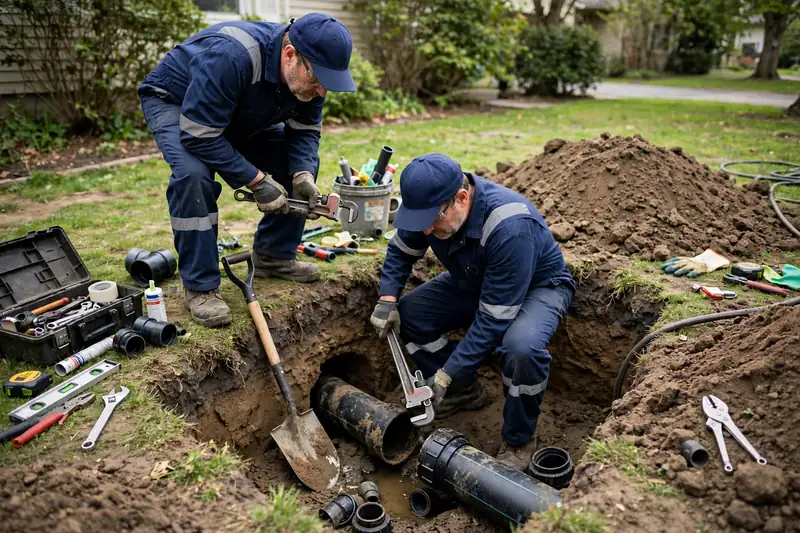
For spot repairs, the plumber digs a targeted access pit, cuts out the damaged section, and joins in new pipe with proper fittings. Trenchless methods insert a liner or pull a new pipe through the old one with only one or two small access points.
- 5
Testing and restoration
After the repair, the plumber runs water through the system and may run the camera again to confirm a smooth, continuous pipe. The excavation area gets backfilled and compacted. Surface restoration like sod, concrete, or asphalt is usually handled separately, so ask your plumber what is included before work begins.
Repair Methods and Options
Not all sewer damage needs the same fix. The right method depends on the pipe material, the type of damage, the depth of the line, and what sits above it.
Traditional excavation and spot repair
The plumber digs down to the damaged section and replaces it with new pipe. This is the most direct method and the only option for collapsed lines, severe offsets, and pipes that have lost their shape. It disturbs the yard, driveway, or sidewalk above, which adds restoration cost. For isolated damage in an easy-to-dig area, spot repair is often the most economical choice.
Pipe lining (cured-in-place pipe)
A resin-soaked liner is pulled into the old pipe and cured to form a new pipe inside the old one. Lining needs only small access points and leaves landscaping, driveways, and patios intact. It works well for cracked pipes, root-damaged lines, and separated joints where the old pipe still holds its basic shape. Learn more in our guide to trenchless sewer repair.
Pipe bursting
A bursting head is pulled through the old line, fracturing it outward while a new pipe follows right behind. Like lining, this method needs minimal digging. It suits lines that are too damaged for a liner but where the homeowner wants to avoid a full open trench. The new pipe is typically HDPE, which resists roots and corrosion.
Section replacement vs. full replacement
A spot repair replaces just the damaged few feet. This makes sense when the rest of the line is sound, which the camera inspection confirms. When the whole line shows cracks, heavy root intrusion, or failing joints, replacing only one section means the next failure is already brewing. In that case, a full sewer line replacement costs more now but ends the cycle of repeat repairs.
Root removal plus repair
Tree roots enter sewer lines through tiny cracks and joints, then expand into thick masses. Cutting the roots clears the immediate blockage, but the entry points remain. A lasting fix pairs root removal with a repair that seals the entry: lining, bursting, or replacing the affected section. Without that seal, roots grow back, often within a year or two.
Hydro jetting before repair
Many repairs start with a jetting pass to clear roots, grease, and debris so the camera sees the true pipe wall. See hydro jetting for how that cleaning step works and when it helps.
What Causes Sewer Lines to Break
Age is the most common cause. Clay and cast iron lines installed decades ago crack, corrode, and separate at the joints. Tree roots exploit those weak points, entering through hairline cracks and growing until they block flow and split the joint further.
Shifting soil, freeze cycles, and heavy loads above the line also cause damage. A line under a driveway carries more load than one under lawn. Poor bedding at install time can leave a pipe unsupported, so it sags into a belly where waste pools and the pipe weakens.
Even new lines can fail if they were installed with poor bedding or bad slope. Slope matters a lot: too flat and solids settle, too steep and water outruns solids, leaving them behind. A camera check after any new install is cheap insurance against a bad slope hiding underground.
What Sewer Line Repair Costs
Sewer line repair is one of the bigger plumbing expenses homeowners face, so honest ranges help. These are national ranges, not quotes. Your local plumber will give upfront pricing based on your specific line.
| Job | Typical range |
|---|---|
| Minor spot repair, accessible area | $1,000 to $3,000 |
| Trenchless lining or pipe bursting, per foot | $80 to $250 per foot |
| Trenchless job, typical residential line | $4,000 to $12,000 |
| Full open-trench replacement, per foot, before restoration | $50 to $200 per foot |
Before and After: A Root-Damaged Line
The photos below are illustrations of the difference a repair makes. They are not photos of a real job.
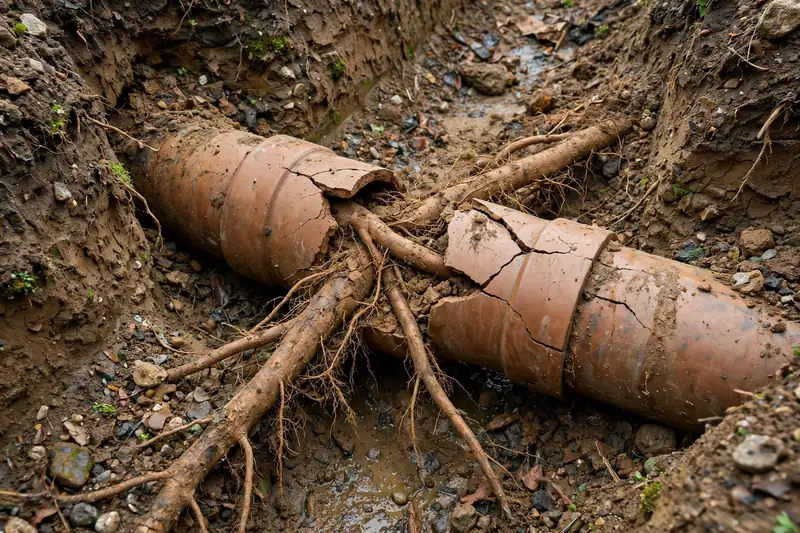 Before
 After
A properly installed spot repair or replacement lasts decades. PVC and HDPE pipes carry 50 to 100 year life ratings. Cured-in-place liners typically come with 50 year material warranties from the maker. The repair lasts longest when the plumber also addresses the cause, such as removing an aggressive tree or fixing poor drainage around the line.
Frequently Asked Questions
What is the difference between sewer line repair and sewer line replacement?
Repair fixes one or more damaged sections while keeping the rest of the existing line. Replacement removes and installs an entirely new line from house to connection point. Repair costs less and suits isolated damage. Replacement makes sense when the whole line is failing or repairs keep repeating.
Can a sewer line be repaired without digging up my yard?
Often, yes. Trenchless methods like pipe lining and pipe bursting repair the line through small access points instead of an open trench. They work for cracked pipes, root damage, and separated joints. Collapsed sections and severe pipe offsets usually still need traditional excavation.
How long does a sewer line repair take?
A simple spot repair often finishes in one day. Trenchless lining or bursting typically takes one to two days. Larger excavation jobs can run three to five days, plus time for inspections and surface restoration. Your plumber should give you a timeline before work begins.
What causes sewer lines to break?
Age is the most common cause. Clay and cast iron lines installed decades ago crack, corrode, and separate at the joints. Tree roots exploit those weak points. Shifting soil, freeze cycles, and heavy loads above the line also cause damage. Even new lines can fail if they were installed with poor bedding or bad slope.
Will my homeowners insurance cover sewer line repair?
Standard policies usually exclude sewer line repair, treating it as maintenance. Some insurers offer a service line endorsement that adds coverage for a small yearly premium. Check your policy before you need it. If you do not have the endorsement, you can still add it for future protection.
How long does a repaired sewer line last?
A properly installed spot repair or replacement lasts decades. PVC and HDPE pipes carry 50 to 100 year life ratings. Cured-in-place liners typically come with 50 year warranties from the maker. The repair lasts longest when the plumber also addresses the cause, such as removing an aggressive tree or fixing poor drainage around the line.
Does The Deston perform sewer line repairs?
No. The Deston is a referral service. We connect you with an independent local plumber who inspects your line and performs the repair. You pay the plumber directly, and the plumber gives upfront pricing before any work starts. We serve homeowners across all 50 states.
Should I get a second opinion on a large sewer quote?
Yes, when the quote is large or the method surprises you. A second camera review can confirm the damage and the method. Two pros may differ on trenchless versus dig, and seeing both prices with restoration included helps you choose well.
Do I need a permit for sewer repair?
Most cities require a permit for sewer work and an inspection before backfill. Your plumber pulls the permit and schedules the inspection as part of the job. Ask that the permit and inspection be listed in your written quote.
What should I do if sewage is backing up right now?
Stop using water, keep people and pets out of the affected rooms, and call. Do not run the washing machine or flush again, since that pushes more waste into the house. See our emergency plumber page for urgent help.
More Sewer Help
Sewer Line Replacement | Trenchless Sewer Repair | Sewer Camera Inspection | Hydro Jetting | Emergency Plumber | All Services
Every Drain in the House Is Talking. Listen Before It Backs Up.
Call now and we will connect you with a local pro who can camera the line, show you the footage, and price the repair that fits.
(888) 418-3086 Call NowThe Deston is a referral service that connects homeowners with independent local plumbers. We are not a plumbing company.